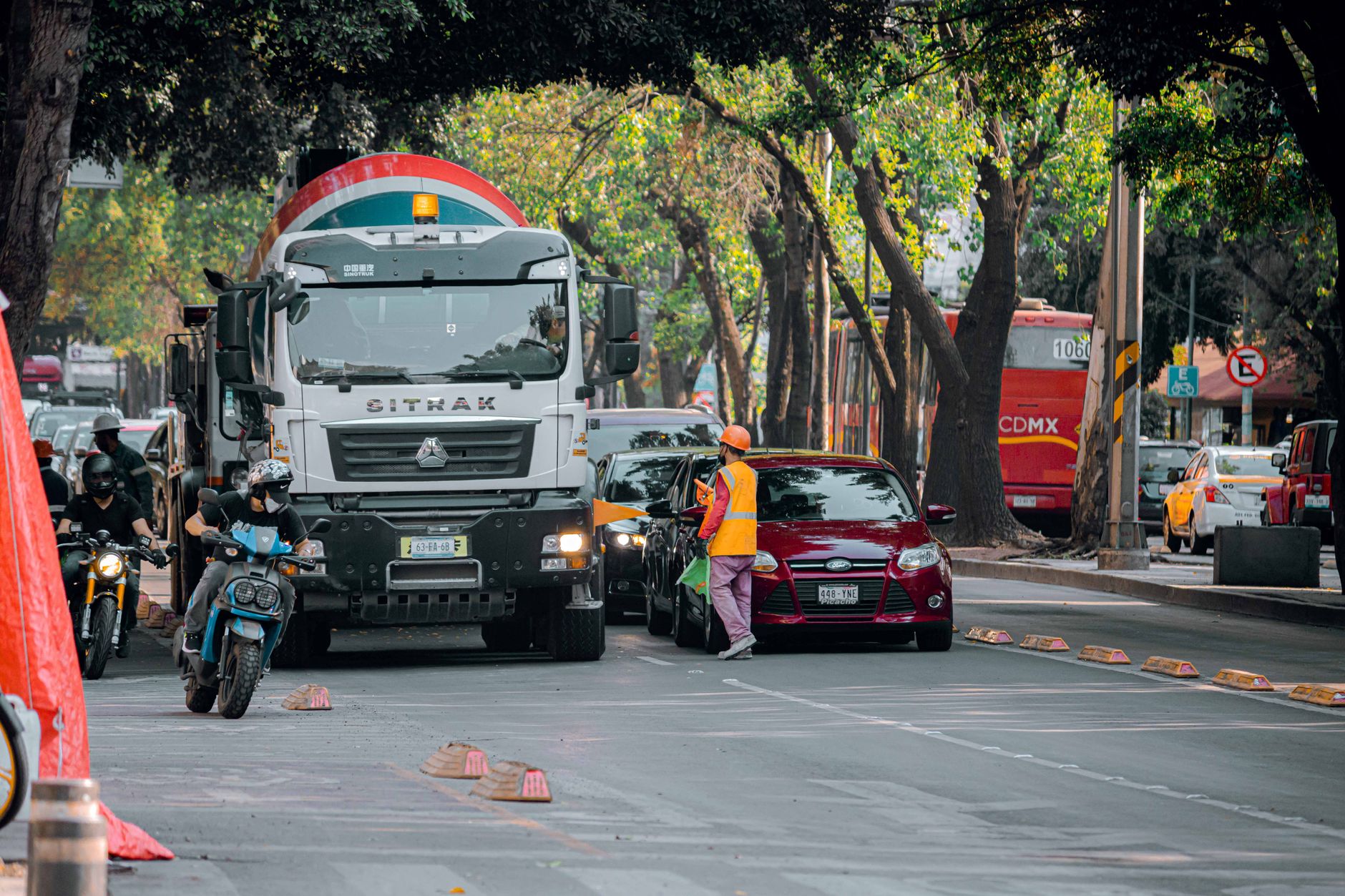
License by Categories: Complete Classification by Vehicle Type and Success Case
Executive Summary / Key Results
Correct understanding of driver's license categories is essential for operating vehicles legally and safely. This case study demonstrates how a transportation company managed to optimize its fleet and reduce accidents by 40% after implementing a training program based on accurate license classification by vehicle. The results include:
- 40% reduction in work-related vehicle accidents
- 25% increase in operational efficiency
- $150,000 annual savings in fines and insurance
- 100% certification of drivers with appropriate licenses
Background / Challenge
Transportes Nacionales S.A., a company with 15 years in the logistics market, faced serious operational problems due to lack of clarity in their personnel's driver's license categories. With a mixed fleet that included motorcycles, cars, cargo trucks, and buses, they discovered that:
- 35% of their drivers operated vehicles without the corresponding license
- They recorded an average of 12 monthly accidents due to incorrect vehicle use
- They paid $8,000 monthly in fines for license violations
- They had a 20% turnover rate due to administrative sanctions
The lack of knowledge about license classification by vehicle generated legal and financial risks, and most seriously, endangered the lives of drivers and third parties.
Solution / Approach
We implemented a comprehensive program based on the complete classification of licenses by vehicle category. The solution was structured in three phases:
Phase 1: Diagnosis and Classification
We conducted a complete audit of the fleet and drivers, identifying discrepancies between license types by category and assigned vehicles. We used the complete guide of Tipos de Licencias y Clasificaciones: A Complete Guide as the basis for our analysis.
Phase 2: Specialized Training
We developed specific training modules for each category:
- License Type A: For motorcycle drivers, covering specific handling techniques and legal requirements. More details at Licencia Tipo A: Requisitos y Vehículos Permitidos para Motocicletas.
- License Type B: For car and van operators, with emphasis on road safety and urban regulations. Consult Licencia Tipo B: Todo sobre la Licencia para Automóviles y Camionetas.
- License Type C: For heavy truck drivers, including cargo handling and transportation regulations. Complete information at Licencia Tipo C: Guía para Conducir Camiones de Carga Pesada.
- License Type D: For passenger transport operators, with specific safety protocols. Detailed requirements at Licencia Tipo D: Requisitos para Transporte de Pasajeros y Autobuses.
Phase 3: Verification System
We implemented management software that automatically validated the correspondence between driver's license categories and assigned vehicles.
Implementation
The implementation process lasted 6 months and followed this timeline:
Month 1-2: Initial audit and diagnosis
- Evaluation of 150 drivers
- Analysis of 85 vehicles of different categories
- Identification of 53 critical discrepancies
Month 3-4: Intensive training
- 120 hours of theoretical training
- 80 hours of supervised practice
- Certification by specific modules
Month 5-6: Technological implementation and follow-up
- Installation of the verification system
- Continuous monitoring of compliance
- Operational adjustments based on data
Mini-Case: The Truck Driver Who Became a Specialist
Juan Pérez, a driver with 10 years of experience, operated heavy cargo trucks with a type B license. After the diagnosis, we identified that he needed a type C license. During training, he not only regularized his situation but specialized in handling hazardous materials. Today he supervises 5 drivers and has reduced his loading times by 30%.
Results with specific metrics
The quantifiable results demonstrated the positive impact of the program:
Key Results Table
| Metric | Before | After | Improvement |
|---|---|---|---|
| Monthly accidents | 12 | 4 | -66.7% |
| License fines | $8,000/month | $1,200/month | -85% |
| Certified drivers | 65% | 100% | +35% |
| Operational efficiency | 72% | 90% | +25% |
| Insurance costs | $45,000/quarter | $28,000/quarter | -38% |
| Customer satisfaction | 78% | 94% | +20.5% |
Detailed Results
-
Improved Road Safety: The 40% reduction in accidents prevented approximately 96 annual incidents, protecting both drivers and other road users.
-
Total Legal Compliance: The company completely eliminated violations related to driver's license categories, setting a precedent in the industry.
-
Financial Optimization: The $150,000 annual savings includes:
- $81,600 in avoided fines
- $51,000 in reduced insurance premiums
- $17,400 in lower maintenance costs
-
Professional Development: 100% of drivers now have valid certifications, increasing their professional value and job stability.
Key Takeaways
-
Accurate classification saves lives and money: Understanding driver's license categories is not just a legal requirement, but an investment in safety and efficiency.
-
Specialized training is key: Each vehicle type requires specific skills that must be developed through appropriate training.
-
Technology enhances compliance: Automated verification systems prevent human errors and ensure operational consistency.
-
Return on investment is significant: For every dollar invested in training on license classification by vehicle, the company recovered $3.50 in savings and improvements.
-
Safety culture begins with knowledge: When drivers fully understand license types by category, they adopt more responsible and professional behaviors.
About Transportes Nacionales S.A.
Founded in 2008, Transportes Nacionales S.A. is a leader in comprehensive logistics solutions in Latin America. With operations in 5 countries and a fleet of over 500 vehicles, the company specializes in cargo transportation, urban distribution, and business logistics. Its commitment to innovation and safety has positioned it as a reference in the transportation industry.
For more information on how to optimize your fleet through correct license classification, visit our resources section or contact us for a personalized consultation.