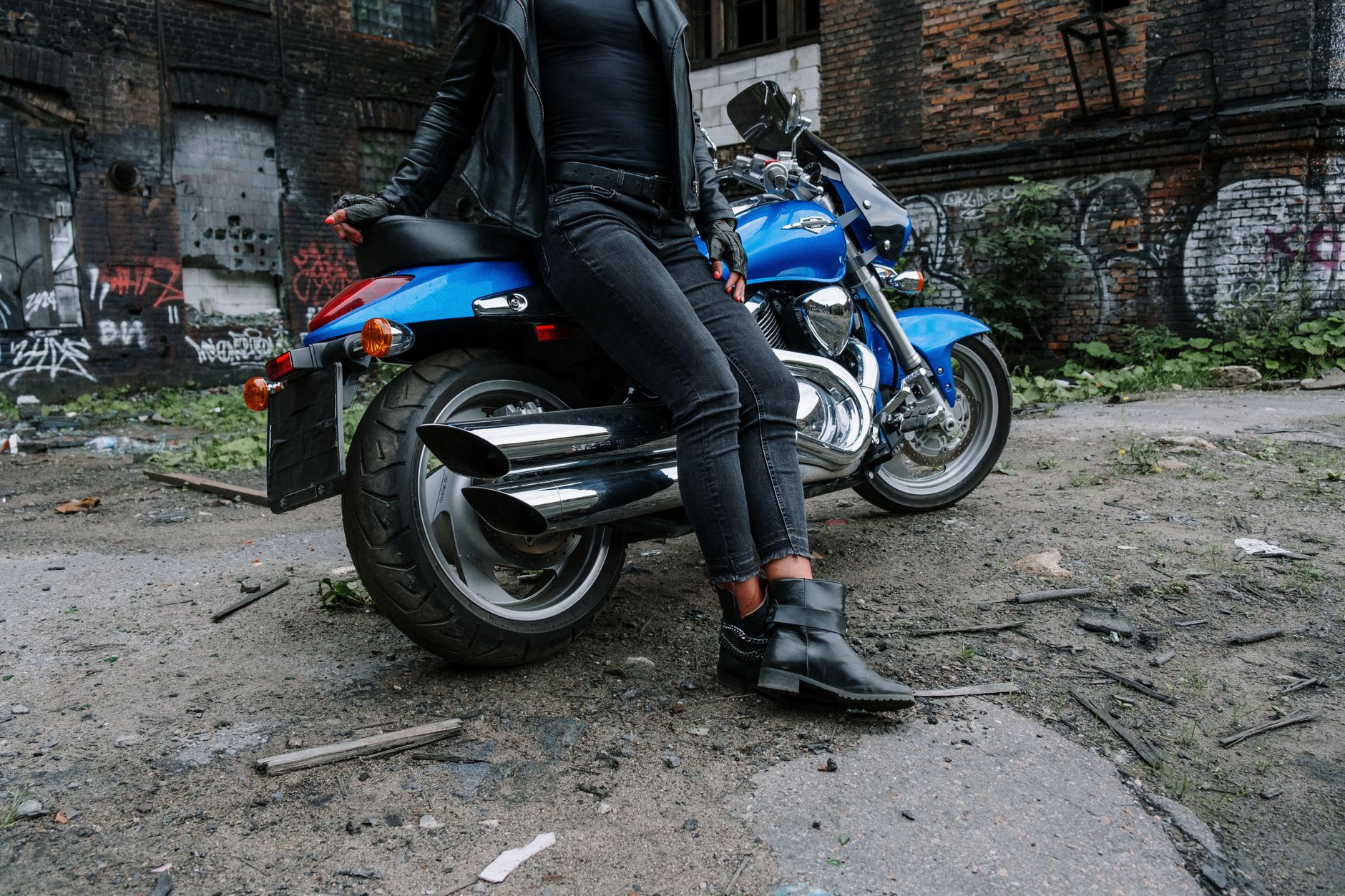
Type A License: Requirements, Permitted Vehicles, and Everything You Need to Know for Motorcycles
The Type A License represents the highest category for operating motorcycles in many countries, allowing the handling of two-wheeled vehicles without power or displacement limitations. This official document not only certifies your ability to operate high-end motorcycles but also demonstrates a commitment to road safety and technical mastery. In a context where motorcycles represent 15% of the vehicle fleet in Latin America according to World Health Organization data, obtaining the correct license becomes a crucial responsibility for every serious driver.
What is the Type A License and Why is it Essential?
The Type A License, commonly known as the "motorcycle A license," authorizes the driver to operate motorcycles without power restrictions, including those with displacements above 600cc and powers that can exceed 100 horsepower. Unlike licenses with progressive restrictions, the Type A represents the culmination of the training process for motorcyclists, requiring demonstration of advanced competencies in vehicle control, active safety, and regulatory knowledge.
According to statistics from the Road Safety Institute, drivers with a Type A License have 40% fewer serious accidents compared to those who operate powerful motorcycles with lower category licenses. This difference underscores the importance of the specialized training required for this license, which goes beyond simply passing a theoretical-practical exam.
Fundamental Requirements to Obtain the Type A License
Minimum Age and Prior Experience
The minimum age to apply for a Type A License varies according to national legislation but is generally set at 21 years. However, some countries allow access from 18 years if the applicant has at least two years of experience with a lower category motorcycle license. This prior experience requirement is not arbitrary: studies by the Ibero-American Road Safety Council indicate that motorcyclists with at least 24 months of practical experience reduce their probability of suffering accidents due to basic control errors by 60%.
Required Documentation
The required documentation includes:
- Valid official identification document
- Official medical certificate certifying psychophysical fitness
- Recent proof of address
- Passport-sized photographs
- Certificate of approval from the theoretical-practical course at an authorized center
Medical Exam and Physical Requirements
The medical exam for the Type A License is more exhaustive than for other categories, especially evaluating:
- Visual acuity with and without correction (minimum 0.8 in the best eye)
- Complete visual field without significant alterations
- Sufficient hearing capacity to perceive acoustic signals
- Motor coordination and reaction times
- Absence of medical conditions affecting judgment or motor control
Obtaining Process: Step by Step
The process to obtain your motorcycle A license follows a logical structure designed to ensure you acquire the necessary competencies progressively and safely.
Phase 1: Specialized Theoretical Training
The theoretical training for the Type A License delves into aspects beyond basic regulatory knowledge. It includes specialized modules on:
- Advanced vehicle dynamics of motorcycles
- Emergency braking techniques on different surfaces
- Traction management in tight curves
- Risk psychology applied to motorcycle riding
- Preventive maintenance of critical systems
Phase 2: Practical Training in a Closed Circuit
The practice in a closed circuit takes place in authorized facilities that simulate real traffic conditions. Mandatory exercises include:
- Slalom between cones at controlled speed
- Precision braking in limited space
- Maintaining balance at very low speed
- Sudden obstacle evasion
- Control on simulated slippery surfaces
Phase 3: Theoretical Exam
The theoretical exam typically consists of 30 to 40 questions with a required accuracy percentage of 90% or higher. The questions focus on:
- Specific regulations for high-displacement motorcycles
- Special signage for motorcyclists
- Mandatory and recommended safety equipment
- Behavior on roads and highways
- Interaction with larger vehicles
Phase 4: Practical Exam on Public Roads
The practical exam in real traffic conditions evaluates:
- Regulatory compliance in a dynamic environment
- Observation and anticipation techniques
- Correct positioning on the roadway
- Effective communication with other users
- Management of complex situations
Vehicles Permitted with Type A License
The Type A License authorizes the operation of all types of motorcycles without technical limitations. To better understand this breadth, it is useful to know the different vehicle classifications you can operate.
Road Motorcycles
Include all motorcycles designed primarily for use on paved roads:
- Sport bikes: High-performance sport motorcycles
- Touring: Motorcycles for long trips with luggage
- Naked: Motorcycles without fairings with an upright position
- Cruiser: Motorcycles with custom style and relaxed position
Dual-Purpose Motorcycles
Vehicles designed for mixed use on roads and dirt roads:
- Adventure bikes: Motorcycles for off-road travel
- Enduro: Light motorcycles for dirt roads with road homologation
- Supermoto: Motorcycles with off-road characteristics but street tires
Specialties and Variants
The Type A License also covers special variants:
- Motor tricycles with power exceeding 15kW
- Light quadricycles when they exceed certain technical parameters
- Motorcycles with sidecars (with specific restrictions depending on the country)
Comparative Table: Motorcycle Categories Covered by Type A License
| Category | Typical Displacement | Average Power | Main Use |
|---|---|---|---|
| Maxi Scooter | 300-850cc | 25-75 HP | City/Highway |
| Naked Street | 600-1200cc | 75-150 HP | Urban/Recreational Use |
| Sport | 600-1000cc | 100-200 HP | Road/Sport |
| Touring | 1000-1800cc | 80-120 HP | Long Trips |
| Adventure | 800-1300cc | 90-150 HP | All Terrain/Asphalt |
| Cruiser | 800-1800cc | 50-100 HP | Recreational/Aesthetic |
Key Differences Between Type A License and Other Categories
Understanding the distinctions between the Type A License and other categories is fundamental to choosing the correct license according to your needs. In our complete article on License Types and Classifications: A Complete Guide, we explore in depth all available categories.
Comparison with A2 License (Restricted)
The main difference lies in power limitations:
- A2 License: Limited to motorcycles with a maximum of 35kW (47 HP)
- Type A License: No power restrictions
Additionally, the training for the Type A License includes specific modules for handling the dynamic characteristics of high-power motorcycles, such as managing sudden acceleration, braking with advanced systems, and control in high-speed curves.
Comparison with Displacement-Based Licenses
Some systems classify licenses by displacement instead of power:
- Up to 125cc: Basic requirements
- Up to 250cc: Specific practical exam
- No limit: Equivalent to Type A License
Advantages of the Type A License
- Complete versatility: You can operate any motorcycle on the market
- Resale value: Your license does not depreciate if you change motorcycles
- Safety: Advanced training significantly reduces risks
- International recognition: Greater acceptance in international agreements
Costs and Time Involved
Estimated Economic Investment
Costs vary by country and school but generally include:
- Enrollment and exam fees: $150-300
- Theoretical-practical course: $400-800
- Didactic material and equipment: $100-200
- Administrative procedures: $50-150
Total estimated: $700-1,450
Duration of the Process
The total time from start to obtaining ranges between:
- Minimum: 4-6 weeks (intensive process)
- Average: 8-12 weeks (standard pace)
- Maximum: 16-20 weeks (progressive training)
Factors Affecting Cost and Time
- Applicant's prior experience
- Availability of examining centers
- Success on first exam attempts
- Specific requirements of the jurisdiction
Legal and Regulatory Aspects
Validity and Renewal
The Type A License generally has a validity of:
- 10 years for drivers under 65 years old
- 5 years for drivers between 65 and 70 years old
- 2-3 years for drivers over 70 years old
The renewal process requires:
- Updated medical exam
- Verification of no serious infractions
- Payment of renewal fees
Restrictions and Limitations
Although the Type A License allows operating any motorcycle, there are contextual limitations:
- Age restrictions for renting high-end motorcycles
- Limitations on competition tracks (require sports licenses)
- Specific regulations for passenger transport
International Recognition
The Type A License is recognized in:
- All signatory countries of the Vienna Convention
- Most countries with bilateral agreements
- With restrictions in some countries with their own systems
Safety and Best Practices for Drivers with Type A License
Essential Equipment
Operating high-power motorcycles requires specialized equipment:
- Full-face helmet homologated ECE 22.06
- Jacket with level 2 protections on shoulders, elbows, and back
- Gloves with protection on knuckles and palm
- Boots covering ankles with reinforcements
- Clothing with high-abrasion materials
Advanced Safe Riding Techniques
- Power management: Learning to modulate progressive acceleration
- Combined braking: Simultaneous use of front and rear brake
- Cornering lines: Techniques to maximize visibility and stability
- Control in adverse conditions: Riding in rain, wind, and slippery surfaces
Specific Preventive Maintenance
High-power motorcycles require special attention to:
- Brake system (fluid, pads, discs)
- Tires (pressure, wear, compatibility)
- Chain or shaft drive (tension, lubrication)
- Suspension (adjustment according to load and conditions)
Statistics and Relevant Data
Road Safety and Type A License
According to the Ibero-American Road Safety Observatory:
- Drivers with Type A License represent 22% of motorcyclists
- Only 8% of serious accidents involve drivers with Type A License
- 76% of drivers with Type A License take advanced training courses
Distribution by Age and Gender
- 65% of holders are between 30 and 50 years old
- 25% are between 20 and 30 years old
- 10% are over 50 years old
- Male/female ratio: 85/15 (female participation increasing)
Impact on Accident Rates
Data shows that:
- The accident rate of drivers with Type A License is 2.3 times lower than average
- 92% use complete protective equipment (vs 68% general)
- 78% perform regular preventive maintenance (vs 45% general)
Practical Case: From A2 License to Type A License
Profile: Carlos, 24 years old, with 3 years of experience riding a 400cc motorcycle with A2 license.
Process:
- Initial evaluation at an authorized school
- 20-hour bridge course (focused on differences with high-power motorcycles)
- Specific practice on circuit with 750cc motorcycle
- Adapted theoretical exam
- Practical exam on public roads
Result:
- Total time: 5 weeks
- Cost: $650
- Success on first attempt
- Acquisition of 900cc motorcycle for long trips
Lessons learned:
- Prior experience significantly reduces adaptation time
- Specific training in power management is crucial
- The transition allows exploring new mobility possibilities
Common Errors and How to Avoid Them
During the Obtaining Process
- Underestimating theoretical preparation: The exam includes advanced technical aspects
- Choosing an unauthorized school: Always verify official certification
- Practicing with inadequate motorcycle: Use a motorcycle similar to the exam one
After Obtaining the License
- Excessive initial confidence: The first weeks require progressive adaptation
- Neglect of maintenance: Powerful motorcycles require constant attention
- Ignoring changing conditions: Adapt your riding to weather, traffic, and road conditions
Frequently Asked Questions about Type A License
Can I obtain a Type A License directly without prior experience?
Depends on local legislation. Some countries allow direct access from 24 years without prior experience, while others require progression from lower categories.
Does the Type A License include sidecars?
Generally yes, but with the condition that the sidecar is homologated and the combination does not exceed certain weight and dimension parameters.
What happens if I operate a powerful motorcycle with a lower license?
Constitutes a serious infraction with consequences that may include:
- Substantial fines
- Vehicle impoundment
- Loss of points on the license
- Possible suspension of the driver's license
Do I need special insurance for high-power motorcycles?
Yes, most insurers offer specific policies for high-displacement motorcycles that include expanded coverage and specialized assistance.
The Future of the Type A License
Trends and Evolutions
Regulatory authorities are considering:
- Incorporation of ecological riding modules
- Specific training for high-power electric motorcycles
- Continuous evaluation systems through telemetry
- Specialized certifications for advanced technologies (traction control, ABS, riding modes)
Impact of Electrification
High-performance electric motorcycles present different dynamic characteristics that might require:
- Specific training in instant torque management
- Regenerative braking techniques
- Knowledge of fast-charging infrastructure
Conclusion: Beyond the Driver's License
The Type A License represents much more than a simple administrative document authorizing the operation of powerful motorcycles. It is the certification of a commitment to excellence in riding, road safety, and personal responsibility. Obtaining this license is not the end of the road but the beginning of a journey of continuous improvement where every kilometer traveled is an opportunity to perfect skills, expand knowledge, and contribute to a safer and more responsible motorcycling culture.
Drivers who aspire to the Type A License should approach the process seriously, understanding that additional power entails additional responsibility. The investment in quality training, adequate equipment, and constant practice translates not only into greater enjoyment of riding but also into a significant reduction of risks.
Remember that, as we explore in our complete guide on License Types and Classifications: A Complete Guide, choosing the correct license according to your current and future needs is a strategic decision that will impact your experience as a driver for years. The Type A License, when obtained with adequate preparation and exercised responsibly, opens a world of possibilities on two wheels while establishing the highest standard of competence and safety in motorcycle riding.