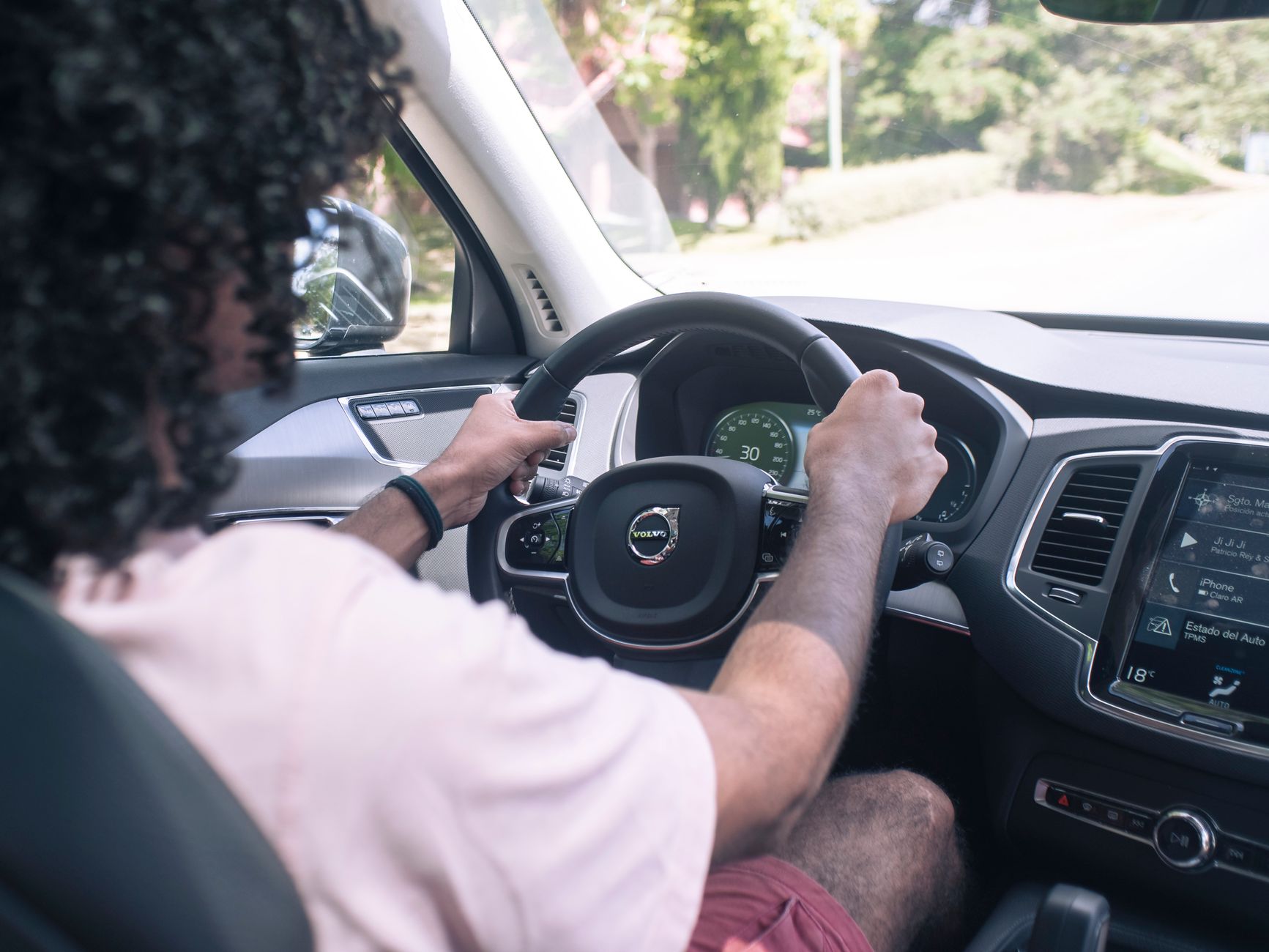
Types of Licenses and Classifications: Complete Guide for Drivers
In the world of driving, understanding the different types of licenses and classifications is essential for operating vehicles legally, safely, and efficiently. This hierarchical and specialized system ensures that each driver possesses the necessary skills and knowledge to handle specific categories of vehicles, from private automobiles to heavy goods or passenger transports. Driver's licenses are not a single document, but a spectrum of authorizations that respond to the complexity and responsibility inherent to each type of vehicle. In this definitive guide, we will comprehensively break down all categories, their requirements, acquisition processes, and the importance of choosing the correct license for your activity. Mastering this information is the first step towards professional and responsible driving, avoiding penalties and contributing to road safety.
License Classification System by Categories
Most countries, including Spanish-speaking ones, follow a classification system based on categories identified by letters (A, B, C, D, etc.) and, sometimes, subcategories. This standardized system allows for a clear understanding of which vehicles the license holder can operate. The basis of this classification lies in the weight, number of passengers, type of cargo, and technical characteristics of the vehicle. For example, the license for a motorcycle (category A) has radically different requirements and tests than those for an articulated truck (category C+E). It is crucial to understand that these categories are usually progressive; to qualify for some heavy vehicle licenses, one must first possess and have experience with lower category licenses. This staggered approach ensures that drivers gradually accumulate experience before taking on greater responsibilities on the road.
Licenses for Light Vehicles: Categories A and B
Categories A and B represent the most common licenses and are usually the entry point for most drivers.
Category B: Automobiles and Similar Vehicles
The category B license authorizes driving automobiles whose maximum authorized mass (MAM) does not exceed 3,500 kg, designed to transport up to 8 passengers in addition to the driver. This category usually also includes driving combinations of coupled vehicles, where the trailer has an MAM not exceeding 750 kg, or where the MAM of the combination does not exceed 3,500 kg. To obtain it, applicants must pass a theoretical exam on traffic rules and road safety, and a practical driving test. It is the base license from which, after a period of experience (normally two years), one can access other categories such as B+E (for heavy trailers) or, through specific training, categories C and D. According to data from the General Directorate of Traffic (DGT) in Spain, more than 85% of the active driver pool holds this license as their main permit.
Category A: Motorcycles and Mopeds
Category A is divided into subcategories based on the power and displacement of the motorcycle (e.g., A1, A2, and A). A1, accessible from 16 or 18 years old depending on legislation, is for light motorcycles; A2, for medium-power motorcycles; and A, with no power restrictions, usually requires holding an A2 license for a minimum period (e.g., 2 years) or a minimum age of 24. The process includes a specific theoretical exam for motorcycles, a skill test in a closed circuit (slalom, braking, balance), and a practical exam in real traffic. Safety is paramount: motorcycle riders represent a high proportion of serious injuries in traffic accidents, so technical training in handling and awareness of risks are essential components of obtaining this license.
Licenses for Heavy Vehicles: Categories C and D
These categories are intended for professionals in goods and passenger transport, involving greater requirements and responsibilities.
Category C: Rigid Trucks
The category C license authorizes driving rigid trucks with an MAM greater than 3,500 kg. To access it, it is generally required to have held a category B license for at least one year (or two, depending on local regulations) and to pass more demanding theoretical and practical exams, which include knowledge about the vehicle, cargo, safety, and transport legislation. Furthermore, in many countries, it is mandatory to obtain a Certificate of Professional Competence (CPC) to professionally engage in road goods transport. This certificate, obtained through a specific course, certifies the driver's professional competence in areas such as social and safety transport regulations. A practical example: Juan, a driver with a category B license for 5 years, decides to professionalize. He obtains his category C license after passing the exams and completing the CPC course, which allows him to work for a logistics company transporting goods in an 18-ton rigid truck.
Category D: Buses and Coaches
Category D is for vehicles designed for passenger transport with more than 8 seats in addition to the driver (e.g., buses, coaches). The requirements are similar to those of category C regarding prior experience (holding a B license) and exams, but with a special focus on passenger safety, accessibility, and efficient driving. The CPC for passenger transport is also a common requirement for professional practice. The responsibility is enormous: the driver not only operates a large vehicle but is also responsible for the safety of dozens of people. Therefore, practical tests usually include specific maneuvers such as approaching bus stops, emergency management, and verification of the vehicle's safety systems.
Licenses for Vehicle Combinations: Categories +E (BE, CE, DE)
These categories extend the base licenses to allow driving combinations of vehicles where the trailer or semi-trailer exceeds the mass limits of the simple category.
Categories BE, CE and DE
- BE: Allows driving combinations of coupled vehicles where the towing vehicle is category B and the trailer has an MAM greater than 750 kg, provided the MAM of the combination does not exceed 3,500 kg. If this weight is exceeded, the "full" BE is required, which normally requires having held the B license for at least one year.
- CE: This is the license for driving articulated trucks (tractor + semi-trailer) or combinations of rigid truck + heavy trailer. It is essential for long-distance goods transport. It requires previously holding a category C license.
- DE: Authorizes driving articulated buses or combinations of bus + heavy trailer. It requires holding a category D license.
Obtaining these licenses involves a specific practical test that evaluates coupling/uncoupling, reversing with a trailer, stability of the combination, and circulation on roads of varying complexity. Training in these categories is crucial, as the dynamics of an articulated vehicle are much more complex than those of a rigid one.
Special Licenses and Other Authorizations
In addition to the main categories, there are licenses and authorizations for specific cases.
Licenses for Special Vehicles
These cover agricultural machinery (tractors), construction vehicles, ambulances, vehicles for people with reduced mobility, etc. Requirements vary enormously: some can be driven with a category B license (under certain conditions), while others require specific training and tests. For example, driving a tractor on public roads usually requires a specific authorization or a license from the category corresponding to its mass and characteristics.
International and Professional Driving Permits
To drive professionally at an international level (e.g., within the European Union or on other continents), complementary permits or the exchange of the national license for an international one are often required. Furthermore, professional drivers of categories C and D must periodically renew their psychophysical fitness and, in many cases, undergo continuous training in road safety and efficiency (such as ADR training courses for transporting dangerous goods).
Acquisition Process and Common Requirements
The path to obtaining any license follows a general structure, although with variations in difficulty and content.
Basic Requirements: Age, Fitness, and Training
Each category has a legal minimum age for its acquisition (e.g., 18 years for B, 21 for C, 24 for D in some cases). It is essential to certify psychophysical fitness through an official medical certificate issued by an accredited center, which evaluates vision, hearing ability, coordination, and general health. Subsequently, the applicant must enroll in an authorized driving school or prepare as a private candidate to take the exams.
Theoretical and Practical Exams
The theoretical exam, normally multiple-choice, evaluates knowledge of traffic regulations, signs, road safety, and, for higher categories, basic mechanics and transport regulations. After passing this, access is granted to the practical exam, which consists of two phases in many systems: one of skill in a closed circuit (for motorcycles and heavy vehicles, including vehicle inspection) and another of circulation in real traffic, where safe, efficient, and rule-compliant driving is assessed. The first-time pass rate for category B is around 50-60%, according to driving school statistics, a figure that decreases for professional categories due to their greater complexity.
Importance of Continuous Training and Updating
Obtaining the license is just the beginning. Continuous training is vital to stay up-to-date with regulatory changes, new vehicle technologies (such as ADAS driver assistance systems), and best safety practices. For professional drivers, this is often mandatory through periodic training courses. For all drivers, awareness of risk factors (fatigue, distractions, speed) must be constant. Road safety is a shared responsibility that begins with a well-trained driver and the appropriate license for their vehicle. To delve into the detailed steps, documentation, and associated costs for obtaining your license, consult our Complete Guide to Licenses and Requirements for Driving: Everything You Need to Know.
Comparison of Categories and Their Practical Uses
The following table summarizes the main categories, their uses, and key requirements to facilitate a quick and comparative understanding:
| Category | Vehicles it Authorizes | Approx. Minimum Age | Previous Requirement | Main Use |
|---|---|---|---|---|
| AM | Mopeds (up to 50cc) | 15 years | None | Basic urban mobility |
| A1 | Light motorcycles (up to 125cc) | 16 years | None | Introduction to motorcycling |
| A2 | Medium-power motorcycles | 18 years | None (specific tests) | General motorcycling |
| A | Motorcycles without restriction | 20-24 years* | Hold A2 (2 years) or age | Advanced/touring motorcycling |
| B | Automobiles (MAM ≤ 3500 kg) | 18 years | None | Private and base professional driving |
| BE | Car + heavy trailer | 18 years* | Hold B (variable experience) | Light transport with trailer |
| C1 | Medium trucks (3500kg < MAM ≤ 7500kg) | 18 years | Hold B | Light goods transport |
| C | Rigid trucks (MAM > 3500 kg) | 21 years* | Hold B (1-2 years) | Professional goods transport |
| CE | Articulated trucks | 21 years* | Hold C | International goods transport |
| D1 | Minibuses (9-16 passengers) | 21 years* | Hold B (1-2 years) | School or local transport |
| D | Buses/Coaches | 24 years* | Hold B (2 years) | Urban/interurban passenger transport |
| DE | Articulated buses | 24 years* | Hold D | Mass passenger transport |
*Ages and experience requirements can vary significantly between countries. Always consult local regulations.
Conclusion: Choosing and Maintaining the Correct License
Selecting the appropriate type of license is not a mere administrative formality; it is a decision that defines your legal driving capabilities and, in many cases, your professional trajectory. Starting from a solid base with the category B license, understanding the progression paths towards categories C and D if seeking a profession in transport, and never underestimating the specific requirements for two-wheeled vehicles or articulated combinations, is essential. This knowledge empowers you to make informed decisions, invest in the correct training, and always drive within the legal framework. Remember that the license is a permit that entails great responsibility for your safety, that of your passengers or cargo, and that of all road users. Keeping it up to date, renewing medical certificates when required, and committing to continuous improvement through training are the pillars of safe and professional driving in the long term. For a detailed analysis of each procedure and specific requirement, do not hesitate to review our Complete Guide to Licenses and Requirements for Driving: Everything You Need to Know, where you will find step-by-step information for your process.