Traffic Signs in Work Zones: The Definitive Guide for Drivers
Correctly interpreting signs in work zones significantly reduces the risk of accidents and saves lives, both for drivers and workers. In this article, you will learn to recognize, understand, and act on temporary signs and delineated construction zones, with practical tips based on regulations and experience.
Executive Summary
Work zones present a temporary road configuration that demands different attention and reaction than a normal road. Temporary signage informs, warns, and redirects traffic in sections where the usual road is modified. Understanding the meaning of each sign, respecting temporary speed limits, and maintaining defensive driving are key to traveling safely. This article synthesizes current regulations and offers a practical framework for interpreting the most common signs, from pre-warning to the affected area, also covering the importance of slowing down and anticipating maneuvers.
What are work zone signs and why are they critical for road safety?
Work zone signs, also called temporary signs, are a set of traffic devices temporarily installed to manage traffic in areas where road work is being carried out. According to regulations, their function is to inform, warn, and redirect users about changes in the usual travel path. These signs are essential because accidents in work zones have a higher fatality rate than average, due to the confluence of vehicles, heavy machinery, and workers in the same space.
Correctly interpreting these signs not only protects you but also the workers who are exposed. In this context, having the right knowledge can make the difference between a safe journey and a tragedy. Therefore, mastering these signs is fundamental for any driver, and even more so if you are preparing for the driving test.
How is a work zone divided and what signs will you find in each part?
A work zone is not a homogeneous area; it is divided into several sub-zones with specific functions, each with particular signage. Understanding this structure will allow you to anticipate what to expect and how to react.
Pre-warning Zone
This is the first warning you encounter. Pre-warning signs (IP) warn you between 50 and 300 meters in advance about a road modification, giving you time to adjust your speed and attention before entering the transition zone. Here you will see signs such as "Road Work" or "Men Working," which prepare you to slow down.
Transition Zone
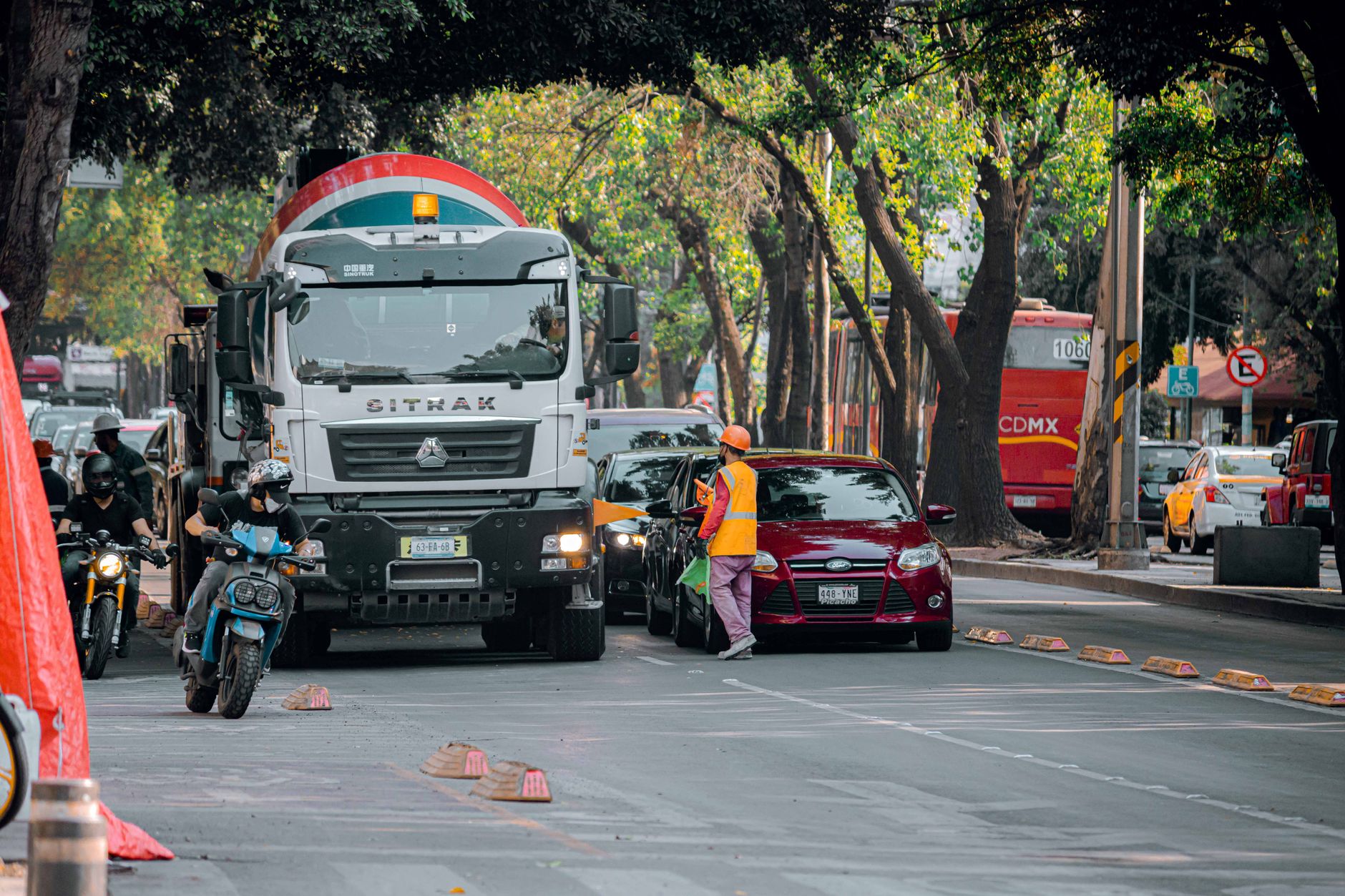
In the transition zone, the road gradually narrows or diverts. Here, channelizing devices such as cones and barriers are used to guide traffic in an orderly manner. You will also find vertical signs indicating detours to the left or right, for both vehicles and pedestrians/cyclists. It is crucial to maintain the marked path and not attempt to leave the delineated lanes.
Work Zone (Affected Area)
This is the sector where the actual work is carried out or materials and equipment are accumulated. You should not drive through here unless otherwise indicated. Fences and vertical signs are used to protect workers and prevent vehicles from entering the hazardous area.
Termination Zone
After the work zone, you will find the end-of-works sign, indicating that the road returns to its normal configuration. At this point, you should gradually resume the permitted speed, provided conditions allow.
Temporary signs: types and meanings
Temporary signs are classified into three main groups, each with a distinct purpose:
- Pre-warning signs (IP): Warn of upcoming work. They generally have a yellow or orange background with black symbols. Examples: "Road Work," "Moving Machinery," "Detour 500 meters."
- Direction signs (ID): Guide drivers on alternative routes. They often have arrows indicating the direction to follow, often with the text "Detour."
- Confirmation signs (IC): Confirm that you are on the correct route or indicate the end of a restriction zone. For example, the "End of Road Work" sign.
All these signs are designed to be clear and legible, but they only work if the driver sees and understands them. Paying attention to vertical signs and pavement markings is vital.
Why should you slow down in delineated construction zones?
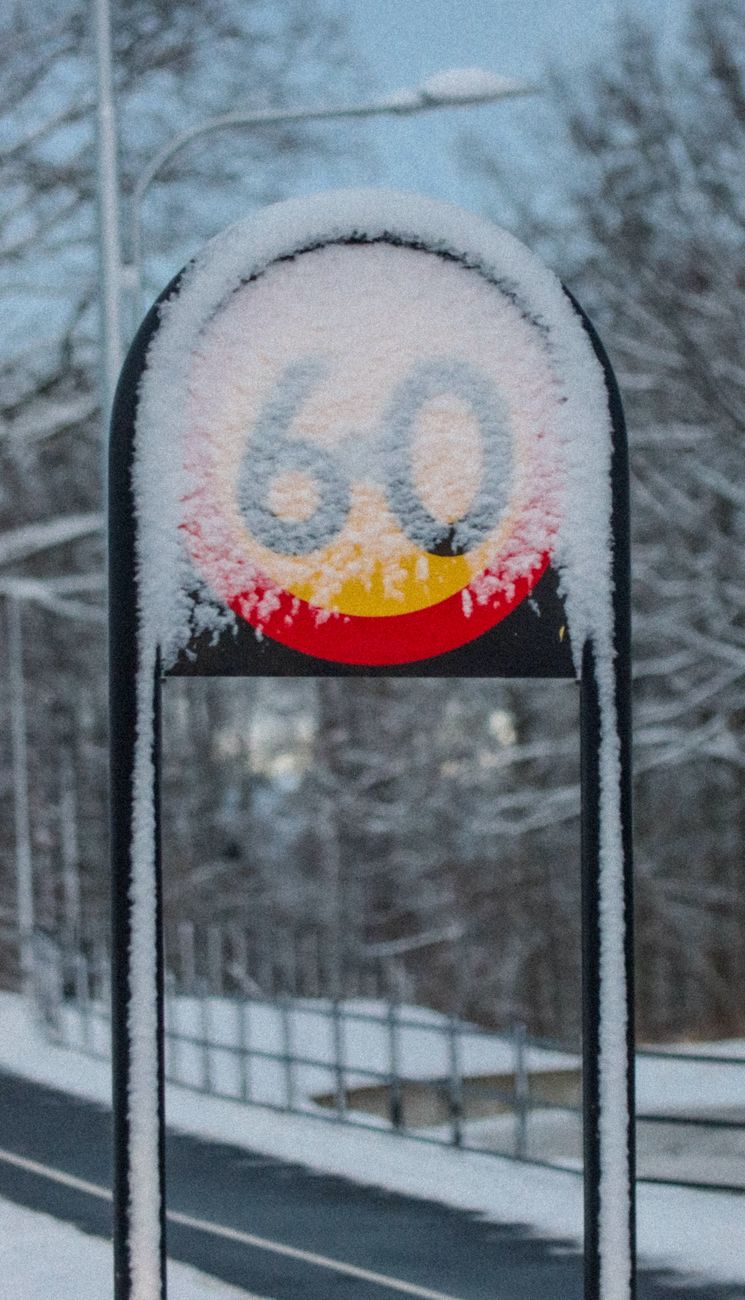
One of the basic principles is to reduce speed progressively. Temporary speed limit signs, which are distinguished by an orange or yellow border, mark the beginning of the work zone. Respecting these limits is crucial because, as mentioned, accidents in these areas are more fatal. The presence of heavy machinery, workers, and changes in the road surface make any speeding drastically reduce your reaction time.
A common mistake is braking suddenly upon seeing the signs. The correct approach is to decelerate in advance and maintain a constant speed through the work zone, avoiding sudden maneuvers that could destabilize your vehicle or surprise those behind you. Additionally, note that in many work zones, mobile speed cameras are installed to monitor speed; ignoring limits can result in fines and, most importantly, endanger lives.
How should you handle a detour or lane reduction?
When you encounter signs indicating a detour or road narrowing, follow these steps:
- Stay calm and use your turn signals in time to indicate your intention.
- Reduce speed gradually before reaching the channelizing area.
- Yield to vehicles already in the lane you are merging into, if necessary.
- Follow arrows and markings on the pavement; they are your primary guide.
- Avoid changing lanes within the work zone, unless strictly necessary.
Remember that signage is designed to maintain orderly traffic flow. If everyone cooperates, traffic flows better and the chances of collision are reduced.
The importance of temporary signage in accident prevention
Temporary signage is not an ornament; it serves a vital safety function. Its correct interpretation significantly reduces the accident rate in work zones. This is because signs warn with sufficient advance notice, allowing drivers to modify their behavior (speed, attention, maneuvers) before entering the transition zone. Without these signs, drivers would face dangerous surprises, such as a closed lane or moving machinery, with no time to react.
Furthermore, signage protects road workers, who depend on drivers respecting the instructions to perform their work without risk. The safety barrier placed in these zones also serves as protection, but its effectiveness depends on drivers not hitting them due to speeding or reckless maneuvers.
Practical defensive driving tips in work zones
Defensive driving is the best strategy to deal with work zones. Here is a list of tips you can apply in practice:
- Increase following distance: leave more space between your vehicle and the one ahead to have braking margin.
- Do not change lanes unnecessarily: in work zones, each lane change is an additional risk.
- Be aware of workers: they can appear suddenly from between machinery or vehicles.
- Respect temporary speed limits: even if they seem too low, they are calculated for the specific conditions of the work zone.
- Do not stop to watch the work: your attention should be on the road, not on the work being done.
- Anticipate the movements of other vehicles: especially construction trucks, which may have blind spots.
Regulatory, warning, and informative signs in work zones
In a work zone, you can find the three types of signs you study for your driving test: regulatory, warning, and informative. Regulatory signs, such as speed limits or no-passing zones, are mandatory. Warning signs, such as "Men Working," alert you to a potential hazard. Informative signs, such as "Detour 2 km," guide you on the route. Knowing how to distinguish them is fundamental to acting correctly, as you learn in the guides for warning signs and informative signs.
You should also pay attention to pavement markings, which in work zones are often temporary and yellow or orange in color. Learn to interpret them with the guide to pavement markings.
How to prepare for a driving test regarding these signs?
If you are studying for your driving test, it is essential to master work zone signs. Many theoretical exams include questions about the meaning of these signs and correct behavior. To do this, we recommend reviewing your country's manuals, but also practicing with sample tests. Remember that work zone signs often have a distinctive color, since they are temporary, and it is crucial to know that you must reduce speed and increase attention.
A good resource is the complete guide on traffic signs and pavement markings, which will give you a solid foundation. Additionally, knowing the differences between regulatory signs, such as prohibition signs, will help you avoid confusion in real situations. Check out this success case on regulatory signs to better understand their application.
Consequences of not respecting signs in work zones
Not respecting signs in work zones can have serious consequences:
- Accidents, which can be fatal for both you and workers.
- Fines and penalties, as many zones have speed cameras or surveillance.
- Loss of points on your license, depending on local legislation.
- Increased insurance as a result of an accident.
Tragically, many drivers consider these signs as mere suggestions. Nothing could be further from the truth: they are safety rules that save lives.
Relevant studies and data on work zone accidents
While specific numerical data varies by region, general evidence indicates that work zone accidents are a serious problem. The presence of multiple hazards (machinery, uneven surfaces, workers) makes the severity of accidents higher compared to other road sections. For this reason, authorities invest in quality signage and awareness campaigns.
As a driver, your responsibility is to be informed and cautious. Safety in these areas depends not only on signage; it requires your active cooperation.
Conclusion
Traffic signs in work zones are an essential component for road safety. Understanding their meaning and acting accordingly is not only a legal obligation but an act of responsibility towards yourself and others. Remember that these signs are designed to protect workers who risk their lives every day to keep our roads in good condition. The next time you approach a work zone, take a deep breath, slow down, and pay attention. Your life and the lives of others will thank you.
To continue learning about traffic signs and improving your driving skills, we invite you to explore the resources available on our blog. Continuous preparation is the key to being an exemplary and safe driver.
References
- Efficient Interpretation of Road Signs in Highway Work Zones, Autoescuela Kany.
- Defensive driving tips in work zones, Industrias Duero.
- Temporary road signage, Official Bulletin of Buenos Aires Documents.