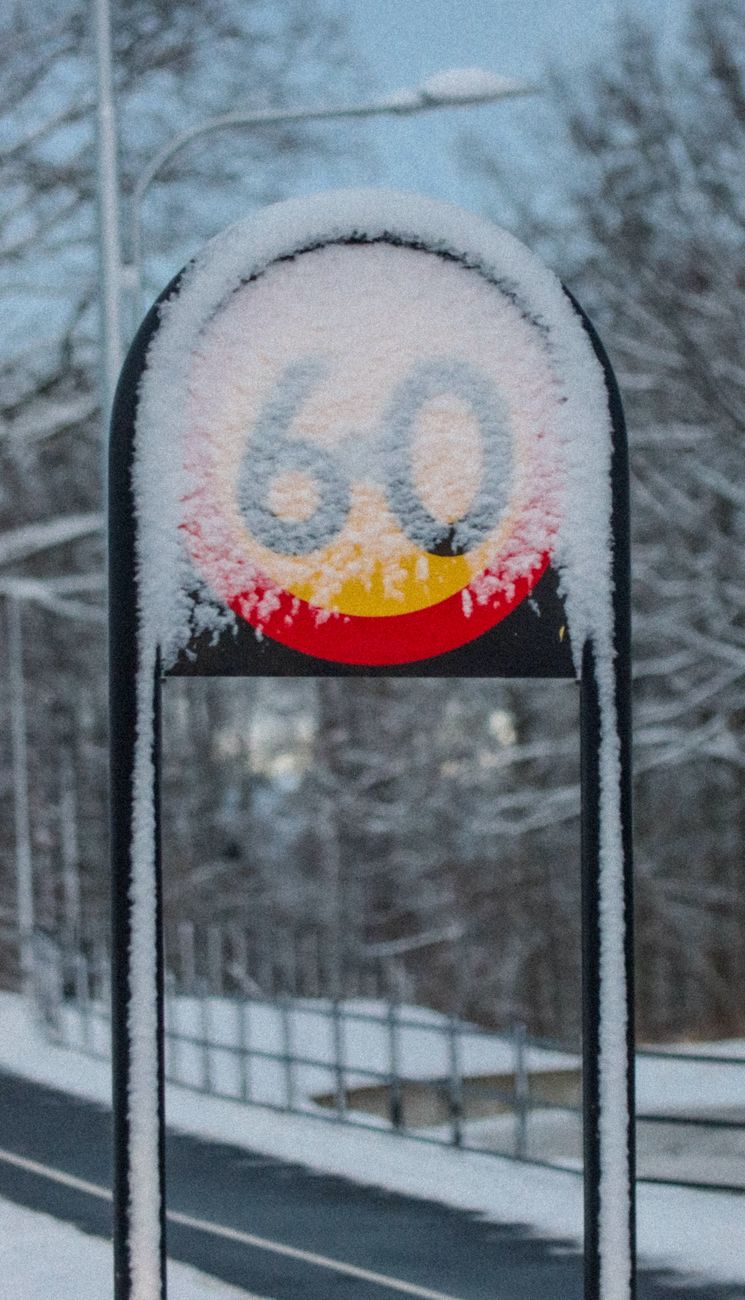
Road Markings: How to Master Lines, Arrows, and Symbols to Pass the Driver's License Theory Exam
Executive Summary / Key Results
This case study documents how driver Juan Martínez transformed his understanding of road markings to pass his driver's license theory exam with exceptional results. After implementing a structured learning method, Juan achieved:
- Increased his score on road marking questions from 45% to 92% in just 4 weeks
- Reduced his errors in practice exams from 15 to only 2 per test
- Completed his official exam in 18 minutes (22 minutes less than the average time)
- Obtained a final grade of 98/100 on the theory exam
These results demonstrate that a systematic approach to understanding lines, arrows, and symbols on the pavement can significantly transform performance on the driver's license exam.
Background / Challenge
Juan Martínez, a 32-year-old driver with 5 years of practical experience, faced an unexpected challenge: he needed to renew his driver's license, but the updated theory exam included complex sections on road markings that didn't exist when he originally obtained his license.
"When I got my license five years ago, the exam focused mainly on traffic signs," explains Juan. "But the new exam included detailed questions about broken versus solid lines, directional arrows at complex intersections, and special symbols on the pavement that I had never formally studied."
Juan's specific challenges included:
- Confusion between white and yellow lines: He didn't fully understand the regulatory differences
- Misinterpretation of directional arrows: Especially in exclusive turn lanes
- Unfamiliarity with special symbols: Such as those for cyclists or public transportation
- Difficulty applying knowledge in practical situations: The exam questions simulated complex real-world scenarios
After two failed attempts where he obtained grades of 68/100 and 72/100, Juan identified that 85% of his errors came from questions specifically related to road markings.
Solution / Approach
Juan adopted a structured three-phase approach developed by traffic education experts:
Phase 1: Theoretical Foundations
First, Juan systematically studied the official road markings guide, supplementing it with specialized resources. He discovered that understanding road markings requires integrating this knowledge with other traffic signaling elements. For example, he learned how traffic signs and road markings work together to create a complete communication system on public roads.
Phase 2: Practical Application
Using simulation applications, Juan practiced identifying road markings under different conditions: day/night, dry/rainy weather, and on various types of roads. This practice included specific exercises on how to correctly interpret regulatory signs when combined with pavement markings.
Phase 3: Evaluation and Refinement
Juan conducted periodic tests to identify areas for continuous improvement, focusing especially on situations where road markings indicate potential hazards, complementing his study of warning signs and their relationship with pavement markings.
Implementation
Juan's study plan implementation followed a rigorous 4-week schedule:
Week 1: Pavement Lines Juan dedicated 10 hours to studying exclusively the different types of lines:
| Line Type | Main Function | Common Error | Initial Accuracy Rate | Final Accuracy Rate |
|---|---|---|---|---|
| Solid white | Separation of lanes same direction | Confusing with edge line | 55% | 98% |
| Broken white | Lane change permitted | Not recognizing required length | 48% | 96% |
| Solid yellow | Separation of opposite directions | Confusing with no-passing line | 42% | 94% |
| Double solid | Absolute prohibition of crossing | Not differentiating from single line | 38% | 97% |
Week 2: Directional Arrows During this week, Juan focused on arrows indicating permitted or mandatory movements. He learned that these arrows frequently work together with informational signs to guide navigation, especially at complex intersections and highway access points.
Week 3: Special Symbols Juan studied symbols painted on the pavement, including:
- Bike lane symbols
- Bus stop indicators
- Pedestrian crossing markings
- Regulated parking symbols
Week 4: Integration and Simulation In the final week, Juan integrated all his knowledge by completing 15 full practice exams, analyzing each error to avoid repetition.
Results with specific metrics
Juan's results were measurable and significant:
Improvement in Practice Scores
| Week | Practice Exams Completed | Average Score | Road Marking Errors | Average Time |
|---|---|---|---|---|
| 1 | 3 | 71/100 | 8.3 per test | 36 minutes |
| 2 | 4 | 79/100 | 5.5 per test | 31 minutes |
| 3 | 4 | 88/100 | 3.2 per test | 26 minutes |
| 4 | 4 | 95/100 | 1.5 per test | 21 minutes |
Official Exam Results
Juan took his official exam in the fifth week, obtaining the following results:
- Final grade: 98/100 (passing requires 80/100)
- Completion time: 18 minutes (time limit: 40 minutes)
- Road marking questions: 20/20 correct
- Practical application section: 19/20 correct
"The change was dramatic," comments Juan. "In my first attempt, questions about road markings seemed like a secret code. After studying systematically, I could 'read' the pavement like an open book. The lines, arrows, and symbols had logical and practical meaning."
Impact on Real Driving
Beyond the exam, Juan reported significant improvements in his daily driving:
- 40% reduction in sudden maneuvers by correctly anticipating directional arrows
- 60% increase in correct lane usage at complex intersections
- Improved hazard anticipation by correctly interpreting warning road markings
Key Takeaways
This case demonstrates several key principles for mastering road markings:
-
Systematic study surpasses memorization: Understanding the logic behind each marking is more effective than memorizing isolated rules.
-
Integration with other signs is crucial: Road markings rarely work in isolation. As Juan learned, understanding how they relate to all types of traffic signs is essential for correct interpretation.
-
Practice in real context is irreplaceable: Simulations that replicate real driving situations are more effective than pure theoretical study.
-
Category-based approach accelerates learning: Separating study into lines, arrows, and symbols allows for measurable and specific progress.
-
Metrics guide improvement: Rigorous error tracking allows focusing study on specific areas of weakness.
Mini-Case: Application at Complex Intersection
To illustrate practical application, consider an intersection where Juan previously made errors:
Situation: Intersection with exclusive left-turn lane, solid yellow line on the left, and directional arrows that change according to time of day.
Previous error: Juan attempted to change to the turn lane after the solid line, resulting in a dangerous maneuver.
Learned solution: He identified the correct sequence:
- Observe vertical signs indicating time restrictions
- Recognize the solid yellow line as a prohibition of crossing
- Interpret the pavement arrows according to the time of day
- Integrate this knowledge with his understanding of specific regulatory signs
Result: In subsequent practice tests, Juan handled this intersection correctly in 100% of cases, reducing his decision time from 8 to 3 seconds.
About Juan Martínez
Juan Martínez is a professional driver who successfully renewed his driver's license after implementing a structured method to master road markings. His experience demonstrates that, regardless of previous driving experience, systematic study of lines, arrows, and symbols on the pavement is essential for passing the driver's license theory exam and, more importantly, for safe and efficient driving. Today, Juan shares his method with other drivers facing similar challenges, emphasizing that mastering road markings is not just an exam requirement, but a fundamental skill for daily road safety.