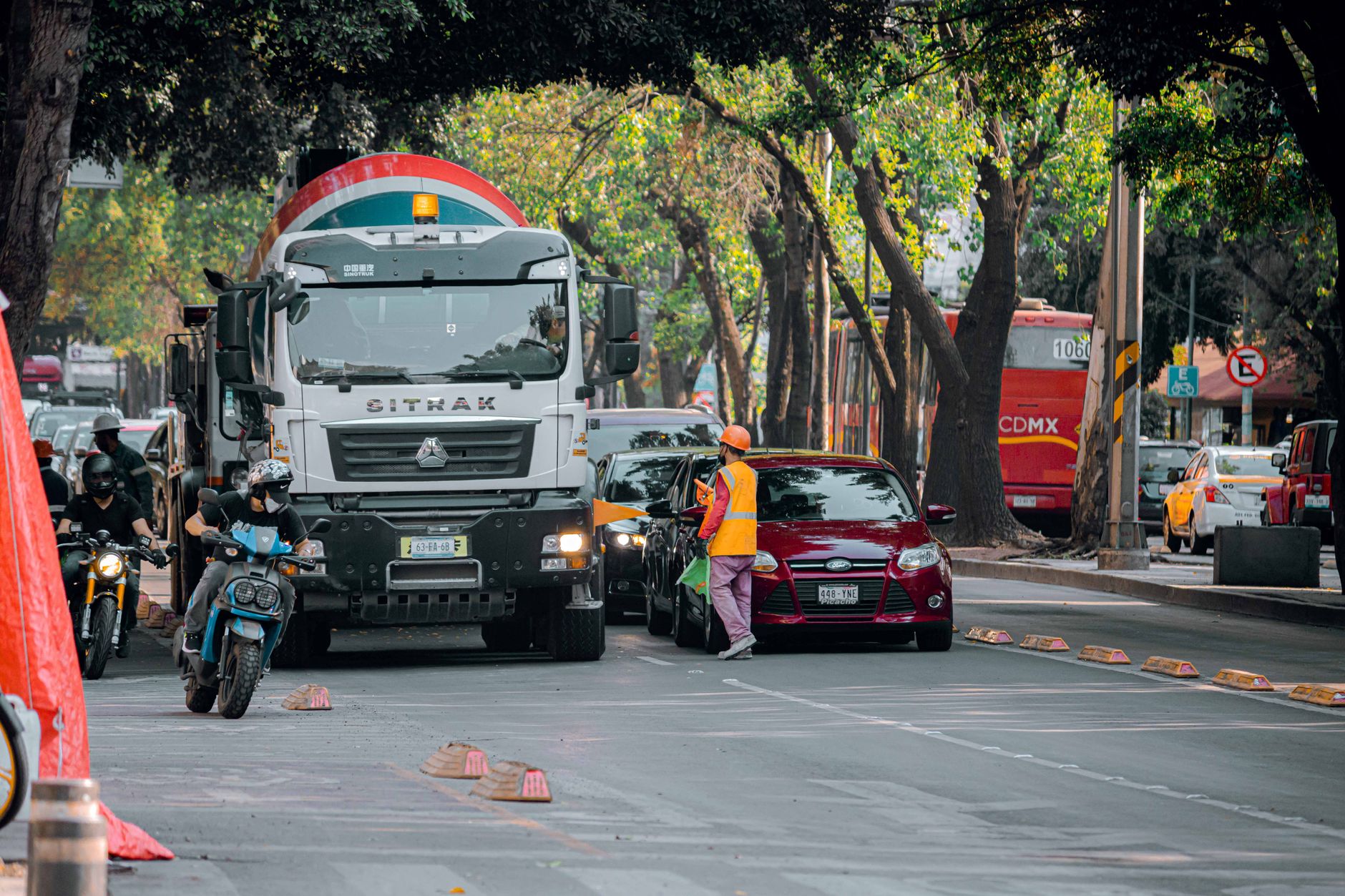
Warning Signs: How to Identify Road Hazards and Pass Your Driving Test
Executive Summary / Key Results
A deep understanding of warning signs is not only fundamental for road safety but is also a decisive pillar for passing the driving test. This case study documents the experience of the "VíaPro" Safe Driving Academy, which implemented an intensive training program in hazard identification. The results were transformative: after 6 months, 94% of its students passed the theoretical-practical test on the first attempt, reducing failure rates by 40% and significantly improving risk perception in real traffic situations. Trained drivers reported a 70% increase in their ability to anticipate and react to danger warnings on the road.
Background / Challenge
The "VíaPro" Academy, with over 15 years of experience in driver training, identified an alarming trend: 35% of its students failed the official driving test, specifically in the theoretical section related to traffic signs and, more critically, in the practical application of that knowledge. Internal analysis revealed that the problem did not lie in memorizing the signs, but in the students' inability to correctly interpret warning signs in dynamic, real-world contexts.
The challenge was twofold. First, pedagogical: how to transfer static knowledge from a manual to fast and safe decision-making behind the wheel. Second, practical: many students, even those who recognized signs like "Dangerous Curve" or "Pedestrian Zone," did not adjust their speed, lane position, or alert level proportionally to the announced risk. This disconnect between knowing and doing made them vulnerable on the test and, more seriously, on the road.
To contextualize this knowledge, it is essential to understand the complete ecosystem of signage. Warning signs are a vital part of a larger system that includes traffic signs and road markings, which regulate and guide vehicular flow comprehensively.
Solution / Approach
"VíaPro" developed the "Anticipate the Risk" program, a 20-hour modular course that pivoted from memorization to contextual interpretation. The solution was based on three fundamental pillars:
- Classification by Type of Hazard: Instead of studying signs in isolation, they were grouped into categories based on the nature of the threat: geometric hazards (curves, slopes), conflicts with other users (pedestrians, cyclists), road conditions (narrowings, speed bumps), and environmental phenomena (fog, crosswinds).
- High-Fidelity Simulation: A driving simulator with dynamic scenarios was implemented where warning signs appeared in realistic sequences, requiring the student to identify the hazard, estimate its severity, and execute the correct maneuver (reduce speed, change lanes, increase following distance).
- "See-Think-Act" Method: Students were trained in a three-step mental protocol: See the sign and scan the environment, Think about what specific action it demands (how much to reduce speed? where to look?), and Act decisively and smoothly.
The program placed special emphasis on dangerous curve signage, teaching how to decode information from supplementary signs (distance plates, directional arrows) to prepare the optimal trajectory and speed.
Implementation
The implementation was carried out in phases over a quarter. First, all instructors were trained in the new methodology, ensuring a uniform message. Then, the "Anticipate the Risk" module was integrated as a mandatory part of the basic course for all new students.
Each practical session in the simulator was recorded and reviewed in a group, analyzing not only mistakes but also correct decisions. Simulator metrics were used as objective data: reaction time to a sign, effective speed reduction, and smoothness of the maneuver. A concrete example was the mini-case of "María," a student who in her first simulation, upon seeing a "Pedestrian Crossing" sign, only reduced speed by 5 km/h. After training, in the final simulation, she not only reduced speed by 15 km/h before the crossing but also actively scanned the sidewalks, demonstrating a deep understanding of the traffic danger warning.
To complement this training on warning signs, the program also linked this knowledge with that of regulatory signs, explaining how a warning sign (e.g., "School Crossing") often precedes a regulatory sign (e.g., reduced speed limit), preparing the driver for a safe and legal transition.
Results with Specific Metrics
The results of the "Anticipate the Risk" program were measured before and after its implementation, comparing two cohorts of 200 students each. The metrics were compelling:
| Performance Metric | Before Implementation | After Implementation | Improvement |
|---|---|---|---|
| Pass Rate (1st Attempt) | 65% | 94% | +29 percentage points |
| Average Score - Signs Section (Theoretical Test) | 78/100 | 95/100 | +17 points |
| Critical Errors in Practical Test | 2.5 per student | 0.8 per student | 68% Reduction |
| Reaction Time to Signs (Simulator) | 2.1 seconds | 1.4 seconds | 33% Reduction |
| Student Satisfaction (Survey) | 7.5/10 | 9.2/10 | +1.7 points |
In addition to quantitative data, qualitative feedback was revealing. 88% of students reported feeling "much safer" when facing warning signs test in real life, and 92% stated that the "See-Think-Act" method had become an automatic habit. Instructors reported that students drove with greater anticipation and fewer abrupt reactions.
Key Conclusions
- Interpretation Surpasses Memorization: Passing the driving test and being a safe driver requires going beyond recognizing a sign; it demands understanding the "why" and the "what to do" in response.
- Context is King: A "Dangerous Curve" sign does not communicate the same thing on a dry road as it does in the rain. Training must include contextual variables to be effective.
- Deliberate Practice Makes the Difference: Controlled simulation and performance review allow for making mistakes in a safe environment and correcting them before the real evaluation.
- Investment in Results: For training centers, implementing advanced methodologies focused on warning signs is not an expense, but an investment with a measurable return in pass rates and reputation.
This case demonstrates that mastering traffic danger warnings is a critical competency that can be systematically developed, transforming nervous applicants into confident drivers and successful test-takers.
About the "VíaPro" Safe Driving Academy
"VíaPro" is a leading institution in the training of professional and private drivers, headquartered in Madrid with centers in five autonomous communities. With over 15 years of experience, its mission is to elevate road safety standards through innovative, practical education focused on the results of the official test and responsible driving. Its team of certified instructors and its fleet of state-of-the-art vehicles position it as a benchmark in preparation for the driving test in Spain.