How to Perform a U-Turn Correctly: Techniques for Different Types of Roads
The U-turn is one of the most challenging and potentially dangerous maneuvers drivers face on public roads. Although seemingly simple, performing it incorrectly can result in serious accidents, significant fines, and the suspension of a driver's license. According to statistics from the General Directorate of Traffic, approximately 15% of accidents at urban intersections involve poorly executed U-turns, with consequences ranging from property damage to serious personal injuries.
This article constitutes the definitive guide on how to perform a U-turn correctly, adapting techniques to different types of roads and traffic conditions. As responsible drivers, mastering this maneuver is not only a requirement to pass the driving test but an essential skill for daily road safety. Throughout this guide, we will explore everything from legal fundamentals to advanced techniques, providing insights from road safety training experts and updated industry statistics.
Legal and Regulatory Fundamentals of the U-Turn
Before addressing practical techniques, it is crucial to understand the legal framework regulating U-turns. The General Traffic Regulations establish specific conditions for this maneuver, whose violation can entail fines of up to 200 euros and the loss of 4 points on the driver's license.
U-turns are prohibited in the following situations:
- On highways and freeways
- In tunnels and underpasses
- On curves and changes in gradient with reduced visibility
- At intersections regulated by traffic officers or traffic lights (unless expressly signaled)
- On roads with specific prohibition signs
- When obstructing the circulation of other vehicles
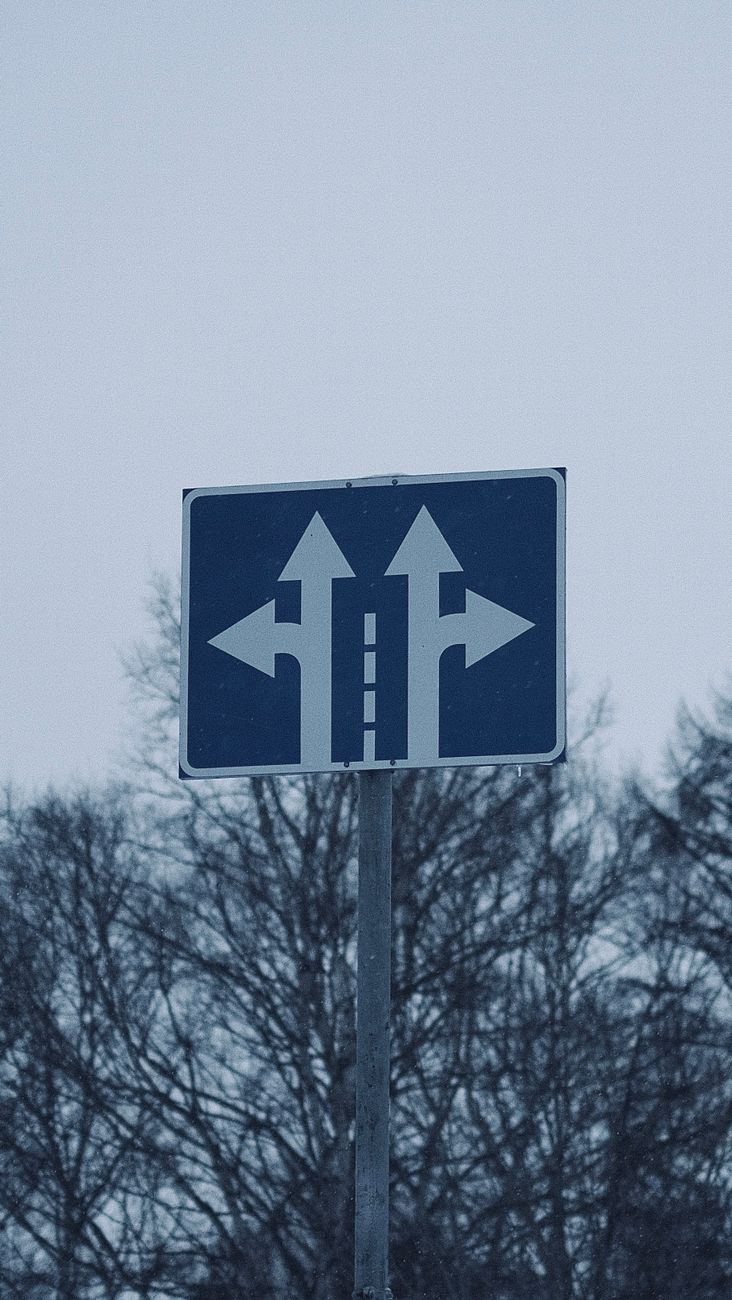
Vertical signage is decisive. The R-300 sign (prohibited to change direction of travel) clearly indicates where this maneuver cannot be performed. Conversely, the S-30 sign specifically authorizes the U-turn at that point. As part of Essential Techniques and Maneuvers: A Complete Guide, understanding these signs is fundamental for any driver.
Preparation and Environment Assessment
Proper preparation represents 70% of the success of a safe U-turn. Before initiating the maneuver, the driver must perform a complete assessment of the environment that includes:
Visibility assessment: A minimum of 100 meters of visibility in both directions is required on urban roads, and 200 meters on conventional roads. In conditions of rain, fog, or at night, these distances must be increased considerably.
Analysis of available space: The vehicle needs space approximately 1.5 times its length to complete the maneuver without risks. For a standard 4.5-meter car, this means needing at least 6.75 meters of roadway width.
Verification of obstacles: It is essential to identify curbs, islands, vertical signs, lighting poles, and any element that could interfere with the vehicle's trajectory.
Traffic assessment: One must analyze not only oncoming traffic but also traffic moving in the same direction, pedestrians, cyclists, and any vulnerable road user.
The following table summarizes the minimum space requirements according to vehicle type:
| Vehicle Type | Approximate Length | Minimum Space Required |
|---|---|---|
| Standard passenger car | 4.5 meters | 6.75 meters |
| Mid-size SUV | 4.8 meters | 7.20 meters |
| Small van | 5.2 meters | 7.80 meters |
| Light truck | 6.0 meters | 9.00 meters |
Basic U-Turn Technique on Urban Roads
On urban roads, where traffic is denser but speeds are lower, the U-turn technique requires precision and total vehicle control. The process is divided into five clearly defined phases:
Phase 1: Signaling and positioning Activate the left turn signal at least 5 seconds in advance. Gradually reduce speed and position the vehicle as close as possible to the left curb, maintaining a safety distance of approximately 50 centimeters.
Phase 2: Complete stop and verification Stop the vehicle completely. Perform a complete visual sweep: rearview mirrors, left blind spot, right blind spot, and forward vision. Especially verify the presence of pedestrians, cyclists, and motorcyclists who may be in blind spots.
Phase 3: Maneuver initiation Turn the steering wheel completely to the left while keeping your foot on the brake. Begin movement slowly, controlling speed with the clutch in manual vehicles or with gentle pressure on the accelerator in automatics.
Phase 4: Maximum turning point When the vehicle reaches approximately 45 degrees of turn, it will begin to encroach on the opposite lane. At this critical point, you must maintain maximum attention to approaching traffic. If any vehicle appears, stop immediately keeping the wheels straight (not turned) to avoid being pushed into traffic in case of a collision.
Phase 5: Completion and re-entry Once past the midpoint, begin to straighten the steering wheel progressively. Accelerate gently to re-enter the traffic flow in the correct lane, keeping the left turn signal activated until completing the maneuver.
This basic technique shares fundamental principles with other complex maneuvers as detailed in How to Perform a Perfect Parallel Parking: Step-by-Step Guide, where precision and spatial control are equally crucial.
Advanced Techniques for Different Types of Roads
U-Turns on Conventional Roads
On conventional single-lane roads per direction, U-turns present significantly greater risks due to higher travel speeds. The technique requires specific adaptations:
- Extended safety distance: Need at least 300 meters of visibility in both directions
- Advanced signaling: Activate the turn signal 10-15 seconds in advance
- Progressive braking: Reduce speed gradually to not surprise following vehicles
- Extreme positioning: Position yourself completely on the shoulder if possible, provided it is paved and in good condition
- Quick but controlled maneuver: Once the absence of traffic is verified, execute the maneuver decisively but without abruptness
U-Turns on Multi-Lane Avenues
On avenues with two or more lanes per direction, the technique varies substantially:
- Selection of the appropriate lane: Always perform the maneuver from the left lane
- Coordination with other users: Be especially attentive to vehicles that may be changing lanes simultaneously
- Consideration of special lanes: Respect bus lanes, bicycle lanes, or left-turn lanes
- Use of wide intersections: Prefer intersections with more space for the maneuver
U-Turns in Residential Areas and Narrow Streets
In residential streets with limited widths, it may be necessary to use "U-turn with reverse" or "three-point turn" techniques. This maneuver, which shares principles with Straight Line and Curve Reversing Maneuver: Techniques and Common Errors, is executed as follows:
- Turn completely to the left until the vehicle approaches the opposite curb
- Stop, shift to reverse, and turn completely to the right
- Reverse until you have enough space to complete the turn
- Shift to first gear and finish the maneuver by turning left
Risk Factors and How to Mitigate Them
U-turns present specific risks that every driver must know and mitigate:
Risk of head-on collision: It is the most serious accident associated with this maneuver. Mitigation: Exhaustive verification of traffic in both directions, correct estimation of the approach speed of other vehicles.
Risk of pedestrian collision: Pedestrians and cyclists can appear suddenly. Mitigation: Complete visual sweep including blind spots, special attention in pedestrian areas.
Risk of side collision: Vehicles changing lanes simultaneously. Mitigation: Constant mirror verification, correct use of turn signals, as detailed in Safe Lane Change Techniques: Signaling and Blind Spot Verification.
Risk of loss of control: Especially on slippery surfaces. Mitigation: Additional speed reduction, smooth and progressive steering wheel movements.
Legal risk: Fines and point loss. Mitigation: Exhaustive knowledge of regulations, absolute respect for signage.
Adverse Conditions and Necessary Adaptations
U-Turns in Rain
Rain reduces traction by up to 40% and decreases visibility. Necessary adaptations:
- Increase the minimum visibility distance by 50%
- Reduce turning speed by 30%
- Avoid abrupt steering wheel movements
- Maintain greater distance from curbs (accumulated water)
- Especially verify tire condition before the maneuver
U-Turns at Night
Night driving reduces depth and distance perception. Specific recommendations:
- Always use low beam headlights (never high beams during the maneuver)
- Increase observation times
- Pay special attention to users without adequate lighting (pedestrians, cyclists)
- Consider that other drivers may have difficulty estimating your speed
U-Turns in Dense Traffic
During rush hour, U-turns require patience and precision:
- Wait for wider gaps in traffic
- Clearly communicate intention through turn signals
- Be prepared to abort the maneuver if conditions change
- Remain calm in the face of possible impatience from other drivers
Common Errors and How to Avoid Them
Based on analysis from traffic examiners and accident data, these are the most frequent errors:
Error 1: Underestimating the necessary space Many drivers initiate the maneuver without verifying they have sufficient space, resulting in incomplete turns that block traffic. Solution: Visually measure the available space comparing it to the vehicle's length.
Error 2: Not checking blind spots Cyclists, motorcyclists, and pedestrians often position themselves in blind spots during turns. Solution: Perform the "Dutch reach" - turning your head to visually verify blind spots before and during the maneuver.
Error 3: Inadequate speed Too fast (loss of control) or too slow (prolonged obstruction). Solution: Maintain a constant and very low speed (5-10 km/h maximum).
Error 4: Incorrect wheel positioning Keeping the wheels turned while waiting to complete the turn. In case of a rear-end collision, the vehicle would be pushed into oncoming traffic. Solution: Keep the wheels straight until the moment of initiating movement.
Error 5: Insufficient or late signaling Other users cannot anticipate the maneuver. Solution: Activate the turn signal well in advance (minimum 5 seconds in the city, 10 on the road).
Practical Case: Real Situation Analysis
Context: Urban street 7 meters wide, moderate traffic, sunny day. Vehicle: Passenger car 4.3 meters long. Objective: U-turn to change direction of travel.
Correct sequence:
- Driver activates left turn signal 50 meters from the chosen point
- Progressively reduces speed
- Positions 40 cm from the left curb
- Stops the vehicle completely
- Performs complete verification: mirrors, blind spots, front and rear traffic
- Upon confirming absence of traffic within 100 meters, initiates turn with steering wheel completely to the left
- Maintains minimum constant speed
- Upon reaching 90 degrees, begins to straighten progressively
- Completes the maneuver and re-enters the right lane
- Deactivates turn signal and adjusts speed to traffic flow
Total maneuver time: 12-15 seconds Space used: 6.5 meters of roadway width Safety distance maintained: 50 cm from curbs at all times
This case demonstrates the practical application of all described techniques, highlighting the importance of systematic methodology.
Vehicle Equipment and Maintenance
Performing safe U-turns requires the vehicle to be in optimal condition:
Tires: Must have a minimum tread depth of 3 mm (legally 1.6 mm, but insufficient for optimal safety). Correct pressure is essential to maintain the turning radius intended by the manufacturer.
Steering: Excessive play in the steering can cause dangerous oversteering or understeering. Periodic inspection of the steering system is fundamental.
Brakes: Must respond in a balanced and progressive manner. Braking imbalances can cause skids during the turn.
Suspension: Shock absorbers in poor condition affect stability during direction changes.
Lighting: Turn signals functioning correctly, position and low beam lights for visibility.
Training and Recommended Practice
Mastering the U-turn requires structured practice. We recommend:
Phase 1: Controlled environment Practice in empty parking lots or road training areas, using cones to mark the limits of available space.
Phase 2: Low-intensity streets Practice on residential streets with little traffic, preferably during off-peak hours.
Phase 3: Progressively more complex conditions Gradually incorporate different types of roads, traffic conditions, and weather situations.
Recommended frequency: Practice this specific maneuver at least once per month to maintain competence.
Statistics and Relevant Data
According to the latest report from the General Directorate of Traffic (2023):
- 68% of incorrect U-turns occur due to lack of blind spot verification
- The months with the highest incidence of U-turn accidents are July and August (vacation traffic)
- 42% of novice drivers fail the practical test due to errors in U-turns
- Fines for incorrect U-turns have increased by 15% in the last 3 years
- The average cost of damages in accidents from poorly executed U-turns is 3,500 euros
Conclusion: The Importance of the Correct U-Turn
Performing a U-turn correctly transcends mere technical skill; it represents a commitment to road safety, respect for regulations, and consideration for all road users. This maneuver, seemingly simple, concentrates multiple competencies that define the expert driver: environmental assessment, precise vehicle control, risk anticipation, and adaptation to variable conditions.
Drivers who master the U-turn demonstrate not only having met the requirements of the driving test but having internalized the fundamental principles of responsible driving. Each U-turn executed with precision contributes to reducing accident statistics, improving traffic flow, and creating a safer road environment for everyone.
Let us remember that, ultimately, the difference between a correct U-turn and a dangerous one is not in the complexity of the technique, but in the driver's discipline to systematically apply the steps described in this guide. Safe driving is a conscious choice that manifests in every maneuver, especially in those that, like the U-turn, test our skill and responsibility behind the wheel.