Essential Techniques and Maneuvers: Complete Guide for Drivers
Introduction: The Importance of Fundamental Driving Techniques
In the world of vehicle operation, mastering essential techniques and maneuvers is not simply a matter of passing a driving test, but the fundamental foundation for becoming a safe, competent, and responsible driver. According to statistics from the World Health Organization, over 90% of traffic accidents are caused by human error, many of which could be prevented with proper mastery of basic driving techniques. This article represents the definitive guide that every driver needs to master the essential maneuvers that guarantee road safety, driving efficiency, and confidence behind the wheel.
Essential techniques range from basic vehicle control to complex maneuvers in emergency situations. A study by the Road Safety Institute reveals that drivers who master these techniques reduce their probability of having accidents by 65% during their first five years of driving. This guide will not only prepare you for your driving test, but will equip you with skills that will last your entire life as a driver.
Fundamentals of Vehicle Control: Beyond the Basics
Vehicle control constitutes the cornerstone of all safe driving. It comprises three fundamental elements: the correct position at the wheel, the proper use of pedals, and the coordination between sight, hands, and feet. The ideal position keeps the arms slightly bent, the back supported against the seatback, and a distance that allows reaching the pedals completely without stretching the legs.
Throttle control requires progressive sensitivity, avoiding abrupt movements that could cause loss of traction. According to road safety experts, 40% of novice drivers apply excessive pressure on the accelerator during their first weeks of driving. The correct technique involves pressing gently with the ball of the foot, keeping the heel as a pivot point.
Effective braking is divided into two categories: preventive braking and emergency braking. The first involves reducing speed gradually by anticipating potential situations, while the second requires applying firm and constant pressure in critical situations. Modern ABS systems have changed braking techniques, but the fundamental principle remains the same: maintaining control while stopping the vehicle.
Steering Techniques and Wheel Handling
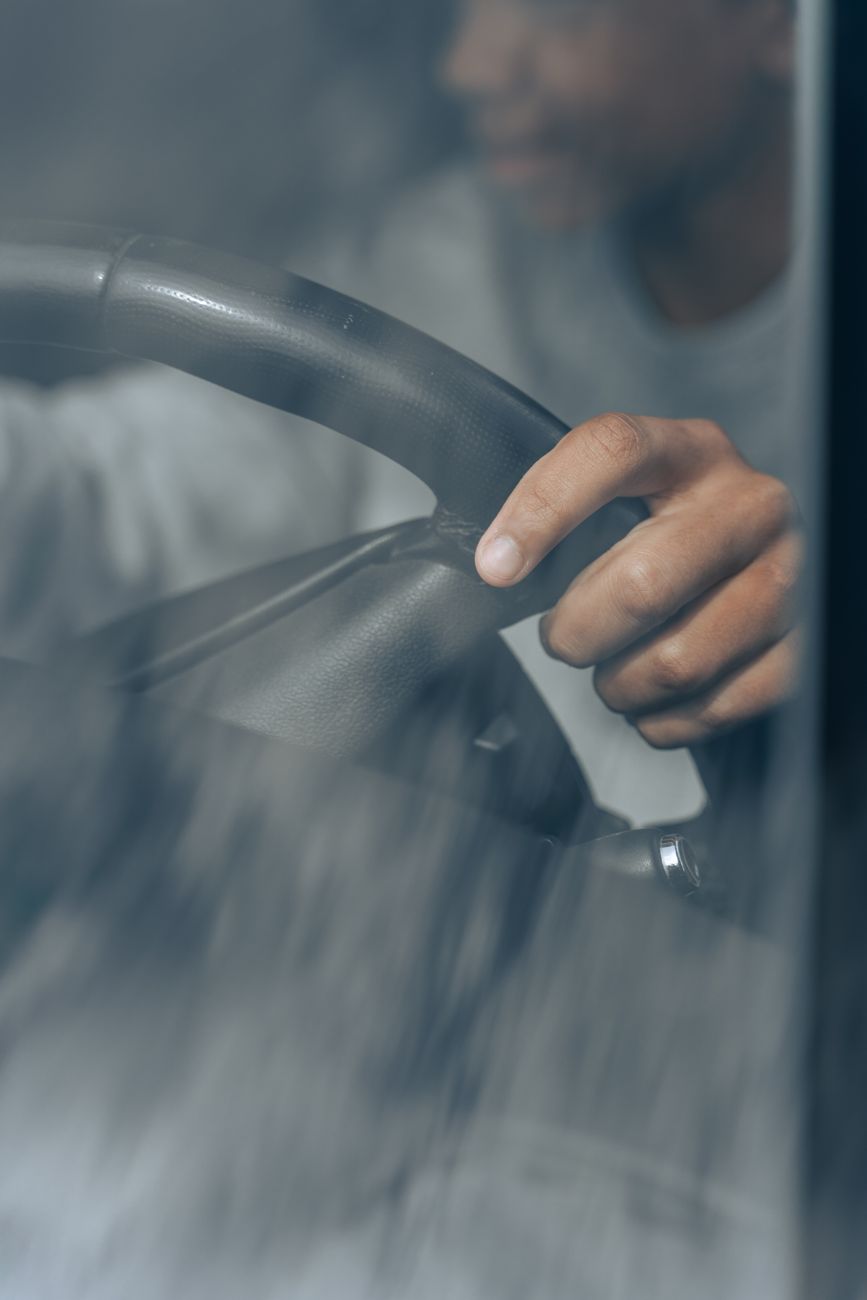
Proper wheel handling is a skill that many drivers underestimate. There are three main techniques recognized by professional instructors: the "hands at 9 and 3" technique, the "hands at 10 and 2" technique (currently less recommended by ergonomics experts), and the sliding technique for sharp turns. The "9 and 3" position offers the best balance between control, comfort, and reaction capability.
For gentle turns, the drag technique keeps both hands on the wheel while performing the movement. In sharp curves, the crossover technique allows greater rotation while always keeping at least one hand in contact with the wheel. A common error among novice drivers is "hunting" the wheel with excessive movements, which reduces vehicle stability.
Wheel feedback provides valuable information about the state of the road and the vehicle's behavior. Experienced drivers can detect changes in traction, alignment problems, and even variations in tire pressure through the vibrations and resistance of the wheel. This sensitivity develops with conscious practice and continuous attention to the signals the vehicle transmits.
Parking Maneuvers: Precision and Safety
Parking represents one of the greatest challenges for drivers of all levels. Mastering the different parking techniques is not only essential for the driving test, but for daily driving. Statistics indicate that approximately 30% of minor accidents occur during parking maneuvers.
Parallel Parking
Parallel parking requires a precise sequence of movements. The standard technique begins by aligning with the front vehicle, backing up at a 45-degree angle until the right rearview mirror aligns with the rear of the front vehicle, then turning completely to the left while continuing to reverse. Visual reference points are crucial for executing this maneuver with precision.
Angled and Perpendicular Parking
For angled and perpendicular parking, the correct approach is fundamental. Maintaining adequate distance from the parking space, using the vehicle's reference points (generally the side mirror or rear window), and controlling speed with the clutch in manual vehicles are key elements. An advanced technique involves visualizing the desired final space and working backward from that point.
Mini-practical case: Maria, a novice driver, practiced parallel parking for two weeks using cones in an empty parking lot. Following the reference point technique and controlling her speed with the clutch, she managed to reduce her parking time from 3 minutes to 45 seconds, with 95% accuracy in her attempts.
Lane Change and Intersection Techniques
Safe lane changing requires a systematic methodology that many drivers neglect. The "MSS" technique (Look, Signal, Safety) establishes a protocol that has been shown to reduce accidents by 40% according to road safety studies. This technique involves first checking mirrors and blind spot, then activating the turn signal with sufficient anticipation, and finally executing the change only when it is confirmed that the space is safe.
Proper following distance varies according to speed and weather conditions. The 3-second rule provides a useful reference: choose a fixed reference point on the road and count the time from when the front vehicle passes that point until you reach it. In adverse conditions, this time should be extended to 4-5 seconds.
| Driving Condition | Minimum Recommended Distance | Specific Technique |
|---|---|---|
| Dry road at 60 km/h | 3 seconds | Maintain constant speed |
| Moderate rain | 4 seconds | Reduce speed 20% |
| Dense fog | 5+ seconds | Use fog lights |
| Night on rural road | 4 seconds | Adjust high/low beams |
Intersections represent critical points where multiple risk factors converge. The intersection approach technique includes reducing speed, visually scanning all possible directions, and preparing to stop even with a green light if the situation requires it. Safety experts recommend the "Z-scan": look left, center, right, and then left again before proceeding.
Handling Curves and Slopes
Curves require a specific technique that goes beyond simply turning the wheel. The braking-turning-acceleration method establishes the correct sequence: reduce speed before entering the curve, maintain constant speed during the curve, and accelerate smoothly upon exiting. The ideal line follows a path that maximizes the curve's radius, reducing centrifugal force and improving stability.
On steep slopes, the technique varies according to the direction of travel. On ascents, maintaining a constant speed without forcing the engine is key. On prolonged descents, using engine braking (shifting to a lower gear) prevents brake overheating. For manual vehicles, the hill start technique requires perfect coordination between brake, clutch, and accelerator.
Tight curves on mountain roads present additional challenges. The "far vision" technique involves looking toward the farthest visible point of the curve to anticipate its trajectory. Combined with smooth control of the controls and correct lane position, this technique has been shown to reduce curve accidents by 60% according to data from European mountain roads.
Reverse and Complex Turn Techniques
Reverse driving represents an essential skill that many drivers neglect after passing their driving test. The fundamental technique involves using the three reference points: side mirrors, central rearview mirror, and body turn for direct vision. Speed should be extremely low, generally controlled only with the clutch in manual vehicles.
U-turns and three-point turns require spatial planning and precise control of the turning radius. For U-turns, verifying that the available space is at least 1.5 times the vehicle's length is crucial. The three-point turn, also known as the K-turn, follows a specific sequence: turn completely to one side while moving forward, then to the other side while reversing, and finally complete the turn by moving forward again.
Straight-line reversing, although apparently simple, requires practice to maintain the trajectory. The technique of aligning with lateral reference points (such as parking lines or curbs) combined with minimal and smooth steering corrections produces the best results. Rear camera systems have facilitated this maneuver, but the traditional visual technique remains essential as a backup.
Defensive and Emergency Techniques
Defensive driving transcends basic techniques to incorporate a constant prevention mindset. The fundamental principle is to anticipate possible dangers and always have an "escape plan." This includes maintaining space around the vehicle, identifying potentially dangerous drivers, and recognizing risk situations before they fully develop.
Emergency techniques should be practiced in controlled environments before needing them in real situations. Emergency braking with ABS differs significantly from traditional braking: it requires applying firm and constant pressure on the pedal, without pumping, trusting that the system will modulate the pressure automatically. In vehicles without ABS, the threshold braking technique (applying pressure just before wheel lock-up) is essential.
Obstacle evasion uses the "swerve and recover" technique, which involves a quick turn followed by an immediate correction to resume the original trajectory. Simulation studies demonstrate that this technique, when executed correctly, is more effective than abrupt braking for avoiding collisions at moderate and high speeds.
Adaptation to Adverse Conditions
Adverse weather conditions demand significant modifications in driving techniques. In rain, hydroplaning represents the greatest danger. The preventive technique includes reducing speed, avoiding visible puddles, and maintaining tires with adequate tread depth (minimum 3mm according to manufacturer recommendations). If hydroplaning occurs, the correct response is to gently lift your foot off the accelerator without braking sharply or turning the wheel.
In snow and ice, smoothness in all controls is the golden rule. Progressive acceleration, anticipatory braking with greater distance, and wide turns reduce the risk of traction loss. The technique for driving on snowy slopes especially requires maintaining constant momentum without abrupt accelerations.
Fog presents unique visibility challenges. The proper technique includes using fog lights (not high beams, which create glare), reducing speed proportionally to reduced visibility, and following lane lines as a reference when the road edge is not distinguishable. Maintaining greater following distance is crucial, as braking is usually more frequent in these conditions.
Integration with the Practical Driving Test
Mastering these essential techniques and maneuvers not only improves your road safety, but prepares you thoroughly for the practical driving test. Each maneuver described in this guide corresponds directly to the evaluation criteria used by examiners. For complete preparation that integrates these techniques with the specific requirements of the test, we recommend consulting our Complete Guide to the Practical Driving Test: Techniques, Tips and Definitive Preparation, where you will find specific strategies for each phase of the evaluation.
Examiners look for consistency, smoothness, and control in the execution of all maneuvers. Practicing each technique until it becomes automatic is the key to demonstrating competence during the test. Test result statistics show that candidates who master essential techniques have an 85% pass rate on their first attempt, compared to only 45% for those who focus solely on memorizing test routes.
Assistance Technologies and Traditional Techniques
Advanced Driver Assistance Systems (ADAS) have transformed the driving landscape, but do not replace the need to master fundamental techniques. Systems such as adaptive cruise control, lane keeping assist, and automatic emergency braking function as complements, not substitutes, for driver skills.
Effective integration of these technologies requires understanding their limitations. For example, blind spot detection systems may not detect vehicles approaching rapidly, so the technique of direct visual verification remains essential. Similarly, automatic parking systems work best in standard spaces, but the driver must be prepared to intervene in non-ideal situations.
Maintaining and perfecting manual techniques ensures that the driver can take complete control when conditions exceed the capabilities of automated systems. This balance between technology and human skill represents the gold standard in modern driving.
Conclusion: The Path to Driving Mastery
Mastering the essential techniques and maneuvers described in this complete guide represents the indispensable foundation for any serious driver. From basic vehicle controls to complex maneuvers in adverse conditions, each skill contributes to forming a competent, safe, and reliable driver. Remember that driving mastery is not achieved by passing a test, but through constant practice, honest self-evaluation, and commitment to continuous improvement.
Road safety is a shared responsibility that begins with individual mastery of these essential techniques. By integrating this knowledge with practical experience and maintaining a lifelong learning mindset, you will not only become a safer driver, but will contribute to creating safer roads for everyone. To continue your preparation and delve into specific aspects of the practical test, explore our Complete Guide to the Practical Driving Test: Techniques, Tips and Definitive Preparation, where you will find detailed information about each evaluative phase and proven strategies for success.
Your journey toward driving excellence begins with mastering these fundamentals. Practice with purpose, drive with awareness, and never stop learning. The roads of the future need drivers of the present who value technique as much as technology, safety as much as convenience, and responsibility as much as the freedom that represents the privilege of driving.