Complete Guide to the Driving Practical Test: Techniques, Tips, and Ultimate Preparation
The driving practical test represents the decisive moment in the process of obtaining a driver's license. More than just a technical evaluation, it is the demonstration that you have developed the skills, knowledge, and attitudes necessary to operate a vehicle safely and responsibly on public roads. According to statistics from the National Traffic Institute, approximately 35% of applicants fail their first attempt at the practical test, mainly due to lack of adequate preparation and excessive nervousness.
This definitive guide has been designed by road safety education experts with over 20 years of experience training drivers. We will not only provide you with the necessary technical knowledge but also offer you psychological and practical strategies that will transform your approach to the test. Consider this document your comprehensive preparation manual, where each section has been carefully structured to take you from basic concepts to advanced techniques that make the difference between passing with excellence or facing a new evaluation appointment.
Essential Fundamentals Before the Practical Test
Before even considering scheduling your driving practical test, it is essential to ensure that you meet all the prerequisites. The process begins long before the evaluation day, with methodical preparation that covers administrative, theoretical, and practical aspects.
Administrative Requirements and Documentation
Each autonomous community has specific requirements, but there are common elements you must verify. First, make sure you have passed the theoretical test and have the corresponding certificate. Second, verify that your personal documentation is in order: valid ID or NIE, official medical certificate for drivers (with validity not exceeding 90 days in some regions), and proof of payment of the corresponding fees. A common mistake that leads to immediate postponement of the test is presenting incomplete or expired documentation.
Knowledge of the Test Vehicle
Familiarizing yourself completely with the vehicle you will use during the test is crucial. If you are going to use your own car, it must meet all technical and safety requirements. If you will use a driving school vehicle, schedule at least 2-3 specific practice sessions with that car. Pay special attention to:
- Specific blind spots of the model
- Clutch and brake sensitivity
- Turning radius
- Position of controls and mirrors
- Behavior in different conditions
Experts like Professor Miguel Ángel Rodríguez, with 25 years as an examiner, point out that "20% of errors in the practical test are due to lack of familiarity with the specific vehicle, not lack of general skill."
Mastery of Basic Driving Skills
The core of the driving practical test evaluates your mastery of fundamental driving skills. These competencies are divided into operational techniques and vehicle control skills, each with its own evaluation criteria.
Precise Vehicle Control
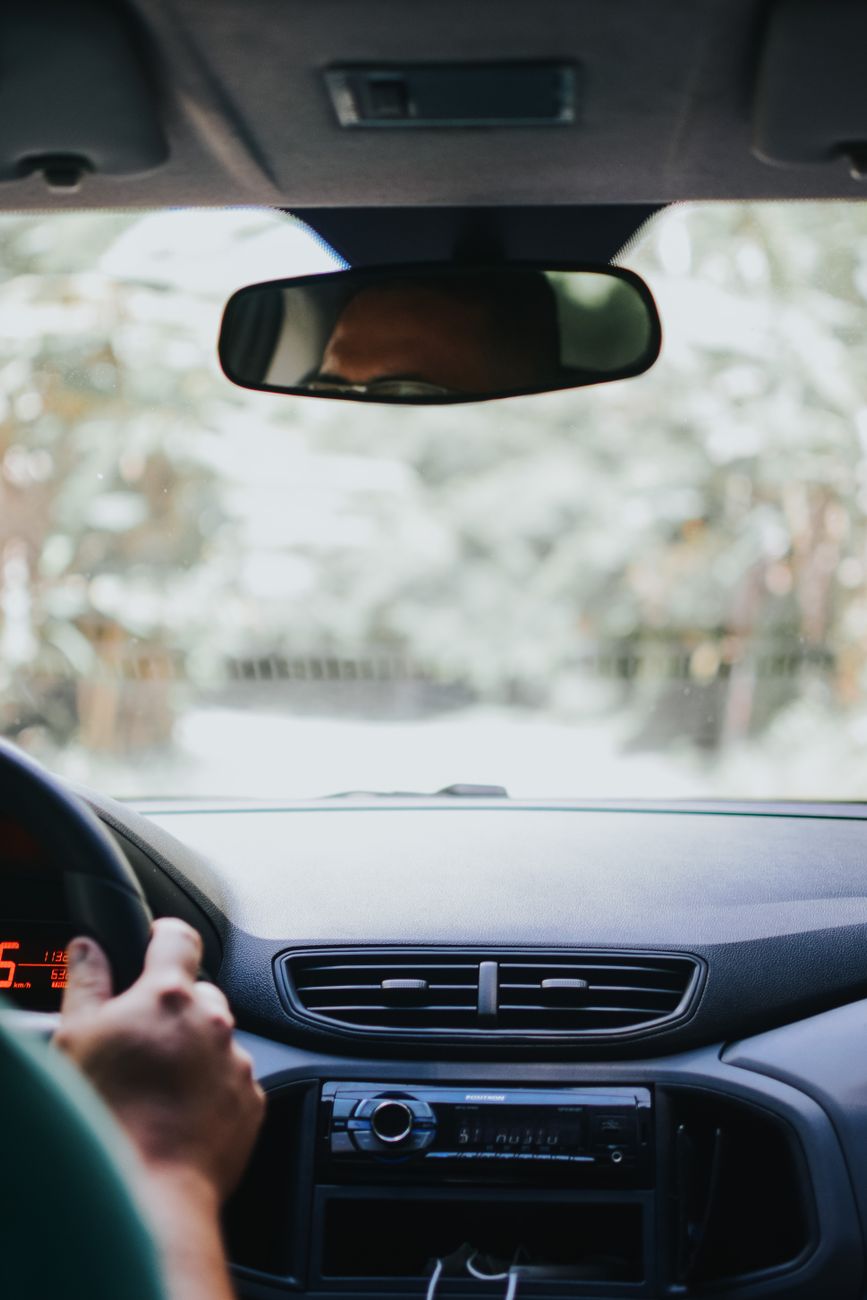
Vehicle control begins with the correct position at the wheel. Keep your hands in the "9:15" or "10:10" position, with elbows slightly bent. The distance to the wheel should allow you to rest your wrist on the top without lifting your shoulders from the seat. Adjust all mirrors before starting movement, verifying that they cover critical areas without significant blind spots.
Clutch-accelerator coordination is particularly important in the test. Practice the friction point until you can identify the exact moment the vehicle begins to move without needing to look at the tachometer. For precision maneuvers like parking, master low-speed control by keeping the clutch at the friction point while slightly modulating the accelerator.
Smooth Braking and Acceleration Techniques
Examiners especially value smoothness in driving. Braking should be progressive, anticipating speed reduction needs. Practice the two-step braking technique: first a gentle pressure to reduce speed, followed by firmer pressure to stop completely if necessary. Always avoid sudden braking, except in real emergency situations.
Acceleration should equally be gradual. In manual vehicles, shift gears between 2,000 and 2,500 rpm under normal conditions, maintaining a constant power flow. In our specialized article on efficient driving techniques, we delve into how to optimize engine use for different situations.
Specific Maneuvers of the Practical Test
Each autonomous community includes a specific set of maneuvers in its practical test, but there are common elements that appear in most evaluations. Mastering these maneuvers requires deliberate practice and understanding of the underlying principles.
Parallel Parking (Line Parking)
Parallel parking is one of the most feared maneuvers, but with proper technique it becomes a systematic operation. Follow these methodical steps:
- Initial position: align your vehicle parallel to the front car, maintaining approximately 50 cm of lateral separation.
- Controlled reversal: turn the steering wheel completely toward the curb when your right rearview mirror aligns with the rear bumper of the front vehicle.
- Angle correction: when your left mirror aligns with the rear bumper of the front vehicle, turn the steering wheel in the opposite direction.
- Final adjustment: straighten the wheels and make small adjustments until you are equidistant between both vehicles.
Practical example: María, a 34-year-old applicant, practiced this maneuver 50 times in different spaces before her test. She identified that her consistent error was starting the turn too early. By correcting this specific point, she executed the maneuver perfectly during her evaluation.
Bay Parking (Perpendicular Parking)
For bay parking, visual reference is fundamental. Use this proven method:
- When approaching the space, maintain a distance of approximately 1.5 meters from parked vehicles.
- When your right shoulder passes the first vehicle of the space, turn the steering wheel completely toward the space.
- Control speed with the clutch, entering slowly while observing both mirrors.
- Straighten the wheels when your vehicle is completely inside the space.
Reversing in a Straight Line and with a Turn
Reversing evaluates your ability to control the vehicle in reduced visibility situations. For reversing in a straight line:
- Place your right hand on the passenger seat backrest
- Turn your torso approximately 90 degrees to look directly out the rear window
- Maintain a very low speed using only the clutch
- Correct direction with gentle steering wheel movements
For reversing with a turn, references change according to the necessary angle. Practice in different scenarios until you develop an intuitive sense of how the vehicle responds in reverse.
Driving in Real Traffic: Strategies for Success
The most extensive part of the driving practical test occurs in real traffic, where you must demonstrate not only technical skill but also judgment, anticipation, and adaptation to changing conditions.
Management of Intersections and Roundabouts
Intersections are critical points where many errors are concentrated. Follow this systematic methodology:
- Anticipatory observation: begin observing the intersection at least 50 meters before.
- Priority evaluation: clearly determine who has priority according to signage and general rules.
- Correct positioning: position yourself in the appropriate lane with sufficient advance.
- Speed control: reduce speed progressively according to conditions.
- Decision making: only proceed when you are certain it is safe to do so.
For roundabouts, the technique is similar but with additional considerations. In our article on mastering complex roundabouts, you will find specific strategies for multi-lane roundabouts.
Maintaining Safety Distances
The safety distance is your main tool for accident prevention. Use the 3-second rule under normal conditions:
- Choose a fixed reference point on the road (a pole, sign, etc.)
- When the vehicle in front passes that point, begin counting "one thousand one, one thousand two, one thousand three"
- If you pass the point before finishing counting, you are too close
In adverse conditions (rain, fog, etc.), increase this distance to at least 4-5 seconds. The following table summarizes recommended minimum distances:
| Driving Condition | Minimum Distance | Equivalent Time |
|---|---|---|
| Optimal dry conditions | 50 meters | 2 seconds |
| Normal urban driving | 25 meters | 1.5 seconds |
| Moderate rain | 75 meters | 3 seconds |
| Fog or heavy rain | 100+ meters | 4-5 seconds |
| Night driving | 75 meters | 3 seconds |
Lane Changes and Overtaking
Lane changes should be executed with precise methodology:
- Signaling: activate the turn signal with at least 3 seconds of anticipation
- Observation: check mirrors and blind spot on the corresponding side
- Adequate space: ensure there is sufficient space in the destination lane
- Smooth execution: change lanes with a minimum angle
- Cancellation: deactivate the turn signal once the maneuver is completed
For overtaking, considerations are more complex. Only overtake when you have complete visibility, sufficient space, and no signage prohibiting it. Remember that in the practical test, unnecessary or risky overtaking is grounds for immediate negative grading.
Signaling and Communication in Driving
Effective communication with other road users is an essential component of safe driving and, therefore, of the practical test. This communication is done through light, acoustic, and position signals.
Correct Use of Turn Signals and Lights
Turn signals are not an option, they are a legal and safety obligation. Use them whenever:
- You are going to change lanes
- You are going to turn at an intersection
- You are going to merge onto or exit a road
- You are going to perform an overtaking maneuver
- You are going to stop or park
A common error is activating the turn signal too late or canceling it too soon. The general rule is: signal at least 30 meters before in the city and 100 meters before on the highway.
For light use, remember these essential rules:
- Low beam lights: mandatory in tunnels, at night, and with reduced visibility conditions
- High beam lights: only on unlit roads and without oncoming vehicles
- Parking lights: whenever you are parked on roads with insufficient lighting
- Hazard lights: only to indicate danger or breakdown
Communication with Pedestrians and Other Drivers
Visual communication is particularly important with pedestrians. Establish eye contact when you are going to yield to a pedestrian, nodding slightly to confirm you have seen them. With other drivers, use conventional signals like a brief flash of lights to yield the right of way (never to demand it).
In complex situations, do not hesitate to use clear hand gestures to communicate your intentions, especially when vehicle signaling may be ambiguous.
Management of Special and Emergency Situations
The practical test may include special situations that evaluate your reaction capacity and judgment under specific conditions. Preparing for these scenarios makes the difference between a competent driver and an exceptional one.
Driving in Adverse Conditions
Although it is unlikely that your test will coincide with extreme weather conditions, you must demonstrate knowledge of how to act if they occur. For rain:
- Reduce speed progressively
- Increase safety distance
- Avoid sudden braking
- Turn on low beam lights
- Extra caution during the first drops (when the road is most slippery)
For fog, considerations are stricter:
- Reduce speed significantly
- Use front and rear fog lights
- Follow the lines on the right edge of the roadway
- Never use high beams (they create glare that reduces visibility)
Reaction to Unexpected Events
Examiners may create simulated situations to evaluate your reaction. If a pedestrian appears suddenly:
- Brake firmly but progressively if space allows
- Sound the horn to alert (briefly)
- If collision is unavoidable, try to swerve without putting others at risk
For obstacles on the roadway:
- Assess if you can avoid it while maintaining your lane
- If you need to change lanes, verify that it is safe to do so
- Brake only if you have sufficient space behind
Never perform sudden evasive maneuvers that could cause loss of control. In many cases, a controlled impact at low speed is preferable to an evasive maneuver that causes a more serious accident.
Psychological Preparation and Stress Control
The psychological factor is responsible for approximately 40% of failures in the driving practical test, according to studies by the Spanish Driving Schools Association. Developing mental strength is as important as mastering technical skills.
Nervousness Control Techniques
Performance anxiety is normal but manageable. Implement these strategies:
- Diaphragmatic breathing: practice deep breathing 5 minutes before the test. Inhale for 4 seconds, hold for 4 seconds, exhale for 6 seconds.
- Positive visualization: during the days before, visualize yourself executing each maneuver perfectly.
- Constructive self-talk: replace thoughts like "I'm going to fail" with "I am prepared and I can do it."
- Focus on the process, not the result: concentrate on each individual action instead of thinking about the final grade.
Handling Errors During the Test
Making an error does not automatically mean failing. Examiners evaluate your ability to recover safely. If you make an error:
- Acknowledge it mentally but do not verbalize self-criticism
- Correct safely if possible
- Continue concentrated on driving
- Do not try to compensate with risky maneuvers
Examiners especially value the ability to remain calm and continue driving safely after a minor error.
Test Day: Protocol and Final Strategies
Test day preparation begins the night before and extends until the moment the examiner delivers the results. Every detail counts.
Physical and Mental Preparation
The night before:
- Sleep at least 7-8 hours
- Have a light but nutritious dinner
- Prepare all necessary documentation
- Visualize the test positively
The morning of the test:
- Eat an adequate breakfast (include proteins)
- Wear comfortable clothing and appropriate footwear for driving
- Arrive at least 30 minutes before the scheduled time
- Perform breathing exercises while waiting
Interaction with the Examiner
Your attitude toward the examiner influences the overall perception. Follow these guidelines:
- Greet politely at the beginning
- Listen attentively to all instructions
- If you do not understand an instruction, ask for clarification kindly
- Maintain eye contact when speaking
- Avoid unnecessary comments or justifications
- Thank them at the end, regardless of how you think it went
Remember that the examiner is not your enemy; they are a professional whose function is to evaluate if you are a safe driver for public roads.
Test Execution
During the test:
- Drive naturally, not excessively slowly
- Verbalize your observations when appropriate ("I am checking the mirror," "verifying the blind spot")
- Keep both hands on the wheel except when you need to shift gears
- Perform all safety checks (mirrors, blind spot) visibly
- Follow instructions exactly, but prioritize safety if there is a conflict
Evaluation and Grading Criteria
Understanding how the practical test is evaluated allows you to focus your preparation on the aspects that really matter. Evaluation systems vary by community, but share common elements.
Scoring System and Faults
Most communities use a system of minor, deficient, and disqualifying faults:
- Minor faults: minor errors that do not compromise safety (generally up to 10 allowed)
- Deficient faults: more significant errors that affect safety (typical limit: 2-3)
- Disqualifying faults: serious errors that pose immediate danger (1 results in failure)
The following table summarizes the most common faults in each category:
| Fault Type | Common Examples | Consequence |
|---|---|---|
| Minor | Rough gear change, incorrect hand position, minimally delayed signaling | Accumulation up to permitted limit |
| Deficient | Insufficient safety distance, inappropriate speed for conditions, insufficient observation | Accumulation up to permitted limit (generally 2-3) |
| Disqualifying | Not respecting STOP sign, invading opposite lane, not yielding to pedestrians at marked crosswalk | Fail immediately |
Interpretation of Results
At the end of the test, the examiner will inform you if you have passed or failed. In case of passing:
- You will receive a temporary certificate
- You can apply for your definitive license at the Traffic Headquarters
- The license will be valid according to your age and type obtained
In case of failure:
- The examiner must indicate the specific causes to you
- You will be entitled to a new test (normally after 15-30 days)
- You must specifically work on the deficient aspects
Not getting discouraged by a failure is crucial. According to official data, 65% of those who fail on the first attempt pass on the second, and 85% on the third.
Additional Resources and Continuous Practice
Passing the practical test is only the beginning of your life as a driver. Continuous road safety education is essential to maintain and improve your skills.
Study Materials and Practice
In addition to practical classes, use these resources:
- Driving simulators: although they do not replace real practice, they help develop coordination and familiarity with controls
- Educational videos: specialized channels show techniques from multiple angles
- Mobile applications: offer maneuver reminders and knowledge tests
- Specialized books: delve into technical and psychological aspects
In our resource center you will find free advanced preparation material developed by our instructors.
Post-License Perfection Courses
Once you obtain your license, consider these perfection courses:
- Efficient driving: fuel savings and emission reduction
- Driving in adverse conditions: specialization for rain, snow, ice
- Defensive driving: advanced anticipation and prevention techniques
- Highway driving: specific for high speeds and long distances
These courses not only improve your safety but can also reduce your insurance premium in many cases.
Conclusion: From Applicant to Competent Driver
The path to passing the driving practical test is a transformation process that goes beyond merely obtaining a permit. It represents the development of technical competencies, the adoption of a road safety mindset, and the assumption of responsibility as a user of public roads.
Drivers who approach this process with the seriousness and dedication reflected in this guide not only significantly increase their chances of passing on the first attempt but also establish the foundations for a life of safe and responsible driving. Remember that each hour of deliberate practice, each analyzed maneuver, each corrected error, brings you closer not only to passing the test but to becoming the type of driver who contributes positively to collective road safety.
Methodical preparation, emotional control, and deep knowledge of the techniques described here constitute your best guarantee of success. When you sit behind the wheel on your test day, do so with the confidence of someone who knows they have left nothing to chance, who has turned every aspect of driving into a conscious and mastered competence. That is the driver examiners seek to certify, and that is the driver the roads need.
Your journey as a competent driver begins today, with the decision to prepare not only to pass a test but to adopt driving as a life skill that you will develop and perfect in the coming years. The roads await you, prepared and safe.