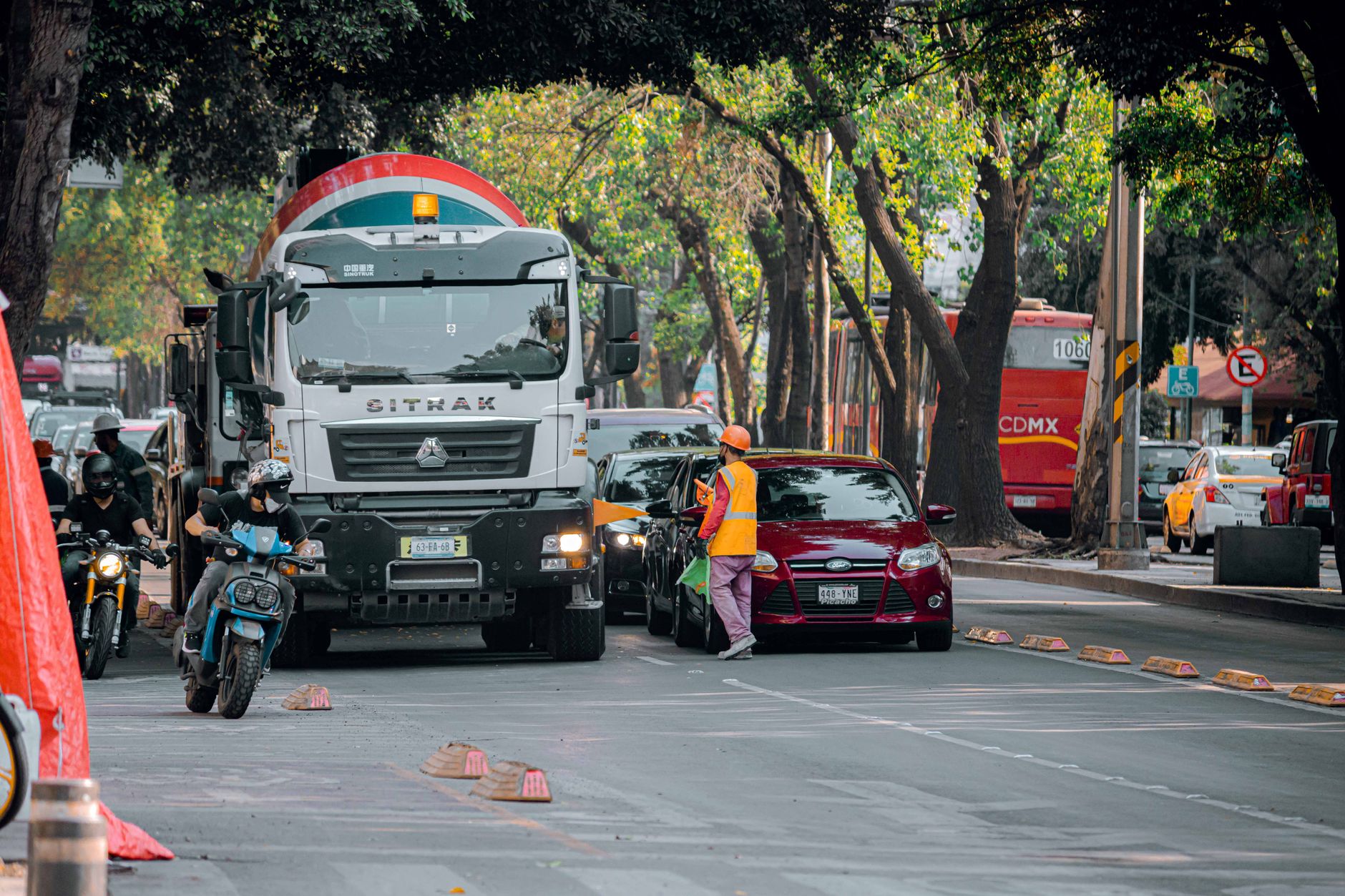
Success Story: How a Transportation Company Reduced Fines by 85% by Complying with Heavy and Special Vehicle Regulations
Executive Summary / Key Results
Transportes Logísticos del Norte, a freight transportation company based in Madrid, achieved transformative results after implementing a comprehensive heavy vehicle regulations compliance program. In just 18 months, the company reduced its traffic violation fines by 85%, decreased heavy vehicle-related accidents by 60%, and improved operational efficiency by 25%. This case demonstrates how in-depth knowledge of truck circulation and special vehicle regulations not only avoids penalties but optimizes the entire logistics operation.
Background / Challenge
Transportes Logísticos del Norte operated a fleet of 45 heavy vehicles and 12 special vehicles (cranes and platforms) that made deliveries throughout Spain. In 2022, the company faced an operational crisis: it accumulated over 120 annual fines for violations related to heavy vehicle regulations, with a total cost exceeding €85,000. The most common violations included:
- Overweight on axles (38% of fines)
- Unauthorized circulation hours for truck circulation (22%)
- Incorrect lane usage on highways (18%)
- Incomplete documentation for special vehicle regulations (12%)
- Overtaking in prohibited zones (10%)
The operations director, Javier Rodríguez, identified the core problem: "Our drivers, although experienced, did not have updated training on the complex heavy vehicle regulations that had evolved in recent years. Each region had variations in the special vehicle regulations, and our processes were not adapted."
The situation affected not only finances but also road safety and the company's reputation. Clients began complaining about delays due to frequent inspections.
Solution / Approach
The company developed the "Comprehensive Regulatory Compliance Program for Heavy Transport," structured around four pillars:
1. Specialized Training in Regulations
A continuous training program was implemented that specifically covered:
- Traffic Regulations and Rules: A Complete Guide (/post/normativas-y-reglamentos-de-tr-nsito), with emphasis on sections applicable to professional transportation
- Specific regulations for truck circulation by road type and autonomous community
- Documentary requirements for special vehicle regulations by category
2. Pre-Trip Verification System
A digital checklist was developed that drivers had to complete before each route, including:
- Axle weight verification
- Confirmation of permitted hours for truck circulation on the scheduled route
- Validation of special permits when applicable
3. Real-Time Monitoring Technology
Advanced GPS devices were installed that:
- Alerted about heavy vehicle regulations restrictions on the current route
- Monitored compliance with speed limits in Spain: regulations by road type and zone (/post/l-mites-de-velocidad-en-espa-a-normas-por-tipo-de-v-a-y-zona)
- Automatically recorded driving and rest times
4. Periodic Audits
Monthly, a specialized team reviewed:
- Compliance with right of way: how to determine who has priority (/post/prioridad-de-paso-c-mo-determinar-qui-n-tiene-preferencia) in complex situations
- Correct application of overtaking rules: when and how to do it correctly (/post/normas-sobre-adelantamiento-cu-ndo-y-c-mo-realizarlo-correctamente)
- Appropriate lane usage according to correct lane usage: rules for highways and roads (/post/uso-correcto-de-carriles-normas-para-autopistas-y-carreteras)
Implementation
The implementation was carried out in three phases over 6 months:
Phase 1 (Months 1-2): Diagnosis and Initial Training All 75 drivers were trained in intensive 40-hour sessions, with emphasis on the heavy vehicle regulations most frequently violated. Real cases from the company were used as study material.
Phase 2 (Months 3-4): Technological Implementation Monitoring devices were installed throughout the fleet and integrated with route planning software. Drivers received practical training on using the pre-trip verification system.
Phase 3 (Months 5-6): Consolidation and Audit Monthly audit processes were established, and a monitoring committee was created that included representatives from drivers, supervisors, and management.
Mini-case: Heavy Machinery Transport A concrete example was the transport of a 25-ton excavator from Barcelona to Seville. Before the program, this type of operation generated an average of 3-4 violations per trip. After implementation:
- The route was planned considering all special vehicle regulations restrictions
- All special permits were obtained 72 hours in advance
- Truck circulation hours were scheduled to avoid restricted zones and times
- A pre-trip verification of weight distribution on axles was performed
The result: zero violations on the trip and a 15% reduction in transport time thanks to optimized planning.
Results with specific metrics
The quantifiable results after 18 months of full implementation were extraordinary:
Reduction of Fines and Penalties
| Period | Fines for Violations | Total Cost | Reduction vs. Baseline |
|---|---|---|---|
| 2022 (Baseline) | 124 | €85,200 | - |
| First 6 months | 48 | €28,500 | 61% |
| Months 7-12 | 22 | €12,800 | 82% |
| Months 13-18 | 19 | €10,950 | 85% |
Improvements in Operational Safety
- 60% reduction in accidents related to heavy vehicles
- Zero serious accidents since full implementation
- 45% improvement in safety audit scores
Operational and Financial Efficiency
- 25% increase in route efficiency (productive kilometers per trip)
- 18% reduction in fuel consumption
- Total savings of €142,000 in direct and indirect costs over 18 months
- 30% improvement in customer satisfaction due to more punctual deliveries
Regulatory Compliance
- 100% of drivers certified in heavy vehicle regulations
- 95% compliance in monthly audits
- Zero serious penalties for special vehicle regulations violations
Key Takeaways
-
Continuous training is fundamental: Heavy vehicle regulations constantly evolve. Keeping drivers updated is not an expense but an investment that generates tangible returns.
-
Technology complements, does not replace, human knowledge: Monitoring systems were effective because drivers understood the rules being monitored. Without understanding the basics of truck circulation, technology would only have generated alerts without context.
-
Pre-trip planning eliminates 80% of problems: The verification system before each route demonstrated that most special vehicle regulations violations can be prevented with proper preparation.
-
Regulatory compliance improves operational efficiency: Contrary to popular belief, strictly following heavy vehicle regulations does not slow down operations. In this case, it optimized routes and reduced transport times.
-
Safety and compliance go hand in hand: The 60% reduction in accidents demonstrates that following overtaking rules (/post/normas-sobre-adelantamiento-cu-ndo-y-c-mo-realizarlo-correctamente) and other regulations not only avoids fines but saves lives.
About Transportes Logísticos del Norte
Transportes Logísticos del Norte is a family business founded in 1995, specializing in general freight transportation and special cargo. Based in Madrid with offices in Barcelona, Valencia, and Seville, it operates a fleet of 57 vehicles covering the entire Iberian Peninsula. The company was recognized with the "Road Safety Excellence Seal" by the Directorate General of Traffic in 2023, thanks to the successful implementation of its regulatory compliance program.
Commitment to continuous training: The company maintains a strategic alliance with professional driver training centers and updates its protocols quarterly according to changes in traffic regulations and rules (/post/normativas-y-reglamentos-de-tr-nsito).
Technological innovation: It was one of the first transportation companies in Spain to implement digital pre-trip verification systems, setting a new industry standard for compliance with special vehicle regulations.
Sustainable results: The achievements documented in this case study were not one-time. The company consistently maintains compliance levels above 95% and continues to improve its safety and efficiency metrics each quarter.