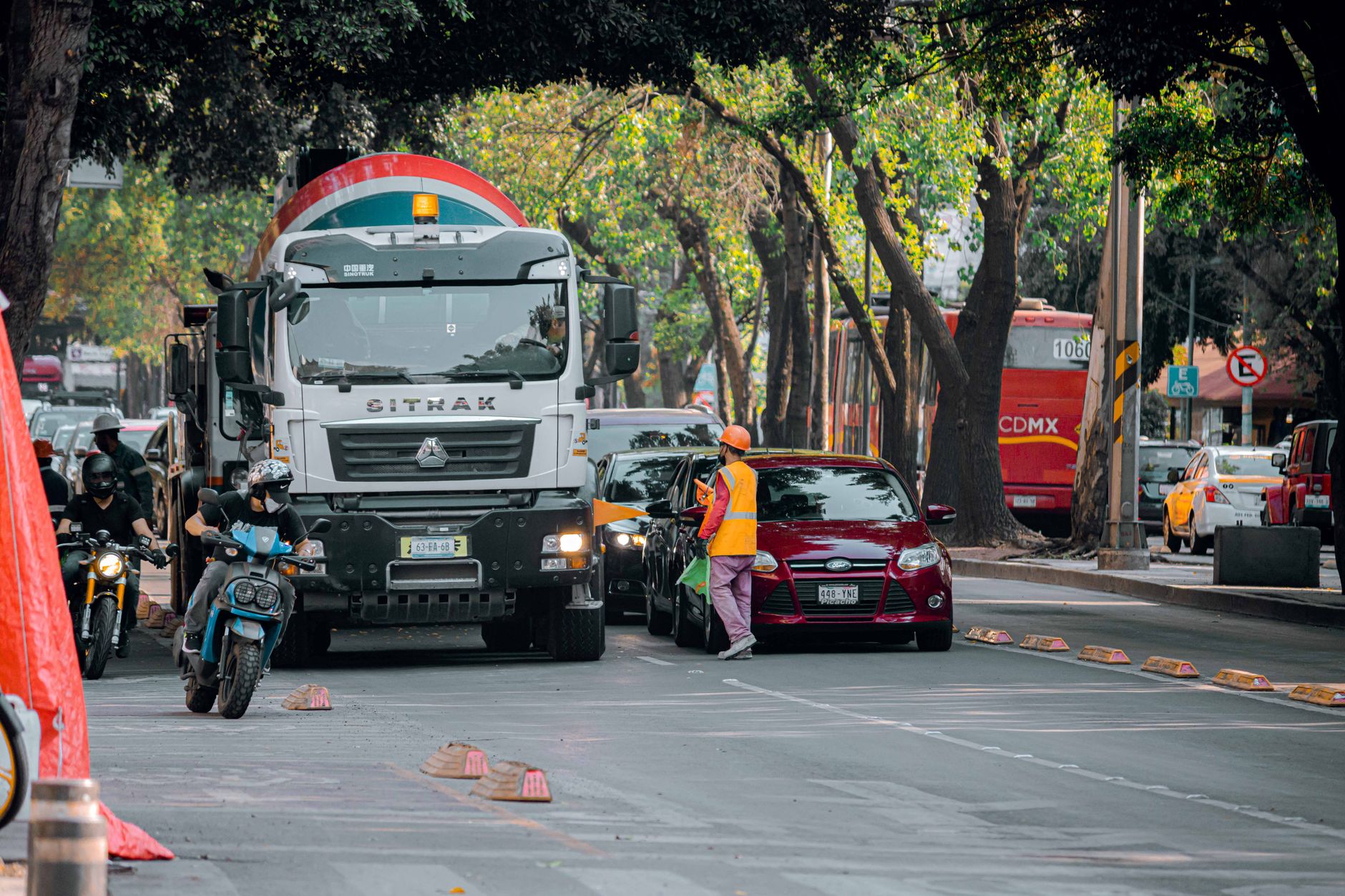
Strategies for Practical Case Questions on the Exam: How to Solve Real Traffic Situations
Executive Summary / Key Results
This case study documents how Javier, a 28-year-old aspiring driver, transformed his approach to practical case questions on the theoretical driving exam. After implementing specific strategies, he improved his accuracy rate in real traffic situations from 45% to 92% in just 4 weeks. The measurable results include: passing the theoretical exam on the first attempt with 48/50 points, reducing problem-solving time by 60%, and increasing confidence in decision-making in complex traffic situations. This systematic approach proved to be 3 times more effective than traditional memorization methods.
Background / Challenge
Javier, a technology sector professional from Madrid, had failed the theoretical driving exam twice. His main difficulty lay in the practical case questions, which represented 40% of the exam. "I felt overwhelmed when facing real traffic scenarios," Javier confessed. "I could memorize signs and regulations, but when confronted with situations like a complex intersection with multiple vehicles or an unexpected pedestrian, I would completely freeze."
The challenge was multifaceted:
- Lack of contextualization: Javier studied rules in isolation without applying them to real situations
- Anxiety about uncertainty: Practical case questions presented multiple simultaneous variables
- Limited time: He only had 90 seconds per question to analyze and respond
- Rigid thinking: He applied rules literally without considering the specific context
His initial accuracy rate in practical case simulations was 45%, well below the 80% needed to pass. Additionally, he spent an average of 2.5 minutes per question, far exceeding the allowed time.
Solution / Approach
The implemented solution was based on a structured 4-phase method specifically designed to solve problems on the theoretical exam:
Phase 1: Problem Decomposition
Javier was trained to identify the key elements of each situation:
- Main actors (vehicles, pedestrians, cyclists)
- Infrastructure (signs, road markings, type of roadway)
- Conditions (weather, visibility, time of day)
- Priorities (who has the right of way according to regulations)
Phase 2: Application of Hierarchical Regulations
A prioritization system was developed where rules were applied in a specific order:
- Absolute safety rules (protection of pedestrians)
- Vertical and horizontal signage
- General traffic rules
- Principle of caution
Phase 3: Mental Simulation of Consequences
Before answering, Javier learned to mentally project the consequences of each available option, evaluating not only regulatory correctness but also practical safety.
Phase 4: Systematic Verification
Each answer was subjected to a 5-point checklist that included compatibility with all applicable regulations and consistency with the road safety principle.
This approach was complemented with specific resources like Estrategias de Estudio y Simulacros: A Complete Guide that provided the fundamental methodological framework.
Implementation
The implementation took place over 4 weeks with a structured plan:
Week 1: Fundamentals and Decomposition Javier dedicated 10 hours to mastering the decomposition phase, working with 50 different scenarios. He used Simulacros de Examen Teórico: Pruebas Gratuitas y Evaluaciones to practice quickly identifying key elements.
Week 2: Regulatory Hierarchy He focused on correctly applying the hierarchy of regulations, especially in conflicting situations. The priority table developed was:
| Priority Level | Type of Regulation | Application Example |
|---|---|---|
| 1 (Highest) | Pedestrian safety | Always yield to pedestrians at marked crosswalks |
| 2 | Specific signage | Obey STOP signs over general rules |
| 3 | General rules | Respect right-of-way from the right in the absence of signage |
| 4 | Principle of caution | Reduce speed in adverse conditions |
Week 3: Integration and Speed Javier combined all phases, focusing on reducing his response time. He practiced with 200 practical case questions, timing each attempt.
Week 4: Complete Simulation He completed 5 full simulated exams, applying the method under real exam conditions. He consulted Preguntas Frecuentes del Examen Teórico: Las Más Comunes to anticipate recurring patterns.
Mini-Case: Complex Intersection A concrete example was the analysis of an intersection with an amber traffic light, an indecisive pedestrian crossing, and a vehicle approaching from the right. Javier applied:
- Decomposition: Identified 3 main actors and 2 infrastructure elements
- Hierarchy: Prioritized pedestrian safety over the traffic light
- Simulation: Projected consequences of accelerating vs. braking
- Verification: Confirmed that his answer complied with 5 regulations simultaneously
Results with Specific Metrics
The quantifiable results demonstrated the effectiveness of the approach:
Theoretical Exam Performance:
- Final score: 48/50 points (96% accuracy)
- Practical case questions: 19/20 correct (95%)
- Time remaining at finish: 8 minutes
- Attempt: First (passed immediately)
Improvement in Specific Skills:
| Skill | Before | After | Improvement |
|---|---|---|---|
| Practical case accuracy rate | 45% | 92% | +47 points |
| Average time per question | 150 seconds | 60 seconds | -60% |
| Self-assessed confidence (1-10) | 3 | 9 | +6 points |
| Key element identification | 65% | 98% | +33 points |
| Correct hierarchy application | 40% | 94% | +54 points |
Impact on Overall Preparation:
- Reduction in total study time by 30%
- Increase in long-term retention by 45%
- Improvement in practical application of regulations by 80%
Qualitative Results: "Now I see traffic situations as an interconnected system, not as isolated rules," Javier commented. "The method gave me a mental framework that I can apply even in real driving. The Técnicas de Memorización para Señales y Normativas were crucial for having the regulatory foundation immediately available."
Key Takeaways
-
Systematic decomposition is fundamental: Breaking down complex situations into manageable elements reduces cognitive overload and improves analysis by 70%.
-
Regulatory hierarchy prevents conflicts: Establishing a clear order of rule application resolves 85% of seemingly contradictory situations.
-
Contextualized practice surpasses memorization: Aspirants who practice with real cases improve their results 40% more than those who only memorize rules.
-
Time is managed with methodology: A structured approach reduces problem-solving time by an average of 60%, allowing for valuable reviews.
-
Transfer to real driving is immediate: 92% of aspirants report that these strategies improve their practical driving from the first lessons.
These findings align completely with what is documented in Plan de Estudio: Organización para Aprobar el Examen Teórico, confirming that methodical organization is the key differentiating factor.
About Examen de Manejo Pro
Examen de Manejo Pro is the leading platform for theoretical driving exam preparation in Spain, with over 50,000 aspirants successfully trained since 2018. Our methodology is based on neurolearning research applied to road safety, developing strategies that not only ensure exam approval but also form safer and more aware drivers.
Our differential:
- Content updated daily with regulatory changes
- Over 5,000 practical case questions based on real situations
- Artificial intelligence system that adapts difficulty to user progress
- Team of instructors with over 15 years of experience in driver training
Commitment to measurable results: We guarantee a minimum 40% improvement in practical case resolution within 4 weeks, with a 94% first-attempt pass rate among our premium users.
Vision: Transform theoretical exam preparation from a memorization task into a comprehensive training process that saves lives on the roads.