Overtaking Maneuver: When and How to Perform It Correctly
The overtaking maneuver consists of passing another vehicle traveling in the same direction, at a lower speed and ahead of us. It is one of the most dangerous maneuvers in driving and, therefore, the practical driving exam evaluates it with special rigor: the examiner observes whether the candidate signals in advance, checks the lane, and respects the right-of-way of the preceding vehicle. A correct overtake is authorized only on sections with a broken line and without signage prohibiting it, and it should never be executed on curves, changes in elevation, or areas of low visibility.
Executive Summary
Overtaking is a safe maneuver only when three conditions converge: legality of the section, sufficient visibility, and free space in the oncoming lane. Traffic legislation establishes precise obligations for the driver who overtakes, including warning in advance with mandatory signals and ensuring that the lane to be used is free. This whitepaper analyzes when overtaking is permitted, how to execute the maneuver step by step, and which errors are penalized most in the practical exam. The goal is to offer drivers a clear decision-making framework that reduces the risk of accident and fines.
Introduction: Why Overtaking Is the Maneuver That Causes the Most Failures
Overtaking is, statistically, one of the most dangerous operations performed on the road. The reason is simple: it forces you to invade the oncoming lane or share lateral space with other users, and any miscalculation results in a head-on collision or sideswipe. In the context of the practical exam, overtaking functions as a test of maturity behind the wheel. It's not enough to turn the steering wheel: you must read the road, anticipate the behavior of others, and demonstrate mastery of the regulations.
Most driving school manuals explain the maneuver, but few teach how to decide whether it should be done. That is the gap this document aims to fill. A driver who knows when NOT to overtake is closer to passing and, above all, to surviving on the road.
Practical training in maneuvers is decisive for transforming a novice driver into an expert in road safety. As explained in Maneuvers and Driving Techniques: Transforming Novice Drivers into Road Safety Experts, mastery of basic maneuvers is the foundation upon which any advanced skill is built.
Problem Statement: The Thin Line Between Overtaking and Risking
The central problem with overtaking is that its legality does not guarantee its safety. A section with a broken line legally permits overtaking, but if visibility is reduced or the preceding vehicle is traveling at a speed similar to ours, the maneuver ceases to be safe. Regulations distinguish between what is permitted and what is prudent. Article 84 of the General Traffic Regulations obliges the driver intending to overtake to verify that there is sufficient free space in the lane to be used, taking into account their own speed and that of other users. If that verification fails, the obligation is to abstain.
The second problem is signaling. Many drivers signal late or don't signal at all. The regulation is clear: warning with mandatory signals is not optional, it is obligatory in every overtake that requires lateral displacement. Furthermore, it must be done with sufficient time for other drivers to react.
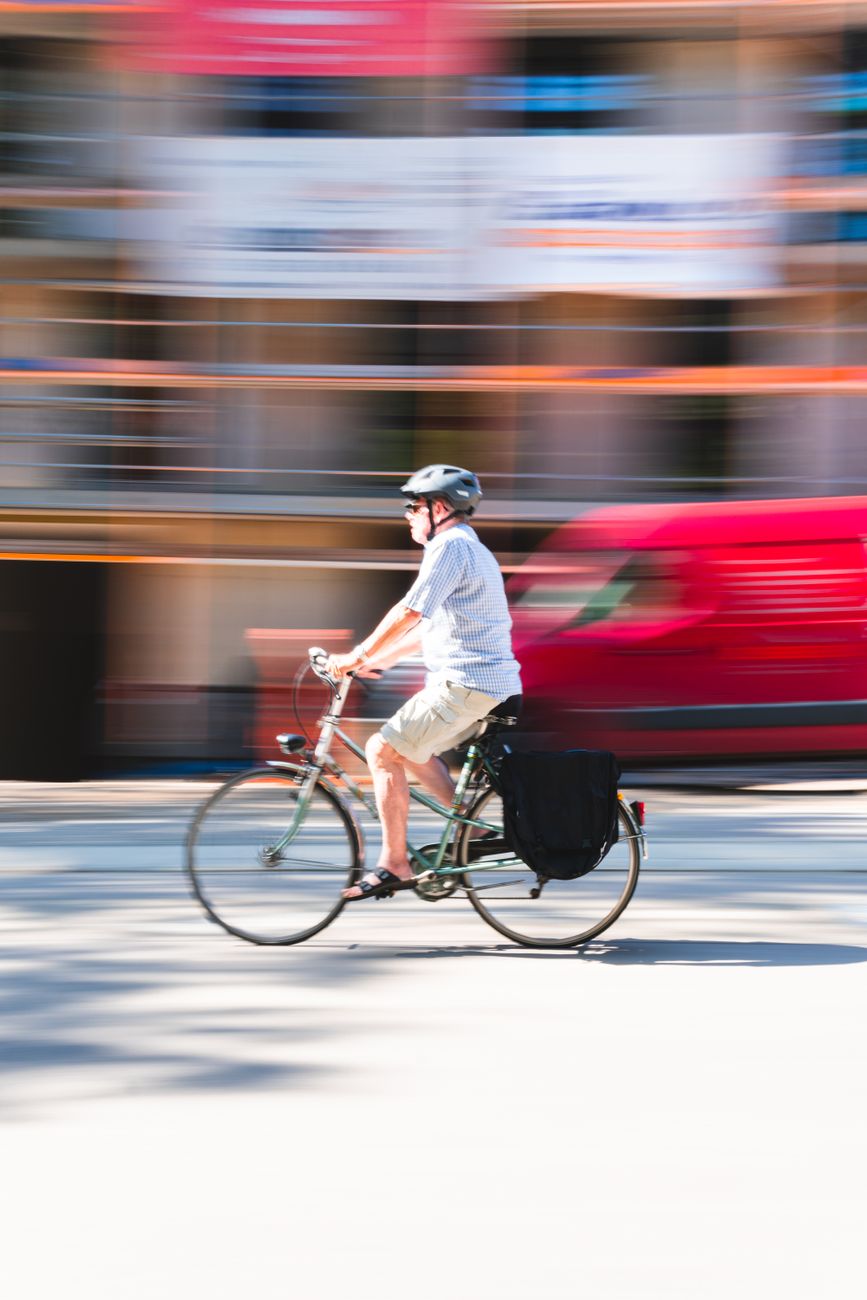
The third problem is lateral distance. When overtaking cyclists or slow vehicles, the minimum separation must be at least 1.5 meters. This fact, which many candidates are unaware of, is a frequent cause of failure and sanctions.
Analysis: When Is Overtaking Permitted and When Is It Not?
What Does the Regulation Say About Authorized Sections?
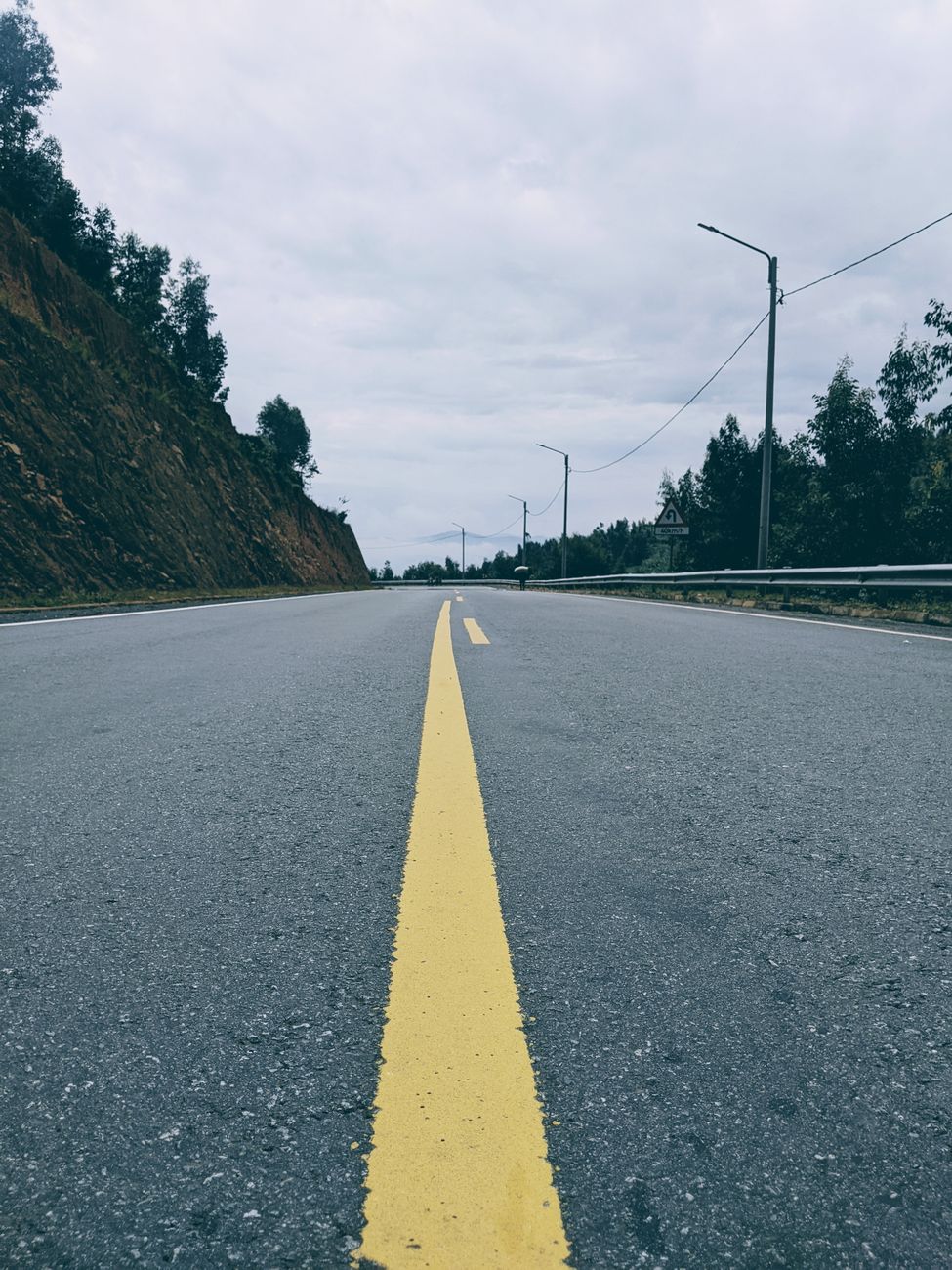
The general rule is clear: you can only overtake on sections with a broken line and without signage prohibiting it. This means that the solid line, double solid line, or "no overtaking" sign nullifies any attempt, no matter how clear the road is. The exception to this rule is overtaking on the right, which is only permitted in very specific cases.
When Can You Overtake on the Right?
The general rule orders overtaking on the left of the vehicle to be passed. There are two exceptions:
- When the driver of the vehicle we are going to overtake indicates their intention to change direction to the left or stop on that side, we can do so on the right, exercising extreme caution.
- On urban roads with at least two lanes in the same direction, you can overtake on the right, but always with extreme caution.
In both cases, the maneuver must be executed with maximum prudence, because the overtaken vehicle may reincorporate without noticing our presence.
Where Is Overtaking Strictly Prohibited?
The evidence is explicit: you should never overtake on curves, changes in elevation, or with low visibility. Nor at intersections, pedestrian crossings, tunnels, or roads with poor visibility. The regulation adds that overtaking is not permitted in tunnels, underpasses, and sections affected by the "tunnel" sign when only one lane is available for the direction of traffic. These prohibitions do not admit interpretation: they are hard limits.
What Obligations Does the Overtaking Driver Have?
Article 84 of the General Traffic Regulations establishes two fundamental obligations:
- Warn with sufficient advance notice using mandatory signals and verify that in the lane to be used there is sufficient free space so that the maneuver does not endanger or hinder those traveling in the opposite direction.
- Ensure that the driver of the vehicle preceding them in the same lane has not indicated their intention to move to the same side. In such a case, they must respect the right-of-way that assists them.
These obligations are not a formality: they are the difference between a safe maneuver and an accident. The first obligation is to warn with sufficient advance notice using mandatory signals; this warning is obligatory in every overtake that requires lateral displacement and must be done with sufficient time for other drivers to react.
The Correct Sequence: A Seven-Step Decision Protocol
Based on the available evidence, an operational protocol can be constructed to execute a safe overtake. This protocol synthesizes the legal conditions and best practices described in the sources.
| Step | Action | Basis |
|---|---|---|
| 1 | Verify that the section permits overtaking (broken line, no prohibition sign) | |
| 2 | Evaluate visibility and distance: rule out curves, changes in elevation, intersections, pedestrian crossings, and tunnels | |
| 3 | Check that no one is coming from the opposite direction and that there is free space in the oncoming lane | |
| 4 | Signal with the turn signal before initiating lateral displacement | |
| 5 | Calculate the time and space needed to complete the maneuver and return to your own lane | |
| 6 | Maintain a minimum lateral distance of 1.5 meters if overtaking cyclists or slow vehicles | |
| 7 | Signal the return to the lane and adjust speed to conditions |
This protocol functions as a mental checklist. If any of the steps fail, the correct decision is not to overtake. In the practical exam, the examiner values precisely that ability to refrain: a candidate who does not overtake when they shouldn't demonstrates more judgment than one who executes the maneuver on impulse.
How Does Overtaking Relate to Other Exam Maneuvers?
The practical exam does not evaluate maneuvers in isolation. Overtaking requires coordination with other operations: mirror observation, speed management, and communication with other users. The same discipline applied to overtaking is required in maneuvers such as parallel parking or perfect perpendicular parking for the practical exam. In all cases, the pattern is identical: observe, signal, execute, and verify.
This connection is not coincidental. A driver who masters the overtaking decision protocol tends to apply the same rigor to techniques for parking on a slope with and without curb and to reversing in a straight line. Safe maneuvering is a mindset, not a set of isolated rules.
Proposed Solution: The Three Concurrent Conditions Model
The evidence allows formulating a simple model to decide whether an overtake should be executed. We call this framework the Three Concurrent Conditions Model: legality, visibility, and space.
Condition 1: Legality
The section must permit overtaking. This implies a broken line, absence of prohibitive signage, and respect for the exceptions of overtaking on the right. If legality fails, no maneuver is possible.
Condition 2: Visibility
There must be sufficient visibility to complete the maneuver without invading risk zones. Curves, changes in elevation, tunnels, and intersections are ruled out by definition. This condition depends on external factors (terrain, weather, traffic) and also on the vehicle itself: a dirty windshield or poorly adjusted mirrors reduce effective visibility.
Condition 3: Space
The lane to be used must have sufficient free space so that the maneuver does not endanger or hinder those traveling in the opposite direction, taking into account your own speed and that of others. This condition is dynamic: it changes second by second. A space that was sufficient five seconds ago may cease to be so.
The model is represented as follows:
Overtake = Legality ∧ Visibility ∧ Space
If any of the three conditions is false, the maneuver must be aborted. This formula is especially useful in the practical exam, where the candidate must verbalize or at least demonstrate that they have evaluated the three conditions before acting.
Implementation Considerations: From Classroom to Road
How Is the Decision to Overtake Trained?
The decision to overtake is not trained by repeating the maneuver on a closed circuit. It is trained on open roads, with real traffic and under supervision. The instructor must force the student to verbalize the three conditions before each overtake. This practice turns a reflex action into a conscious process.
Which Errors Are Penalized Most in the Practical Exam?
The most serious errors are those that violate the model's conditions. Signaling late or not signaling is a direct violation of the obligation of Article 84. Overtaking on a prohibited section is an eliminatory fault. Not respecting the right-of-way of the preceding vehicle that has indicated its intention to move to the same side is another serious fault. And not maintaining the 1.5-meter lateral distance when overtaking cyclists is a fault that reflects a lack of foresight.
When Should You NOT Overtake Even If It's Legal?
There are situations where overtaking is legal but not advisable. If the preceding vehicle is traveling at a speed very similar to ours, the maneuver forces a prolonged speed excess and a high exposure time. If weather conditions reduce visibility, even if the line is broken, prudence advises waiting. This is the nuance that separates the legal driver from the safe driver.
How Is Overtaking Integrated into Complete Driver Training?
Overtaking is one piece of a system. A complete training program includes parking maneuvers, reversing, slope control, and intersection management. The coherence among all of them is what produces competent drivers. The articles linked in this document are part of that system and offer specific protocols for each maneuver.
Conclusion: The Safe Maneuver Is the One Not Done When It Shouldn't Be
Overtaking is a safe maneuver only when the legality of the section, sufficient visibility, and free space in the oncoming lane are simultaneously met. Regulations require warning in advance with mandatory signals and verifying that no one is hindered. The minimum lateral distance of 1.5 meters when overtaking cyclists or slow vehicles is a limit that does not admit discussion.
In the practical exam, the examiner does not reward audacity, but judgment. A candidate who decides not to overtake when conditions are not optimal demonstrates having internalized the most important lesson: the safest maneuver is the one avoided in time. The Three Concurrent Conditions Model offers a mental framework for making that decision in seconds, and its systematic application reduces both the risk of accident and the probability of failing.
Drivers who master this model don't just pass; they drive better. And that is, ultimately, the purpose of any driving exam.
References
- Overtaking. umivaleactiva.es. https://www.umivaleactiva.es/
- How to overtake correctly. noticias.coches.com. https://noticias.coches.com/
- Obligations of the overtaking driver before initiating the maneuver. Article 84 of the RGCir. tuteorica.com. https://www.tuteorica.com/
Return JSON only: