Exhaust System: How to Detect Faults and Maintain It to Reduce Emissions and Improve Performance
The exhaust system is much more than a pipe that expels smoke: it is an essential component for engine performance, safety, and the environment. Detecting faults in time through visual inspections and electronic diagnostics prevents costly repairs and reduces polluting emissions. Proper exhaust maintenance not only improves fuel efficiency but also ensures that your vehicle passes the inspection without setbacks.
Executive Summary
The exhaust system plays critical functions ranging from the expulsion of combustion gases to noise reduction and the regulation of polluting emissions. Despite its importance, most drivers do not periodically check its condition, which causes faults that affect performance and increase fuel consumption. This document analyzes the most common faults, diagnostic methods, and recommended maintenance practices to keep the system in optimal condition. Strategies to reduce emissions and improve vehicle performance are also presented, with a focus on early detection and professional intervention.
Introduction: Why is the exhaust system crucial?
The exhaust system is a set of components that channel the gases resulting from combustion to the outside, minimizing acoustic and environmental impact. Its correct operation is vital for the engine, as it adapts power and prevents excessive fuel consumption. Despite this, it usually receives less attention than other systems, such as brakes or tires, and is only attended to when it breaks or generates excessive noise. This negligence can lead to serious faults that affect safety and the driver's pocketbook.
In this whitepaper, we will explore in detail how to detect faults in the exhaust system, the best maintenance practices, and how these actions contribute to reducing emissions and improving performance. Aimed at drivers and industry professionals, the content is based on technical evidence and seeks to provide a complete guide for informed decision-making.
Problem Statement: Lack of maintenance and its consequences
Most users do not periodically check the condition of the exhaust system, making it the most forgotten component of vehicle maintenance. This omission leads to faults that, in many cases, are only detected when the noise is unbearable or when a part falls off. The consequences include:
- Increased polluting emissions, which contributes to atmospheric pollution and can lead to penalties in the inspection.
- Higher fuel consumption, because a defective exhaust affects engine efficiency.
- Loss of power and vehicle performance.
- Safety risks, such as toxic gas leaks that can enter the cabin.
Furthermore, late detection usually involves complete replacement of the system instead of a specific repair, which increases costs. Therefore, it is essential to adopt a proactive approach.
Analysis: Functions and components of the exhaust system
What functions does the exhaust system perform?
The exhaust system has multiple functions that go beyond expelling gases. According to Vulco, its main purposes are:
- Expel the combustion gases generated by the engine.
- Reduce the noise emitted by these gases.
- Contribute to the proper functioning of the engine by adapting its power.
- Regulate polluting emissions to comply with environmental regulations.
- Prevent excessive fuel consumption.
These functions are interrelated: a clogged or leaking exhaust affects the system's backpressure, which alters combustion efficiency and, therefore, performance and emissions.
What are the main components?
The exhaust system is made up of several elements, each with a specific function:
- Exhaust manifold: Collects the gases from each cylinder and directs them to the rest of the system.
- Catalytic converter: Transforms harmful gases into less polluting substances through chemical reactions.
- Muffler: Reduces exhaust noise.
- Particulate filter: Present in some vehicles (especially diesel), it traps solid particles to reduce pollution.
In addition, there are sensors and valves that monitor and regulate gas flow. A failure in any of these components can trigger chain problems.
Fault detection: How to know if the exhaust system is failing?
Detecting faults in time is key to avoiding major damage. Vulco lists a series of warning signs that should prompt an immediate review:
- Abnormally loud or strange noises, such as rattling.
- Leaks in the exhaust system.
- Engine not running properly.
- Vehicle vibrations.
- Emission of strange gases.
- Illumination of the engine fault light.
- Higher than usual fuel consumption.
These signs can indicate anything from a deteriorated gasket to a clogged catalytic converter. Early detection allows replacing a single part in time instead of the entire system, which saves costs.
Diagnostic methods: visual inspection and electronic diagnostics
Exhaust system maintenance includes two types of complementary checks:
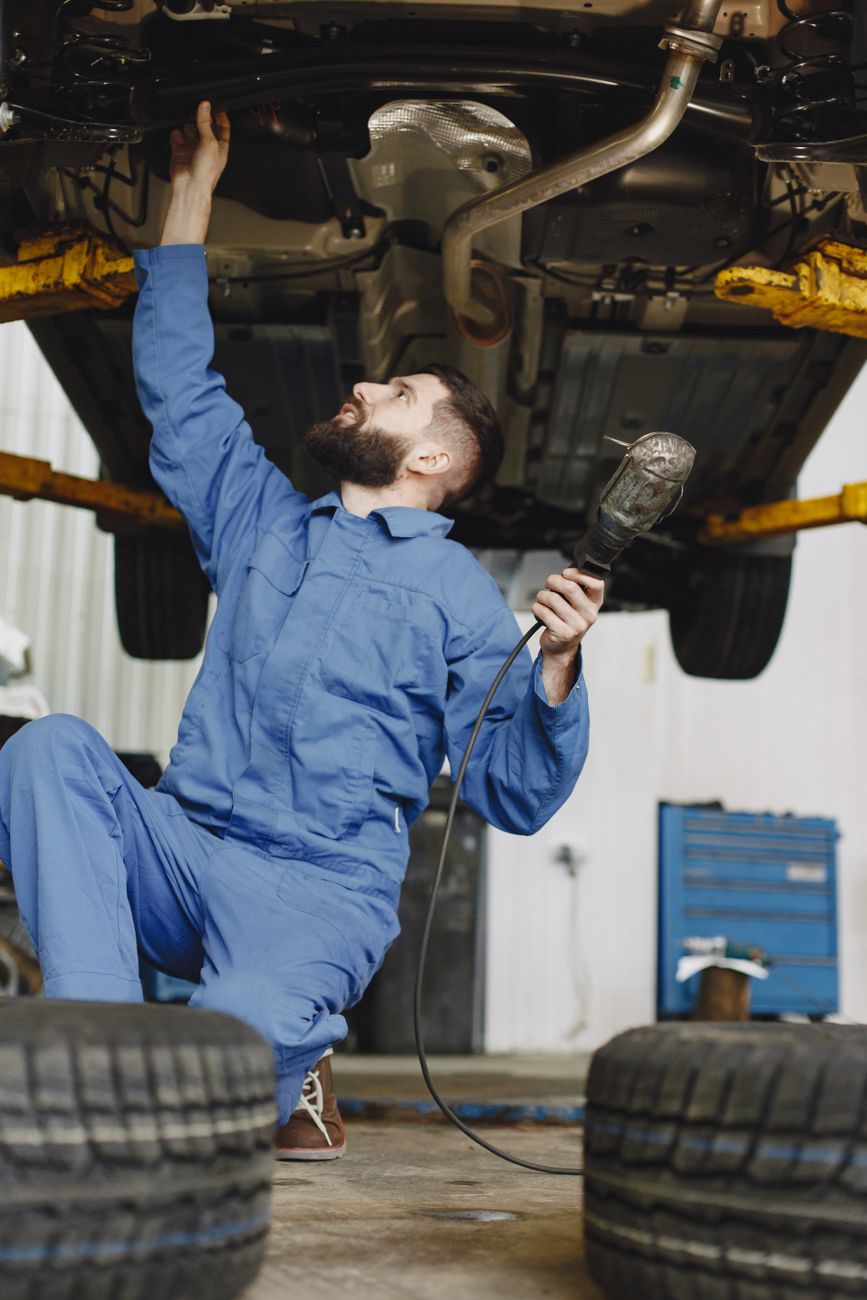
- Visual inspection: Experts examine the system to detect leaks, traces of corrosion, damage to components, and the condition of fasteners.
- Electronic diagnostics: The operation of each component is checked and it is verified that no fault codes appear in the system.
Both methods are necessary for a complete diagnosis. Visual inspection can reveal physical problems, while electronic diagnostics detects failures in sensors or in the engine's electronic management.
Exhaust maintenance: When and how to check it?
When should the exhaust system be checked?
The exhaust system can be checked during the inspection, but a poor-condition exhaust is grounds for a second inspection. To avoid surprises, a pre-inspection check is recommended. In addition, you should go to the workshop if any of the signs mentioned above appear.
What does maintenance consist of?
Maintenance includes the visual inspection and electronic diagnostics already described. Experts from the Vulco network perform an in-depth inspection, prepare a fault diagnosis, and advise on the steps to follow. Early replacement of a defective part is more economical than replacing the entire system.
In addition, exhaust maintenance is complemented by other vehicle routines. For example, good basic vehicle maintenance includes checking all systems, including the exhaust. It is also important to verify the condition of other components that affect performance and emissions, such as engine oil. A timely oil change contributes to reducing emissions and protecting the catalytic converter. Likewise, a brake system in good condition is part of safe and efficient driving; see the brake inspection for more details.
Proposed solution: A proactive maintenance plan
To reduce emissions and improve performance, we propose a proactive maintenance plan based on evidence from Vulco and UMO. The plan consists of the following steps:
- Periodic visual inspection: Every 6 months or before a long trip, inspect the exhaust system for leaks, corrosion, or damage. Use a flashlight and check the fasteners.
- Annual electronic diagnostics: Go to a specialized workshop to perform a fault code scan. This allows detecting failures in sensors and in the catalytic converter.
- Attention to signs: If you notice noises, vibrations, or increased consumption, go to the workshop immediately.
- Pre-inspection check: Before undergoing the technical inspection, perform a complete check to avoid rejections.
- Comprehensive maintenance: Coordinate the exhaust check with other routines, such as oil changes, brake inspection, and tire pressure.
This approach allows detecting faults at early stages, reducing costs, and keeping the vehicle in optimal conditions.
Concrete example: Early detection of a leak
Suppose a vehicle presents increased fuel consumption and a dull noise at the rear. During a visual inspection, the technician detects a leak in the muffler gasket. Electronic diagnostics shows no fault codes, but the leak affects the system's backpressure. Replacing the gasket (an inexpensive part) solves the problem and prevents deterioration of the catalytic converter. This case illustrates how early detection avoids major repairs.
Implementation considerations
To implement this plan, drivers must consider factors such as the type of vehicle, use (city vs. highway), and budget. A vehicle that circulates mainly in the city is exposed to more starts and stops, which can accelerate exhaust wear. In contrast, a vehicle that travels on the highway at constant speeds tends to keep the system cleaner. In addition, exhaust maintenance should be coordinated with other checks; for example, correct tire pressure influences fuel efficiency and, therefore, the load on the engine and exhaust. The car battery also plays a role in starting and electronic management, so comprehensive maintenance is always advisable.
It is important to note that this plan may require adjustments depending on the climate and road conditions. In regions with severe winters, road salt accelerates exhaust corrosion, so visual inspections should be more frequent. Likewise, diesel vehicles with particulate filters require special attention to regenerations and the type of oil used.
Conclusion
The exhaust system is a vital component for performance, safety, and the environment. Early detection of faults through visual inspections and electronic diagnostics, together with proactive maintenance, allows reducing emissions, improving fuel efficiency, and avoiding costly repairs. Drivers should adopt a preventive approach, paying attention to warning signs and performing periodic checks. By integrating exhaust maintenance into the vehicle's general routine, it contributes to safer and more sustainable driving. Evidence shows that a single part replaced in time is better than the entire system. Therefore, the key is prevention and attention to the first symptoms.
References
- Vulco. (n.d.). Diagnosis and review of the exhaust system. Retrieved from www.vulco.com
- UMO. (n.d.). Maintenance of emission control systems. Retrieved from umo.com.co
- Todomecanica. (n.d.). Exhaust gas diagnosis. Retrieved from www.todomecanica.com