Efficient Driving Assessment: How to Optimize Fuel Consumption and Demonstrate Control on the Exam
Efficient driving is the set of techniques that reduce fuel consumption and emissions through intelligent use of the vehicle's mechanics. On a driving exam, mastering these techniques demonstrates car control, anticipation, and environmental awareness—three competencies that examiners increasingly value. This whitepaper analyzes how consumption optimization has become an evaluation criterion and offers a practical framework for drivers to demonstrate control during the test.
Executive Summary
Efficient driving is much more than an environmental trend: it is a measurable skill that directly influences the outcome of a driving exam. Official efficient driving manuals, such as those from IDAE and the Andalusian Energy Agency, agree that techniques such as engine control, anticipation, and systematic consumption logging allow drivers to save fuel and reduce vehicle wear. In an exam context, these techniques translate into observable signs of control: precise gear changes, moderate brake use, constant speed, and reaction capability.
This document explores why efficient driving has been integrated into practical evaluation, what specific indicators examiners look for, and how a driver can train these skills to demonstrate vehicle mastery. It presents an original three-layer framework—technical, tactical, and strategic—that connects consumption optimization with the demonstration of control. It also details implementation considerations for instructors and candidates, and offers practical examples supported by available sources.
The main conclusion is that consumption and control are not separate goals: they are two sides of the same coin. A driver who optimizes fuel consumption demonstrates, almost by definition, superior vehicle control.
Introduction: Why Is Efficient Driving Key on a Driving Exam?
A vehicle that consumes less fuel than necessary is, almost always, being driven with greater control. This relationship is not coincidental. Efficient driving manuals point out that anticipation and foresight reduce the number of sudden braking and acceleration events, which in turn decreases consumption and driver stress. On a driving exam, those same behaviors are interpreted as signs of vehicle mastery.
Efficient driving is defined as a driving style that seeks the lowest possible consumption through proper use of gears, speed, and anticipation. It is not about driving slowly, but about driving well: anticipating traffic, maintaining a constant speed, and using the engine in its optimal range. Spain's Ministry of Transport and Sustainable Mobility dedicates a specific objective—Objective 1.3—to "being able to optimize fuel consumption," confirming that this competency is part of official road training standards.
For the driver facing an exam, understanding this connection is strategic. It is not enough to memorize the rules; you must demonstrate that they are applied naturally. An experienced examiner immediately detects whether the candidate drives efficiently or simply recites techniques without understanding them. Therefore, this whitepaper does not limit itself to listing tips: it proposes a mental model for integrating efficient driving into one's personal driving style.
The Problem: Consumption as a Forgotten Indicator of Control
Most driving exam candidates focus on visible maneuvers: parking, changing lanes, obeying signs. Fuel consumption is rarely perceived as an evaluation criterion. However, consumption is an indirect but powerful indicator of vehicle control. High and unjustified consumption usually reveals sudden accelerations, late braking, poorly selected gears, or lack of anticipation.
The problem lies in the fact that consumption is not visible in real time to the examiner. There is no screen showing liters per 100 kilometers during the test. But there are observable signs: engine noise, smoothness of transitions, frequency of gear changes, following distance. A driver who maintains a constant pace and anticipates situations demonstrates, without needing data, that they are optimizing consumption.
Furthermore, many drivers are unaware that poor engine operation can increase consumption by up to 0.5% in the case of a clogged fuel filter, according to the IDAE manual. This means that consumption is also an indicator of the vehicle's mechanical condition. On an exam, a poorly maintained vehicle may respond irregularly and affect the evaluation, even if the candidate drives well. Therefore, preparation includes a basic review of the car's condition, as explained in How to Perform a Visual Vehicle Inspection Before Driving.
The problem, in summary, is that efficient driving is perceived as a separate topic when in reality it is the common thread that unites all evaluated competencies. Ignoring it means missing an opportunity to demonstrate control comprehensively.
How Are Efficient Driving and Vehicle Control Related?
Efficient driving and vehicle control are two concepts that reinforce each other. Controlling the vehicle implies mastering coordination between accelerator, brake, and clutch, maintaining trajectory, and anticipating maneuvers. Efficient driving adds a layer of optimization: doing all of the above with the least possible energy expenditure.
The Andalusian Energy Agency manual notes that applying efficient driving rules reduces the number of gear changes by more than 20%. Fewer changes mean less wear on the clutch, brakes, gearbox, and engine. In terms of control, this translates into smoother transitions and fewer opportunities for error. A driver who changes gears unnecessarily is, in practice, demonstrating a lack of control over the mechanics.
The relationship is bidirectional. Good control allows you to apply efficient driving techniques; and applying efficient driving techniques improves control because it forces you to anticipate, be consistent, and use the vehicle rationally. On an exam, this synergy is observed in the overall fluidity of driving. Examiners do not evaluate each technique in isolation, but rather the coherence of the whole.
To delve deeper into this connection, it is useful to review how practical skills develop. In Practical Skills and Evaluation: Transforming Novice Drivers into Safe Experts, the process by which a novice acquires the necessary control to pass is described. Efficient driving is, in essence, the mature expression of those skills.
What Role Does Pedal Coordination Play in Efficiency?
Pedal coordination is the mechanical foundation of efficient driving. Accelerating and braking abruptly spikes consumption; doing so smoothly reduces it. The IDAE manual recommends proper engine maintenance, but also a driving attitude that avoids unnecessary accelerations. In practice, this means using the accelerator pedal progressively and anticipating braking so you don't have to press the brake urgently.
An illustrative case is that of a driver who improves vehicle control by 80% simply by perfecting coordination between accelerator, brake, and clutch, as recounted in Mastering Pedal Coordination: How Juan Improved His Vehicle Control by 80%. That same driver, by reducing abrupt changes, will have optimized consumption without intending to.
What Specific Efficient Driving Techniques Are Evaluated on an Exam?
The efficient driving techniques found in official manuals fall into three categories: engine control, anticipation, and consumption logging. Each has a direct translation in the exam.
Engine control: This involves selecting the appropriate gear, maintaining a constant speed, and avoiding revving the engine unnecessarily. The Ministry of Transport asks questions about how to shift gears to save fuel and about the most appropriate speed depending on the terrain. On the practical exam, this is observed in the smoothness of shifts and the ability to maintain a rhythm without oscillations.
Anticipation and foresight: The Andalusian Energy Agency manual highlights that anticipation and foresight not only save fuel but also reduce driver stress. On an exam, anticipating a red light, a merge, or a pedestrian demonstrates that the candidate reads the environment and doesn't just react. This is one of the most valued signs of control.
Consumption logging: Although not directly evaluated on the test, tracking consumption over time is a manual recommendation. This habit allows you to detect breakdowns and maintain a saving attitude. A driver who knows their average consumption is more attentive to vehicle signals and, by extension, drives with more control.
The following table summarizes the main techniques and their manifestation in the exam:
| Efficient Driving Technique | Source | Manifestation in the Exam |
|---|---|---|
| Gear changes at the optimal moment | Smooth transitions, no jerking | |
| Constant and moderate speed | Stable pace, no sudden accelerations | |
| Anticipation and foresight | Progressive braking, safety distance | |
| Reduction in number of shifts | Less clutch use, fluid driving | |
| Periodic consumption monitoring | Attentive attitude, detection of anomalies |
This table shows that efficient driving is not an add-on, but a way to evidence control in every maneuver.
How Does Vehicle Maintenance Influence Consumption and Evaluation?
Vehicle condition affects consumption and, therefore, the ease of demonstrating efficient driving. The IDAE manual details that a faulty fuel filter can increase consumption by up to 0.5%, and that a sudden increase in consumption without justified cause is an indication of engine problems. A poorly maintained vehicle responds unpredictably, making smooth shifts and constant speed difficult.
On a driving exam, the candidate usually uses a driving school vehicle or their own. In both cases, it is the driver's responsibility to perform a basic visual inspection before starting. This inspection includes checking tire pressure, fluid levels, and the general condition of the vehicle. Inflation pressure, in particular, directly affects consumption and safety.
Maintenance is not a minor issue: it is the material foundation of efficient driving. A driver who ignores their vehicle's condition may pass the exam, but will not have internalized the logic of efficiency. For instructors, teaching basic maintenance is as important as teaching maneuvers.
How Can a Driver Demonstrate Control Through Consumption During the Exam?
Demonstrating control through consumption requires three concrete actions: anticipate, smooth, and log. Anticipating means reading the environment far enough in advance so you don't have to react abruptly. Smoothing involves using pedals and the gear lever progressively. Logging, even if not visible on the exam, is a habit that trains attention to consumption and improves driver sensitivity.
During the test, the examiner observes indirect signs. For example, if the candidate maintains an adequate safety distance, they reduce the need for sudden braking and, therefore, consumption. In Safety Distance Management: Calculation and Correct Maintenance, how to calculate and maintain that distance is explained—a skill that directly impacts efficiency.
Another aspect is the use of rearview mirrors. Frequent and well-timed observation allows you to anticipate maneuvers and avoid last-minute accelerations or braking. In Mastering Rearview Mirrors: How Observation Techniques Transformed Driving Exam Results, how these techniques improve results is detailed. The connection to consumption is clear: fewer surprises, less waste.
Original Framework: The Three Layers of Efficient Driving Applied to the Exam
To integrate efficient driving into exam preparation, I propose a three-layer framework: technical, tactical, and strategic. This model helps organize training and understand why each action counts.
Technical layer: Refers to mechanical mastery of the vehicle. It includes pedal coordination, correct use of the gear lever, steering control, and the ability to maintain a constant speed. It is the foundation without which the other layers do not work. A driver who does not master technique cannot be efficient because they lack fine control over the vehicle.
Tactical layer: Refers to reading the environment and anticipation. This includes safety distance, mirror observation, traffic light foresight, and adaptation to traffic conditions. The Andalusian Energy Agency manual emphasizes that anticipation reduces stress and improves efficiency. On the exam, this layer manifests in fluidity and the absence of late reactions.
Strategic layer: Refers to long-term habits. It includes consumption logging, preventive maintenance, and a sustained saving attitude over time. The IDAE manual recommends recording kilometers and fuel liters to detect breakdowns and maintain a saving attitude. This layer is what turns an efficient driver into an expert driver, beyond the exam.
This framework allows candidates to assess their own progress. If they fail at the technical layer, they need coordination practice. If they fail at the tactical layer, they need observation and anticipation training. If they fail at the strategic layer, they need to incorporate logging and maintenance routines. Efficient driving, seen this way, is not a trick to pass, but a path to mastery.
Proposed Solution: A Three-Phase Training Protocol
To bring the above framework into practice, I propose a three-phase training protocol that any candidate can follow. It is based on the recommendations of efficient driving manuals and the logic of practical evaluation.
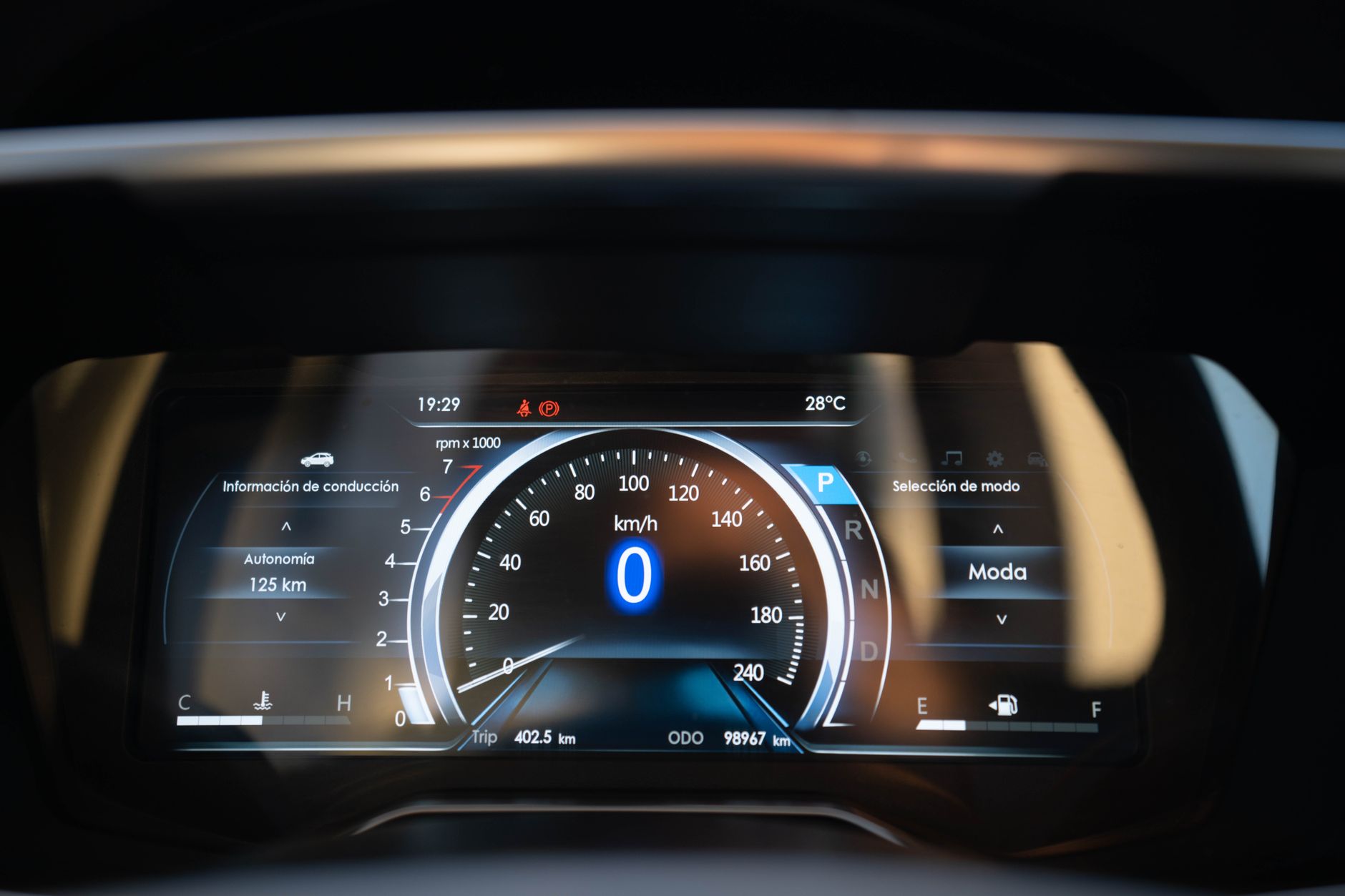
Phase 1: Diagnosis and awareness. For one week, the driver should record consumption each time they refuel. Recording kilometers traveled and liters consumed allows calculating average consumption and detecting variations. This phase does not seek to improve anything, but to create awareness. A driver who does not know how much they consume cannot optimize it.
Phase 2: Technical and tactical training. In this phase, specific techniques are practiced: gear changes at the optimal moment, anticipation of braking, maintaining safety distance, and frequent mirror observation. Practicing in variable conditions is recommended: flat, uphill, and downhill, since the Ministry of Transport notes that techniques vary by terrain. The goal is to automate efficient responses.
Phase 3: Integration and evaluation. In the final phase, the driver applies everything learned in exam simulations. The goal is to drive as if an examiner were present, maintaining efficiency even under pressure. After each simulation, consumption is reviewed and results are compared with Phase 1. A reduction in consumption, even modest, indicates improvement in control.
This protocol does not require advanced technology. A notebook and discipline are enough. The key is conscious repetition: each time a braking is anticipated or a shift is smoothed, the neural circuit that turns efficiency into habit is reinforced.
Implementation Considerations for Instructors and Driving Schools
Integrating efficient driving into formal training requires more than adding a theoretical lesson. Instructors must model the techniques in each practice and provide specific feedback on consumption and control. A useful approach is to record sessions or use onboard computer data, if the vehicle has one, to show the student the impact of their actions.
It is also important to adapt teaching to the type of vehicle and local conditions. Driving in a city with dense traffic is not the same as on an open road. The Ministry of Transport distinguishes between flat and sloped driving, suggesting that training should include varied scenarios. Instructors who incorporate these variations better prepare their students for the exam and for real life.
A limitation to consider is that efficient driving can come into tension with other exam objectives, such as fluidity in merges or adaptation to traffic pace. In those cases, the priority is safety and legality, not maximum savings. The manuals agree that efficiency is a goal compatible with safety, but must not compromise it. This nuance is essential to avoid dogmatism.
Conclusion: Efficiency as Proof of Mastery
Efficient driving is not an optional supplement in driving exam preparation: it is one of the clearest ways to demonstrate control. A driver who anticipates, smooths, and logs their consumption is demonstrating, at the same time, that they master the vehicle, read the environment, and have sustainable habits. Official manuals and the Ministry of Transport's objectives support this vision.
The three-layer framework—technical, tactical, and strategic—offers a roadmap for training these skills in a structured way. The three-phase protocol turns that framework into action. And the available evidence suggests that drivers who apply these techniques not only save fuel, but also reduce vehicle wear and stress behind the wheel.
For the candidate, the message is clear: it is not about driving slowly, but about driving well. Efficiency is the signature of the expert driver. On an exam, that signature translates into passes. On the road, it translates into safety, savings, and vehicle longevity.
References
- Ministry of Transport and Sustainable Mobility. Objective 1.3: Being able to optimize fuel consumption. https://www.transportes.gob.es
- IDAE. Efficient Driving Manual. https://www.idae.es
- Andalusian Energy Agency. Efficient Driving Manual. https://www.agenciaandaluzadelaenergia.es