Eco-Driving Framework: How to Pass Your Efficient Driving Course and Get Your Professional License
In the competitive world of professional transportation, having a driver's license is no longer enough. More and more companies and authorities require proof of an efficient driving course as part of the requirements to obtain or renew a professional license. This article presents the 5E Framework, a proven method that will guide you step by step to master eco-driving, pass the practical exam, and stand out as a professional driver.
Introduction to the Framework
The 5E Framework is a structured system that addresses the five fundamental pillars of efficient driving: Efficiency, Evaluation, Execution, Errors, and Excellence. Developed from international best practices and adapted to local regulations, this framework will help you reduce fuel consumption, minimize emissions, increase safety, and most importantly, successfully meet the professional license requirement.
Why This Framework Works
This framework works because it combines theory and practice progressively. Unlike other approaches that only focus on technical rules, the 5Es integrate the driver's mindset, data analysis, and habit correction. Additionally, it aligns with European Union standards and local regulations for practical driving exams, making it a comprehensive preparation.
The 5E Framework: Steps
1. Efficiency: Know Your Vehicle and Route
Before starting the engine, you must understand how your vehicle works and plan your route.
- Know the manual: Check optimal shift RPM, tire pressure, and assistance systems.
- Plan the route: Use traffic apps to avoid jams and difficult terrain. Flat routes with constant speed are ideal.
- Payload: Remove unnecessary weight; every 100 kg extra increases consumption by up to 5%.
2. Evaluation: Monitor Your Driving
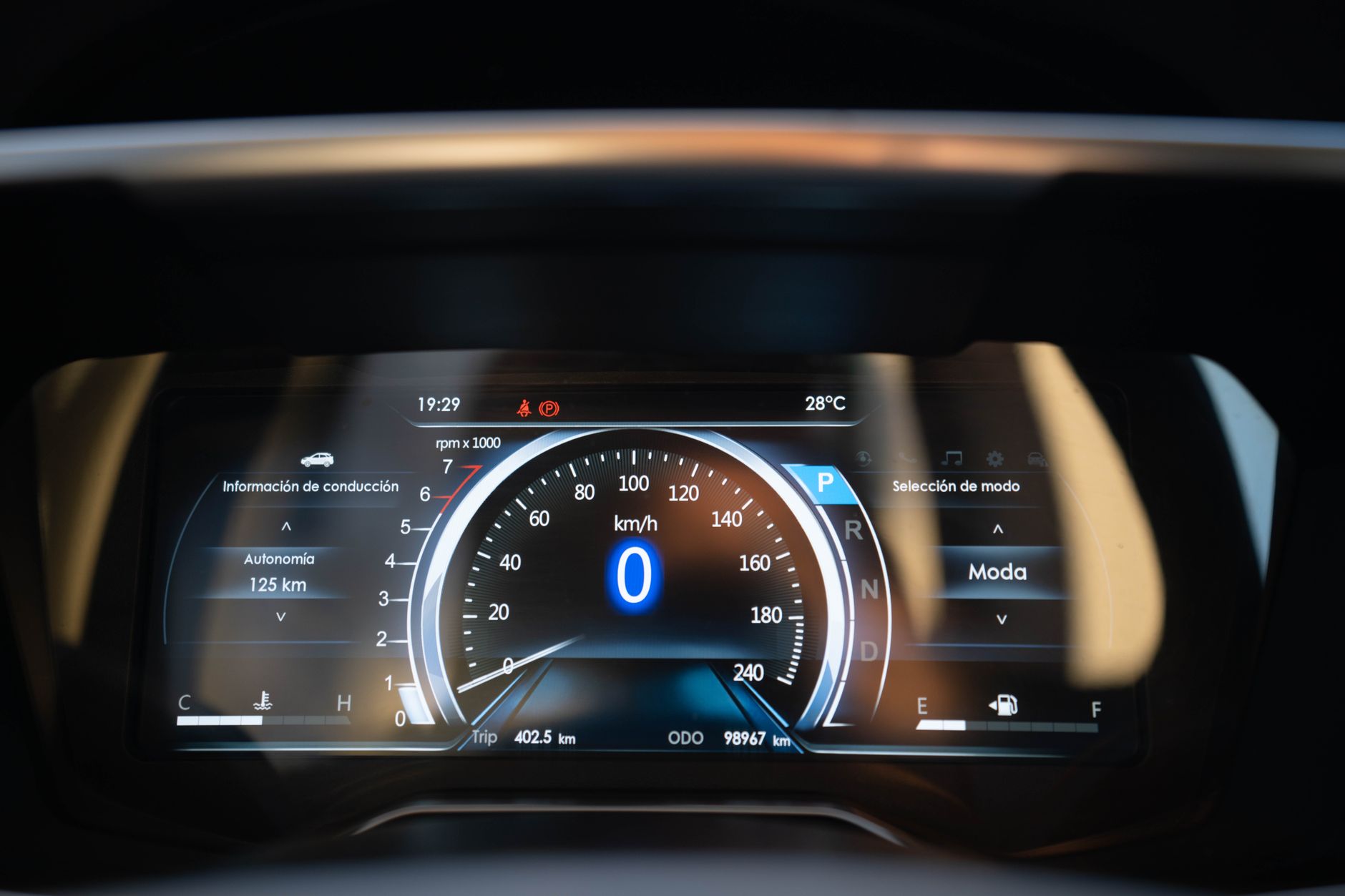
Use telemetry tools or simply pay attention to dashboard indicators.
- Instant consumption: Keep the indicator in the green zone (1500-2500 RPM for diesel).
- Constant speed: Use cruise control on highways to avoid sudden accelerations.
- Proper gear: Shift to a higher gear as soon as possible without straining the engine.
3. Execution: Eco-Driving Techniques
Apply these techniques daily:
- Anticipation: Observe traffic 12 seconds ahead to reduce braking.
- Progressive braking: Lift your foot off the accelerator early and brake gently.
- Smooth acceleration: Press the accelerator gradually; avoid flooring it.
- Turn off the engine: If stopped for more than 30 seconds, turn off the engine.
4. Errors: Identify and Correct Negative Habits
Common errors include:
| Error | Impact | Correction |
|---|---|---|
| Flooring it at traffic lights | +20% consumption | Accelerate gently up to 2000 RPM |
| Braking sharply | +15% consumption | Anticipate and lift off the accelerator |
| Revving the engine cold | +25% wear | Wait 30 seconds before moving |
| Carrying roof load | +25% consumption | Use the trunk if possible |
5. Excellence: Get Certified and Continuously Improve
- Take the official course: Look for authorized centers offering the efficient driving course.
- Prepare for the exam: Review the requirements and administrative procedures for the license.
- Keep a record: Maintain a log of consumption and times to identify areas for improvement.
How to Apply It
- Week 1: Study your vehicle's manual and plan all your routes.
- Week 2-3: Practice anticipation and progressive braking in low-traffic areas.
- Week 4: Use a consumption meter (app or display) to evaluate your progress.
- Week 5: Do a mock practical exam with an instructor.
- Week 6: Take the official exam.
Examples/Success Stories
Case 1: Maria, bus driver Maria reduced her consumption from 38 L/100 km to 32 L/100 km in three months using the 5E Framework. She passed the efficient driving course on her first attempt and now saves $200 a month on diesel.
Case 2: Juan Perez Juan, a truck driver, followed the framework steps and overcame his fear of the practical exam. You can read his full story at how Juan overcame his fear of the practical exam. Additionally, in his process to obtain the license, he highlights the importance of eco-driving.
Common Mistakes to Avoid
- Believing eco-driving is only about saving fuel: It also improves safety and comfort.
- Not planning the route: Getting lost or choosing congested routes ruins any savings.
- Ignoring maintenance: A dirty air filter can increase consumption by 10%.
- Not preparing for the theory exam: Check our guide on the theory driving exam to avoid failing.
Templates and Tools
Efficient Driving Plan Template
Download our weekly template to record:
- Daily consumption (L/100 km)
- Distance traveled (km)
- Techniques applied (anticipation, gear shifting, etc.)
- Observations
Pre-Exam Checklist
| Item | Verified |
|---|---|
| Documents in order: ID, medical exam, course certificate | ☐ |
| Vehicle in good condition: tires, lights, brakes | ☐ |
| Knowledge of practical exam points | ☐ |
| Practice of eco-driving for 1 week | ☐ |
By implementing the 5E Framework, you will not only meet the professional license requirement but also become a safer, more efficient, and competitive driver. Start your journey to excellence today!