Driving in Work Zones: Techniques for Safe Travel and Accident Prevention
Driving safely through a work zone requires reducing speed, increasing following distance, and obeying temporary signage and flagger instructions without exception. Applying these three basic techniques immediately reduces the risk of rear-end collisions—the most common accident in these stretches—and protects both drivers and roadway workers.
Approximately 80% of people who die in construction zone accidents are the vehicle driver and their passengers. That data disproves the intuition that victims are usually the workers. The real danger is concentrated inside the vehicle cabin, and most of these crashes are preventable with simple behaviors.
In this article you will find a step-by-step procedure for navigating work zones safely, with decision criteria, estimated times, and practical warnings. The goal is for you to incorporate these techniques into your driving so that the driving exam and, above all, daily driving find you prepared.
What do you need to drive safely through a work zone?
Before approaching a work zone, make sure you have the following.
- Up-to-date road condition information. Checking traffic conditions before you leave lets you plan enough time to drive safely and avoid the rush that leads to speeding.
- An identified alternate route. Work zones may include detours; knowing an alternative road reduces improvisation and stress when temporary signage redirects you.
- The vehicle in braking condition. Tires and brakes in good condition are critical because sudden braking is common in these zones. This is not a minor detail: rear-end collisions are the most frequent type of crash.
- Full attention and minimized distractions. Avoid changing the radio station or using your mobile phone while driving in a construction zone. Temporary signage requires quick and precise reading.
- Patience and a willingness to obey. Remember that these workers are doing their job and that the flagger has the same authority as a regulatory traffic sign.
Step 1: Check road conditions and plan your trip
The first step happens before you start the engine. Checking traffic information lets you anticipate lane restrictions, detours, and delays, and plan enough time to drive safely.
In several countries there are official telephone services or traveler information websites that report road conditions in real time; in Arizona, for example, it is recommended to call 511 or visit the Traveler Information site. Spending five minutes on this check can save you an incident on the road.
Decision criterion: if your usual route has active construction, decide whether it is better to leave earlier or take an alternate road. This evaluation depends on factors such as time of day and the expected duration of the work. There is no single answer.
Tip: schedule the check right before you leave. Traffic information ages quickly and lane configurations in a work zone can change at any time.
Step 2: Reduce speed as you approach temporary signage
When you see the first construction signs, lift your foot off the accelerator. Speeding is one of the main causes of crashes in construction zones.
Temporary signage—the set of cones, barricades, panels, and signs that delimit the work zone—is not decorative: it is there to help you travel safely through the area. Respect the signs indicated.
Key insight: the safe speed in a work zone is not the one marked by the road's usual limit, but the one that allows you to stop in time for an unexpected event. Usual speed limits may be reduced and there may be people working on or near the road.
Warning: do not drive through an area delimited by traffic cones. That area is closed for a reason, and crossing it can expose you and the workers to serious risk.
Step 3: Increase your following distance
Maintain a two-car distance between your vehicle and the one ahead, as well as with workers and construction machinery. This separation gives you the margin needed to react if the preceding vehicle brakes suddenly.
The most common type of accident in a construction zone is a rear-end collision. That statistic makes following distance the most cost-effective preventive technique you can apply. It is not just about not crashing: it is about having space to stop without entering the work area.
Decision criterion: in rain or on wet pavement, extend the distance beyond two cars. Traction decreases and braking distance lengthens. You can go deeper into techniques for wet conditions in How to Drive in Rain: A Case Study on Accident Reduction in Wet Conditions.
Step 4: Obey the flagger and temporary traffic controls
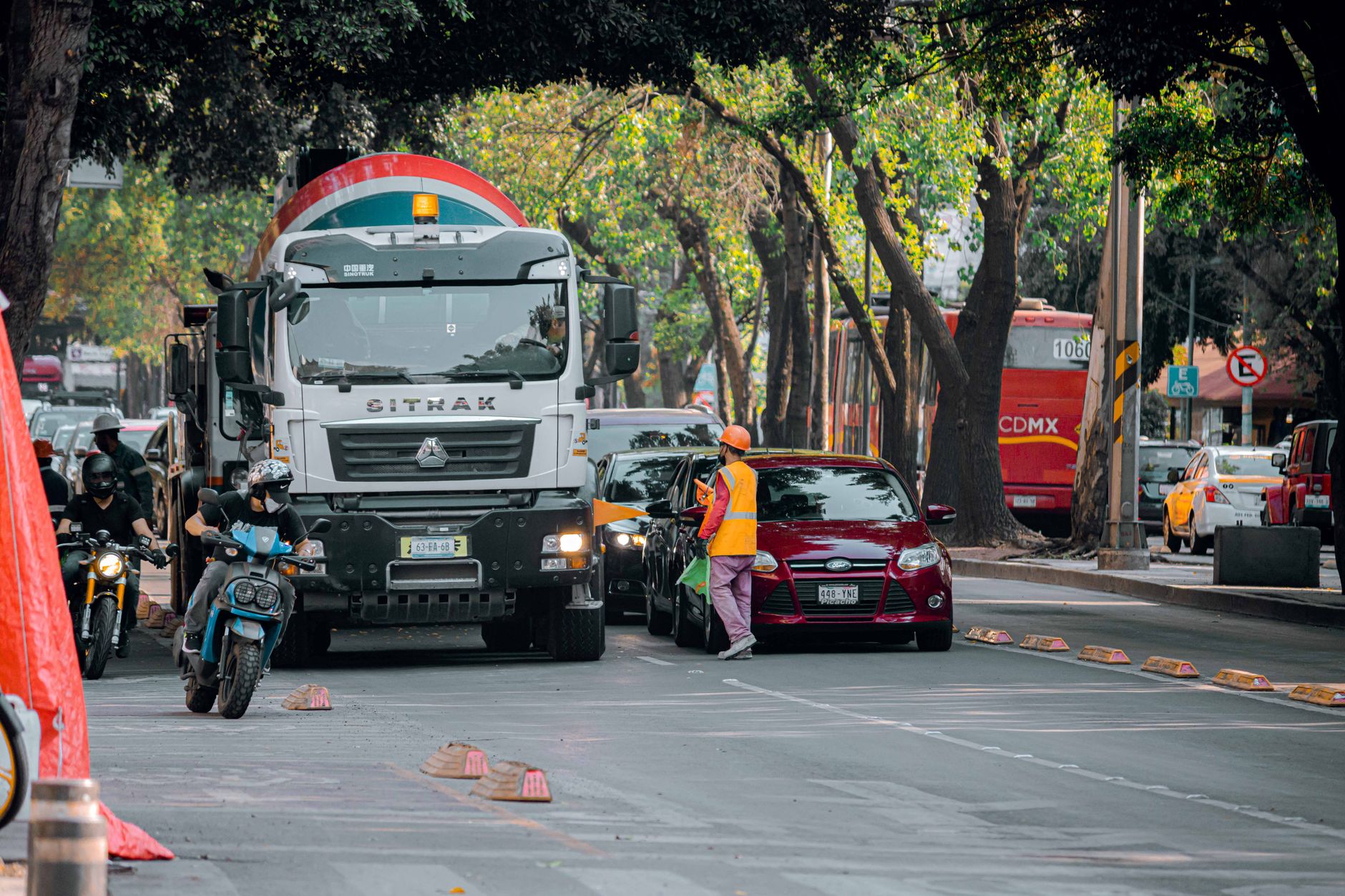
The flagger knows what is best for directing traffic safely in the construction zone, and has the same authority as a regulatory traffic sign. Disobeying their instructions can result in a fine.
Follow the directions of the flagger or signaler, and respect the traffic control barrier or temporary traffic lights. These elements coordinate the alternating passage of vehicles and prevent dangerous crossings.
Key insight: in a work zone, the hierarchy of priority is clear: first the flagger, then temporary signage, then normal flow. When there is a conflict between a permanent sign and a human instruction, the human one prevails.
Step 5: Keep your attention on the road and minimize distractions
Give your full attention to the road and avoid changing the radio station or using your mobile phone while driving in a construction zone. Concentration is not generic advice: it is the skill that allows you to read temporary signage in advance.
Focus your gaze on the road ahead, not on the construction itself. It is tempting to look at the machines or the workers, but that distraction reduces your ability to react.
Tip: anticipate the movements of vehicles entering or leaving the work zone. An unexpected maneuver by a construction truck can force you to brake suddenly.
Step 6: Prepare for lane changes and use late merging
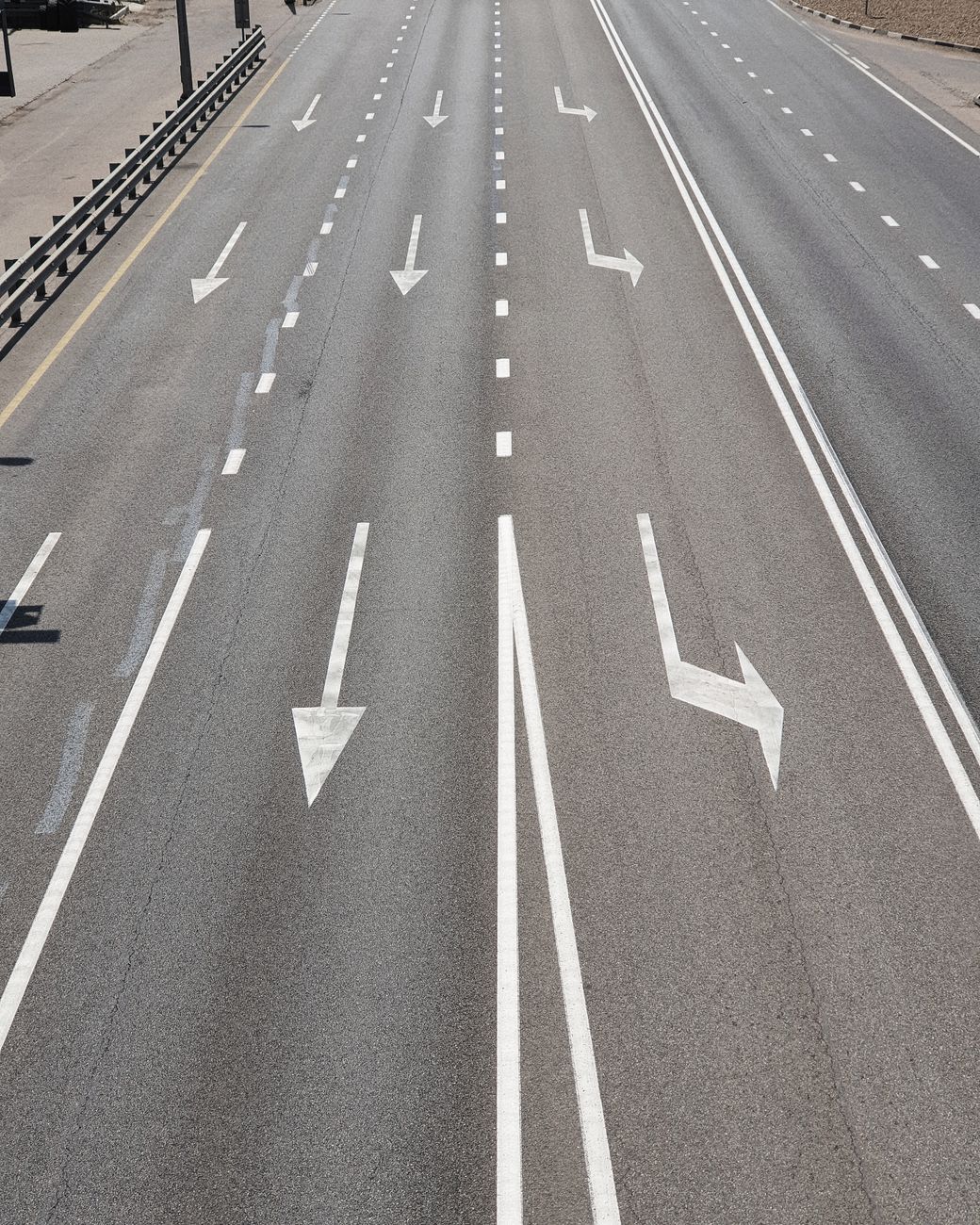
The configuration of lanes in a work zone can change at any time and force you to drive in a reduced lane, change lanes, follow a detour, or take a longer route. Stay alert to the signs indicating these changes.
When two lanes merge, late merging is recommended, that is, using both lanes up to the closure point and alternating passage in an orderly manner. This technique reduces queue length and conflicts, provided it is done cooperatively.
Key insight: late merging is not an aggressive shortcut if executed correctly; it is a flow strategy that benefits everyone when drivers alternate passage.
Step 7: Stay calm and follow the traffic pace
Stay calm and be patient: remember that these workers are doing their job and that construction benefits the community. Frustration behind the wheel is a real risk factor.
Drivers can help keep traffic flowing and respect speed limits by joining the flow as indicated by the signs. Do not try to make up for lost time by accelerating as soon as the work zone ends.
Warning: keep in mind that the road ahead may be obstructed by construction or slow vehicles. Do not pass blindly after a work zone; visibility may still be compromised.
Frequently asked questions and troubleshooting
What do I do if the flagger gives me an instruction different from the light signal?
The flagger's instruction prevails. In a work zone, the flagger has the same authority as a regulatory sign and disobeying can result in a fine. Stop and wait for a clear instruction.
What do I do if I am surprised by a detour without clear signage?
Reduce speed to a minimum, turn on your hazard lights if necessary, and follow the route marked by cones and barricades. Do not drive through areas delimited by cones. If the detour is unavoidable, follow the instructions and check traffic information to plan the corrected route.
How do I know if a two-car distance is enough?
The two-car distance is the minimum recommended reference in construction zones. In rain, reduced visibility, or heavy traffic, extend it. The distance should allow you to stop without entering the work area.
Should I check road conditions if I know the area?
Yes. Lane configurations can change at any time. Even on usual trips, construction can appear overnight. Checking traffic conditions is a safe driving practice, not just for occasional travelers.
Next steps to consolidate safe driving
Applying these techniques in every work zone you encounter is the best way to turn safety into a habit. The key is to anticipate: check road conditions, reduce speed, and increase distance before temporary signage forces you to react. That margin of anticipation is what separates safe driving from a risky situation.
If you want to go deeper into anticipation techniques, we recommend reviewing Defensive Driving: How a Transport Fleet Reduced Accidents by 45% with Anticipation Techniques. You may also be interested in the case of Road Safety and Driving: How a Transport Company Reduced Accidents by 40% to see how these measures are applied on a professional scale.
The driving exam usually evaluates the ability to read and respect temporary signage. Mastering these techniques not only helps you pass, but also to drive with the authority of someone who knows the environment. As a next step, review your usual route and identify active work zones. That small preparation makes the difference.
Conclusion
Driving in work zones is an exercise in anticipation and respect. Reducing speed, maintaining a two-car distance, obeying the flagger, and concentrating on the road are the four techniques that reduce the risk of rear-end collisions, the most common accident in these stretches. Most victims are the vehicle occupants themselves, so these measures protect you and those accompanying you. Temporary signage is there to guide you, not to complicate your trip. Treat it as what it is: a safety tool.