Driving in Fog Conditions: How to Adapt Speed and Lighting to Drive Safely
To drive safely in fog, you must turn on your low beams and fog lights, and adapt your speed and safety distance to the available visibility, following the 3V rule: visibility, speed, and the vehicle ahead must be equivalent. This guide shows you step by step how to achieve this, with clear criteria for deciding when to use each light and at what speed to reduce, based on official DGT recommendations.
Fog is one of the most dangerous weather phenomena behind the wheel because it drastically reduces visibility and deceives you about actual speed. Applying the correct techniques is not only a legal obligation but the difference between a safe trip and an accident. Below, you will find a complete procedure to adapt your driving to any fog episode, from light mist to dense fog.
What do you need to drive safely in fog?
Before hitting the road, make sure you have the following elements. Each one serves a specific function in fog driving and will help you maintain control at all times.
- Low beams and fog lights in good condition. They are your main allies: they allow you to see and, above all, be seen. The DGT recommends turning them on whenever there is fog. Check their operation before starting your journey.
- Operational windshield wipers. Fog is often accompanied by humidity, and effective wipers keep the windshield clear. Check their condition and the windshield washer fluid level.
- Knowledge of the 3V rule. This rule is the reference measure for driving in fog: visibility, speed, and distance from the vehicle ahead must match. For example, if you see 50 meters ahead, you should drive at 50 km/h and maintain 50 meters of distance.
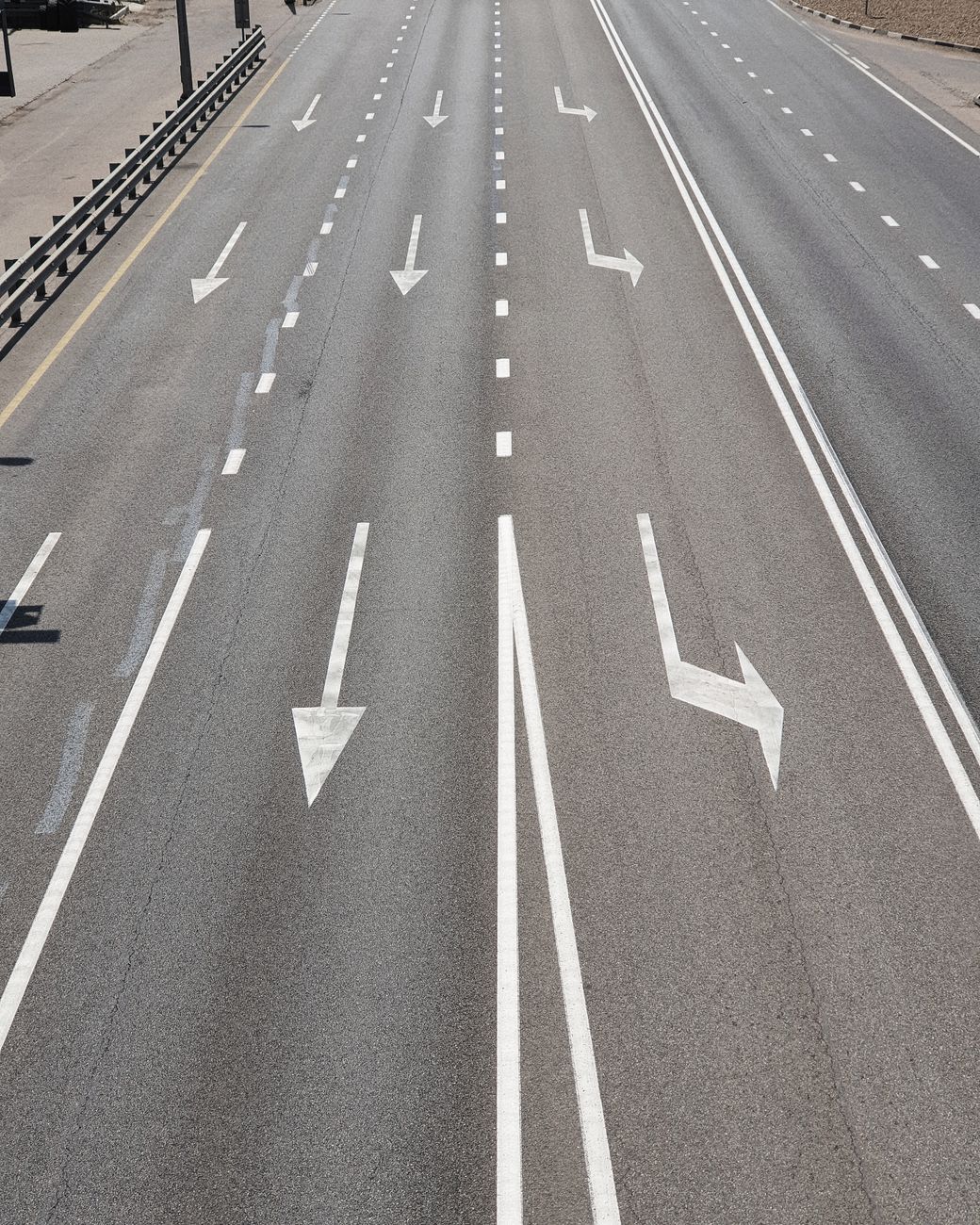
- Mental map of road markings. When fog is very dense, the longitudinal markings on the right become your reference to stay centered in the lane.
- Seat belt fastened and other passive safety elements. Although not specific to fog, their use is mandatory and reduces the consequences of any impact.
Step 1: Turn on the correct lights before you start driving
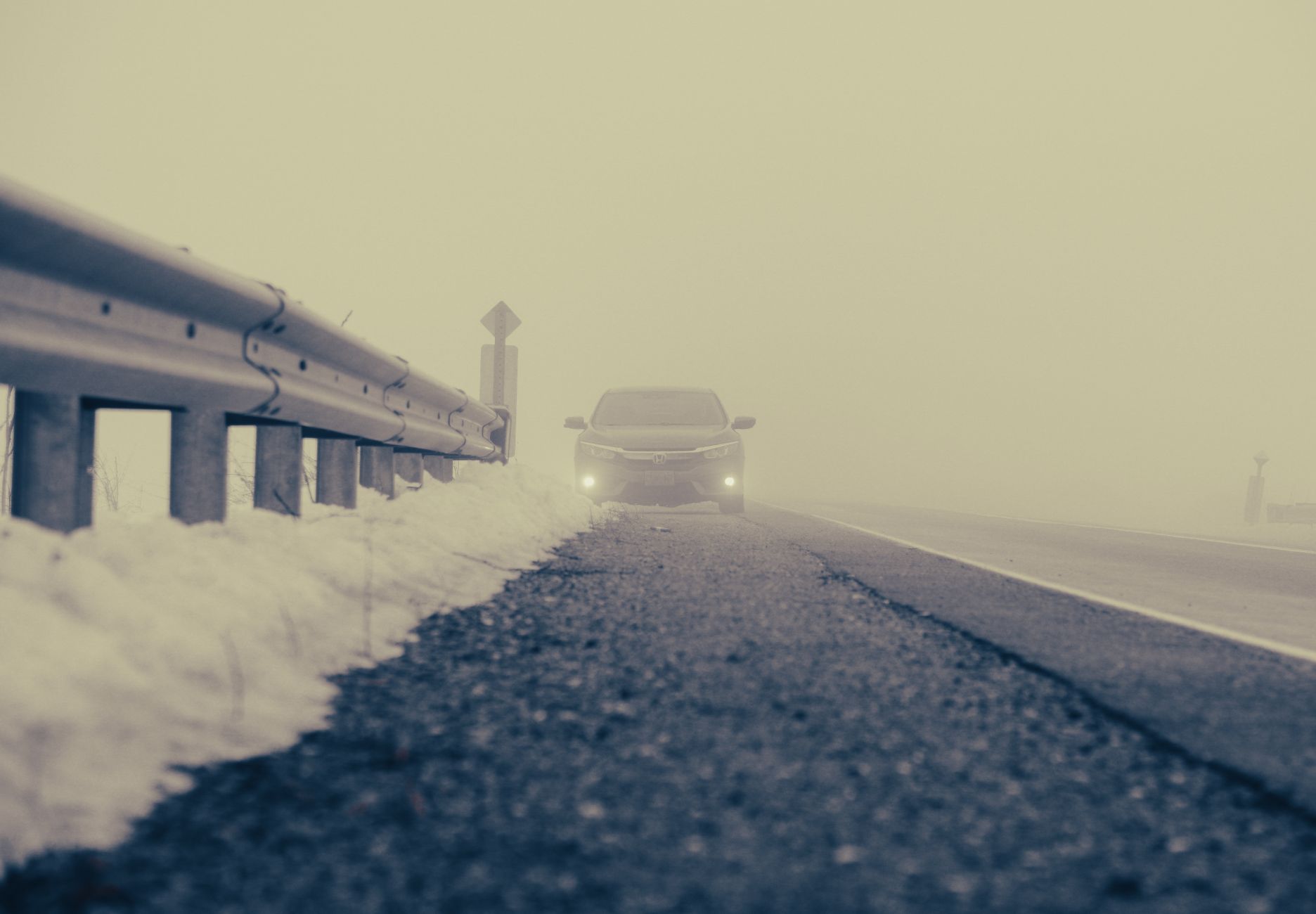
Light is your main safety tool in fog: it's not just about seeing, but about being seen. Turn on your low beams and fog lights as soon as visibility begins to decrease. The DGT is clear: in fog, you must turn on low beams and fog lights as an essential rule to "see well and be seen."
When to use front and rear fog lights?
Front fog lights improve visibility in dense fog conditions. Rear fog lights, on the other hand, should only be activated when the fog is truly thick and does not allow you to see anything around you. The DGT warns that the rear fog light should not be used in rain and must be turned off as soon as you leave the affected area, as otherwise it will greatly annoy other drivers.
This distinction is key: using the rear fog light indiscriminately can dazzle those behind you and cause accidents. Use it only when visibility is minimal, and turn it off as soon as conditions improve.
Tip: If your vehicle does not have fog lights, low beams are sufficient to comply with regulations and maintain acceptable visibility. Do not replace fog lights with high beams, as these can dazzle.
Step 2: Adjust speed according to actual visibility
Speed is the factor that most influences the severity of a fog accident. The most advisable thing is to adapt speed to each circumstance; dense fog forces you to reduce speed significantly. The best way to know if you are driving at the right speed is to feel safe behind the wheel and capable of reacting to an unforeseen event. That will be the most appropriate speed.
Apply the 3V rule practically:
| Visibility (meters) | Recommended maximum speed (km/h) | Minimum distance from the vehicle ahead (meters) |
|---|---|---|
| 50 | 50 | 50 |
| 40 | 40 | 40 |
| 30 | 30 | 30 |
This table is a guide based on the 3V rule. As a reference, if visibility is 50 meters, drive at 50 km/h and maintain 50 meters of distance. Reduce even more if the fog thickens.
Warning: Do not brake abruptly or stop on the roadway. If you need to slow down, do so progressively and use hazard lights if necessary.
Step 3: Maintain an extended safety distance
Safety distance is your reaction margin. In fog, you must increase it proportionally to visibility. The 3V rule gives you the guideline: the distance from the vehicle ahead must equal visibility and speed.
Do not follow another vehicle closely; watch the brake light of the vehicle ahead to anticipate any braking. This practice allows you to react in time if the car in front stops suddenly.
Practical example: If the fog allows you to see 30 meters ahead, you should drive at 30 km/h and maintain 30 meters of distance. If the vehicle ahead is closer, reduce speed further or increase distance. Never tailgate the car in front relying on it not braking suddenly.
Step 4: Use road markings as a reference
When fog is very dense, the longitudinal markings on the right side of the roadway become your guide to stay centered in the lane. The DGT recommends focusing on longitudinal markings to maintain direction and drive with the car centered.
This technique is especially useful on curvy roads or highways, where fog can make you lose lane reference. Look at the lines on the right and follow them gently with your eyes, while still paying attention to the rest of the road. If the fog is extremely dense and you cannot see the markings, reduce speed to a minimum and consider stopping in a safe place off the roadway.
Tip: On highways and expressways, always drive in the right lane. This reduces the risk of collision with vehicles traveling at higher speeds.
Step 5: Avoid overtaking and sudden maneuvers
In fog, any unexpected maneuver increases the risk of an accident. Avoid overtaking, as you cannot clearly see if another vehicle is coming in the opposite direction or if there are obstacles in the lane. The DGT recommends not overtaking in these conditions.
Also, pay special attention to two-wheeled vehicles and pedestrians, who are less visible in fog. Reduce speed in urban areas or near intersections, and maintain a generous lateral distance from cyclists and motorcyclists.
Warning: Do not brake abruptly or stop on the roadway. If you have an emergency, immediately turn on your hazard lights, headlights, and fog lights.
Step 6: If the fog is very dense, consider stopping in a safe place
Dense fog can reduce visibility to less than 50 meters, or even to zero. In those cases, driving is extremely dangerous. The DGT advises that when fog is very dense, use the road markings on the right as a reference, but if you cannot see them, the wisest thing is to stop at a rest area or off the roadway.
Do not stop on the shoulder of a highway or expressway, as it is very dangerous. Look for an exit or a service area. If you cannot find a safe place, reduce speed to a minimum and turn on all available lights, including hazard lights.
Note: This guide is based on DGT recommendations, but conditions may vary. When in doubt, always prioritize safety and look for a safe place to stop.
Troubleshooting common issues
What do I do if the fog lights don't work?
If the fog lights do not turn on, check the fuse or the bulb. If you cannot repair them immediately, use low beams, which are mandatory and sufficient for driving in fog. Do not drive without any lights, as you would be practically invisible to other drivers.
How do I know if the fog is too dense to continue?
If you cannot see beyond 50 meters, the 3V rule requires you to drive at 50 km/h or less. If visibility is less than 30 meters, driving becomes very risky. In that case, look for a safe place to stop. The feeling of insecurity behind the wheel is a clear sign: if you do not feel capable of reacting to an unforeseen event, reduce speed or stop.
Should I use hazard lights while driving in fog?
No, hazard lights are reserved to indicate a stop or an imminent danger situation. To drive in fog, use low beams and fog lights. Only if you stop on the roadway due to an emergency, turn on hazard lights along with the other lights.
Next steps
Now that you know the steps to adapt speed and lighting in fog conditions, it's time to put them into practice. The next time you face a fog episode, remember the 3V rule and always prioritize visibility and safety distance. If you want to learn more about other adverse conditions, you can consult our articles on how to drive in rain and defensive driving. Additionally, if you are preparing for your driving test, make sure you master these techniques, as they are an essential part of road training. Road safety is a shared responsibility, and every decision counts. Stay informed and drive with caution.