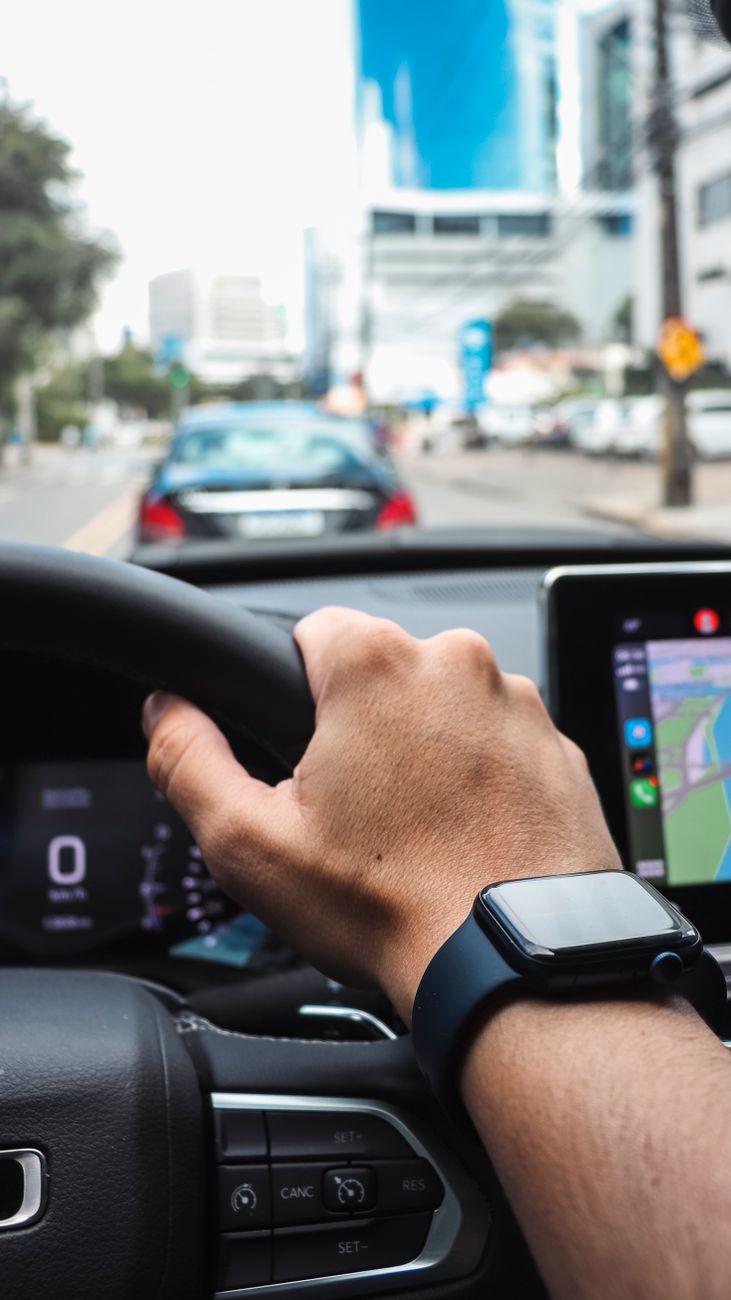
Defensive Driving: Concepts and Frequently Asked Questions on the Written Test
Defensive driving is a technique that enables the driver to avoid accidents despite the incorrect actions of other road users and adverse conditions. This skill is not only evaluated on the written driving test but is also essential for road safety. Mastering defensive driving involves anticipating dangers, maintaining an alert attitude, and making correct decisions in risky situations. In this article, you will find a complete guide on what defensive driving is, frequently asked questions that appear on written tests, and techniques for safe driving.
Executive Summary
Defensive driving is a driving approach that prioritizes accident prevention through anticipation, constant observation, and responsible decision-making. On written driving tests, this concept is evaluated across questions that present real risk scenarios. Drivers who adopt safe driving techniques significantly reduce the likelihood of being involved in traffic accidents. This article explains the fundamentals of defensive driving, summarizes the most common questions on tests, and offers practical strategies to incorporate these concepts into daily practice. By the end, the reader will understand the importance of defensive driving as a driving philosophy that saves lives and will be better prepared to pass the written test.
Introduction / Background
Road safety is a global challenge. Every year, millions of people lose their lives in traffic accidents, many of which are avoidable. Defensive driving is a response to this problem, aiming to equip drivers with skills to detect dangers early and react appropriately. According to the National Police of Nicaragua, in its official question bank for the written test, defensive driving is defined as "driving to avoid accidents despite the incorrect actions of other users and adverse conditions." This definition is widely used in road safety education programs in different countries. For example, in Chile, defensive driving is "a fundamental concept in road safety education" and "one of the pillars that every applicant for a Class B driver's license must deeply understand before taking the written test." This preparation is equally valued in other countries, where driving tests include questions on safe driving.
What is defensive driving and how does it differ from normal driving?
Defensive driving is not simply "driving carefully." It is a set of techniques that involve always being prepared for unexpected actions from other drivers and changing road conditions. While normal driving relies on obeying traffic rules, defensive driving goes beyond: it seeks to anticipate potential dangers that others may create. For example, when approaching an intersection with a green light, a defensive driver slightly reduces speed and observes if any vehicle is approaching the intersection without intending to stop. This is an anticipatory practice that purely reactive driving would not consider. Defensive driving also includes managing emotions, such as avoiding anger at aggressive drivers, known as "road rage." Thus, defensive driving becomes a proactive attitude that distinguishes the safe driver.
What are the human factors that contribute to defensive driving?
The written test often evaluates concepts such as "knowledge, alertness, good judgment, foresight, and agility" as human factors that help develop safe driving. These five elements form the basis of defensive technique. Knowledge implies mastering traffic rules and vehicle capabilities. Alertness refers to the ability to maintain concentration and perceive potential hazards. Good judgment allows for quickly assessing situations and making correct decisions. Foresight is the ability to imagine what could happen and be prepared. Agility, both physical and mental, to execute evasive maneuvers if necessary. For example, a driver who knows their vehicle's braking distance (knowledge) maintains a prudent distance (foresight) and is attentive to the brake lights of the vehicle ahead (alertness). If the vehicle ahead brakes suddenly, the defensive driver has the good judgment not to swerve violently but rather brake in a controlled manner (agility). All these factors are integrated into the "state of alertness" that characterizes the defensive driver.
What is a defensive driver according to the technical concept?
A defensive driver is "a person with the ability to drive a vehicle without causing infractions, accidents, discourtesies, misuse of the vehicle, or harm to other users." This technical definition broadens the concept beyond simple driving skill. It includes consideration for other road users and respect for the environment. A defensive driver not only avoids collisions but also avoids behaviors that could cause discomfort or danger, such as excessive horn use or abrupt lane changes. Therefore, defensive driving is an ethical behavior in traffic.
How does defensive driving relate to traffic rules?
Defensive driving does not replace knowledge of traffic rules but complements it. To be defensive, a driver must know the rules of right of way, speed limits, proper use of lights and signals, and parking regulations. For example, respecting the right of way at an intersection is a legal rule, but defensive driving advises that even if you have the right of way, you should ensure that other drivers respect it before proceeding. This is especially relevant at intersections without traffic lights, where a driver who does not respect the stop sign can cause an accident. In my recommended practice, I always advise drivers to approach intersections with the intention of stopping if they see that another vehicle may not yield. Defensive driving integrates with knowledge of traffic regulations, which are subject to evaluation on the written test.
Why does the written test include defensive driving questions?
Written driver's license tests include defensive driving questions because they aim to assess whether the applicant possesses the cognitive skills necessary to drive safely. In Chile, for example, defensive driving "appears transversally in multiple questions, especially those that evaluate driver behavior in risky situations, the relationship with other road users, and the ability to act prudently even when having the right of way." Written test questions are not limited to memorizing signs; they present real scenarios and ask what the safest action is. For example, a question might describe a situation where a pedestrian unexpectedly crosses the street, and the driver must decide between braking or swerving. The test assesses the ability to choose the most prudent option, not the fastest. This reflects the importance of defensive driving as a basic competency for all drivers.
Which defensive driving questions frequently appear on the written test?
Specific defensive driving questions may vary by country and jurisdiction. In Nicaragua, the Traffic Safety Directorate of the National Police has an official question bank that includes the topic of defensive driving. Among the typical questions are:
- What is defensive driving? (the correct answer refers to driving to avoid accidents despite the incorrect actions of others and adverse conditions).
- What are the human factors that help develop defensive driving? (answers include knowledge, alertness, good judgment, foresight, and agility).
- What is a driver from the defensive driving concept? (the correct answer is the one that mentions the ability to drive without causing infractions, accidents, discourtesies, etc.).
It is important to note that these questions may appear with different phrasings, but the essence is the same: to assess understanding of the concept and its practical application. In Argentina, the battery of written test questions, developed by the Government of the Province of Buenos Aires, includes a section on "Safe Coexistence in Traffic" with questions on responsibility and safe behavior. Although not all questions explicitly mention defensive driving, many scenarios assess anticipation and accident prevention.
Safe driving techniques you should master
There are various safe driving techniques that every driver should know. These techniques will not only help you pass the written test but also make you a safer driver. Some of the most important are:
Anticipation and peripheral vision
Anticipation is the foundation of defensive driving. It involves looking ahead beyond the immediate. A driver should look at least 10 to 12 seconds ahead of their vehicle. This allows for identifying potential hazards such as stopped vehicles, sharp curves, or changes in traffic flow. Additionally, it is useful to use peripheral vision to detect lateral movements of pedestrians or cyclists.
Maintaining a safe following distance
The safe following distance is the space between your vehicle and the one ahead. The general rule is to maintain at least a two-second gap under normal conditions. Under adverse conditions, such as rain or fog, this distance should be increased. To calculate it, choose a reference point on the road and count two seconds after the vehicle ahead passes it. If your vehicle reaches the point before completing the count, the distance is insufficient.
Proper use of mirrors
Mirrors are essential tools for having a complete view of the surroundings. You should check the rearview and side mirrors every 5 to 8 seconds. Before changing lanes or turning, always check the blind spot by turning your head to ensure no vehicles are in the adjacent lane.
Communication with other drivers
Using turn signals (blinkers) is essential to communicate your intentions to other drivers. Signaling well in advance (at least 30 meters before) allows others to react appropriately. Braking can also serve as a signal if used correctly. For example, lightly pressing the brake pedal a few times before fully braking can alert drivers behind you.
Speed control
Respecting speed limits is a basic rule, but defensive driving implies adjusting speed to the environment. For example, if it is raining or there is roadwork, you should reduce speed even if the limit allows a higher speed. Speeding is a common factor in accidents, so maintaining a safe speed is an essential defensive technique.
Managing fatigue and stress
Driving while fatigued or stressed affects reflexes and decision-making abilities. It is important to recognize signs of fatigue, such as constant blinking, yawning, or lack of concentration. If you feel tired, it is best to stop and rest. In stressful traffic situations, such as aggressive drivers, avoid confrontation and yield if necessary. Staying calm is a defensive technique that prevents dangerous escalations.
How to practice defensive driving in daily life?
Defensive driving is not a set of theoretical knowledge that is forgotten after the test. It should be a habitual practice in every trip. Below is a simple procedure to integrate defensive driving into your routine:
- Before starting: Adjust your seat and mirrors, and verify that the vehicle's systems function properly. Quickly scan the vehicle's surroundings for obstacles.
- During driving: Perform constant visual scans: mirrors every 5-8 seconds, the road ahead, and intersections. Maintain an adequate following distance, especially under adverse conditions.
- At each intersection: Reduce speed even if you have the green light or the right of way. Observe whether a vehicle is approaching at high speed and may run the red light.
- When changing lanes: Signal in advance, check the side mirror, and turn your head to check the blind spot. Execute the change smoothly and gradually.
- After driving: Reflect on your performance. Were there any situations where you could have reacted more defensively? This analysis will help you identify areas for improvement.
The relationship between defensive driving and traffic rules
Defensive driving is closely related to Traffic Rules and Regulations: A Complete Guide for Drivers. Knowing traffic laws is a requirement to pass the written test, but applying them defensively is what makes the difference in road safety. For example, Speed Regulations: Limits and Penalties on the Written Test - Complete Guide establish the permitted limits, but a defensive driver knows that a safe speed may be lower than the limit when conditions are not ideal. Similarly, knowing Right of Way: Essential Rules and Exceptions for the Driving Test is fundamental, but the defensive driver always yields if necessary to avoid a collision. Respecting Parking regulations and the Proper Use of Lights and Vehicle Signals are also components of safe and defensive road behavior.
Evaluation of defensive driving in different countries
The way defensive driving is evaluated on written tests may vary by country, but the objective is the same: to determine whether the driver has the cognitive skills to drive safely. In Chile, defensive driving is central content in the Class B driving test. In Nicaragua, the official question bank of the Traffic Safety Directorate of the National Police (used at tramitesenlinea.policia.gob.ni) includes a specific section on defensive driving with questions applicable to all license categories. In Argentina, the Government of the Province of Buenos Aires has published a battery of questions for the driver's license test that includes sections on "Safe Coexistence in Traffic," addressing concepts such as driver responsibility and behavior towards others. Although each country has its own question bank, the topics are similar: anticipation, speed control, respect for rules, and consideration for other users.
Comparative table of emphasis in Spanish-speaking countries
| Country | Evaluating Body | Key Concept Evaluated | Example Question |
|---|---|---|---|
| Chile (Class B) | El Buen Conductor App | Anticipation and action in adverse conditions | "What is defensive driving?" (answer in the app) |
| Nicaragua | National Police (Traffic Safety Directorate) | Defensive driving as a skill to avoid accidents | "What is defensive driving?" with options about avoiding accidents |
| Argentina | Government of the Province of Buenos Aires (Road Safety Policy) | Safe coexistence and responsibility | "What is responsibility?" on public roads |
This table is not exhaustive but shows that defensive driving is a universal topic in road safety education.
Defensive driving as a value for society
In addition to being a requirement to pass the test, defensive driving has a profound social impact. When more drivers adopt safe driving techniques, traffic accidents, injuries, and deaths are reduced. The costs associated with crashes, such as vehicle repairs and medical expenses, also decrease. Defensive driving fosters a culture of respect and responsibility on the roads, benefiting everyone. That is why driving manuals and written tests worldwide emphasize these concepts.
Common problems when studying for the defensive driving test
Many aspiring drivers face difficulties when preparing for the written test. Some of the most common problems are:
- Lack of practice in applying concepts: Students may memorize definitions but have trouble choosing the correct answer in situational questions.
- Ambiguity in options: Sometimes two or more answers seem correct, and the student does not know which one is best according to defensive driving principles.
- Time pressure: The written test has a time limit, which can make students rush to answer without reading carefully.
To overcome these problems, it is essential to study actively, not just memorize. It is recommended to practice with sample tests and understand the reason behind each correct answer.
Practical tips to pass the written driving test
Although each country has its own test, there are general best practices that will help you succeed:
- Study the official manual: Your country's or state's driving manual contains the key concepts that will be evaluated. Read it thoroughly.
- Understand concepts, not memorize: Instead of memorizing questions and answers, try to understand the reasoning behind each answer. For example, if a question is about following distance, understand that distance depends on speed and road conditions.
- Practice with simulated tests: Look for online quizzes or apps that offer questions similar to those on the real test. Practice helps you become familiar with the format.
- Rest well before the test: A good rest will allow you to maintain concentration during the test.
- Read each question carefully: Many times, students make mistakes by reading too quickly or misinterpreting the question. Mark keywords like "NOT," "EXCEPT," or "ALWAYS."
- Stay calm: During the test, if you encounter a difficult question, do not dwell on it too long. Answer it as best you can and move on. You can return to it if you have time left.
Considerations for implementing defensive driving in evaluation
Those responsible for designing written tests must consider how to effectively assess defensive driving skills beyond memorization. Questions should be situational and present moral dilemmas or complex decisions. For example, a question might describe an intersection where a driver has the right of way, but there is a distracted pedestrian crossing the street. The correct option would be to yield to the pedestrian, even if technically not following the right-of-way rule. Such questions measure the driver's attitude toward safety over strict rule compliance. Additionally, it is important that tests are updated according to accident statistics to address the most relevant issues. In many countries, multiple-choice formats with images or animated situations are already used to make the assessment more realistic.
Defensive driving is a shared responsibility
In conclusion, defensive driving is not only a requirement to pass the written test but also a responsibility that every driver acquires when obtaining a license. The official definition is clear: driving to avoid accidents despite the incorrect actions of others and adverse conditions. This implies that you cannot control the actions of other road users, but you can control your own response to them. Adopting a defensive attitude is a personal commitment to your safety and the safety of others.
References
Traffic Safety Directorate of the National Police of Nicaragua, "Official Questions Topic Defensive Driving" (tramitesenlinea.policia.gob.ni). El Buen Conductor, "Defensive Driving for the Class B Test" (elbuenconductor.cl). Government of the Province of Buenos Aires, "Questions Written Test Driver's License" (www.gba.gob.ar).