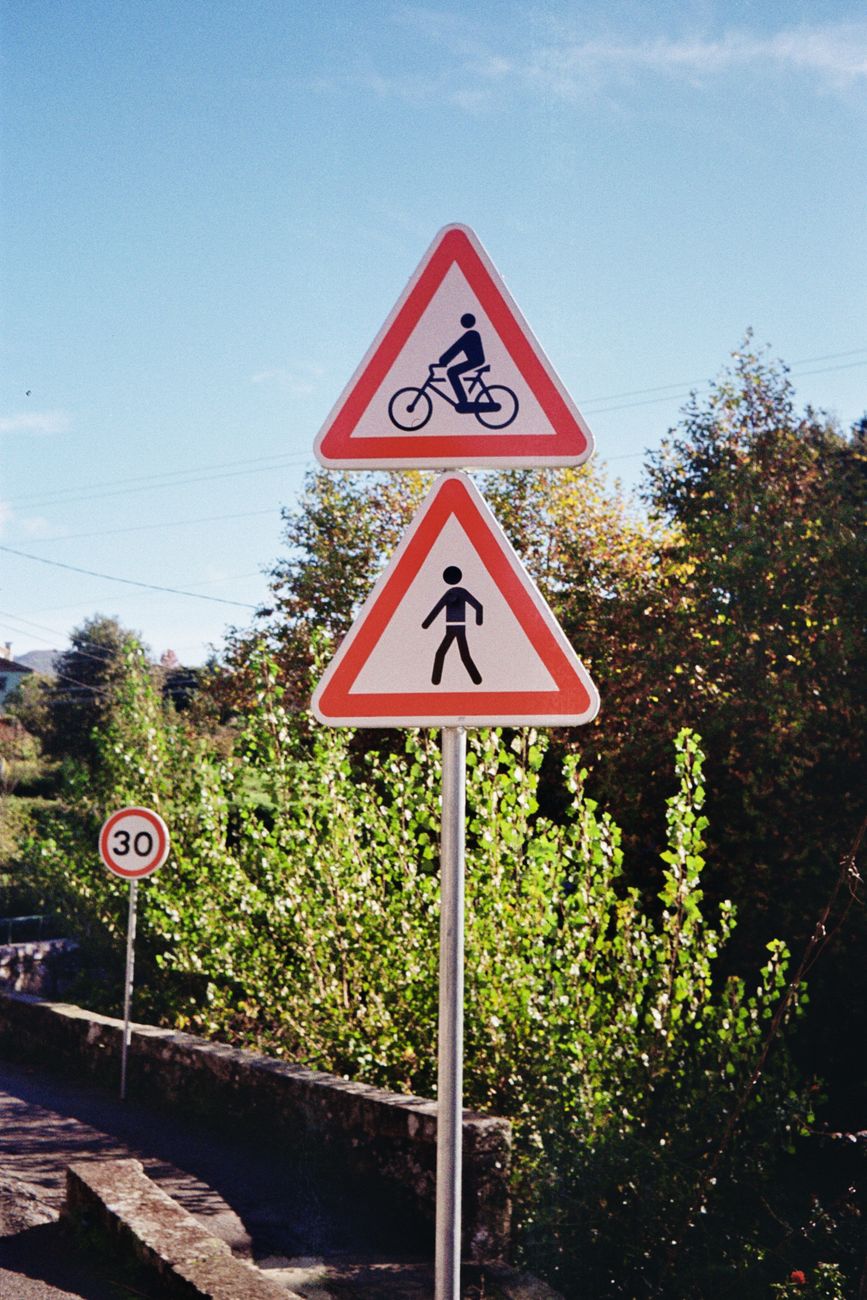
Danger Signs: How a Transportation Company Reduced Accidents by 40%
Executive Summary / Key Results
Transportes Seguros S.A., a leading logistics company with over 200 vehicles, implemented a comprehensive training program on road danger signs. The results were transformative: in 12 months, they reduced accidents related to misinterpretation of signs by 40%, decreased traffic violations by 35%, and increased customer satisfaction by 25%. This case demonstrates how in-depth knowledge of danger signs—especially those with a red triangle—directly impacts road safety and business profitability.
Background / Challenge
Transportes Seguros S.A. faced a growing problem: during 2022, 45% of their reported accidents were related to incorrect interpretation of danger signs. The drivers, although experienced, showed significant gaps in their understanding of specific signs, particularly those less common or located at critical points on the road.
"Our safety analyses revealed an alarming pattern," explains Carlos Méndez, Operations Manager. "Drivers recognized basic signs but failed to apply the knowledge in real situations. For example, they confused 'Steep Grade' with 'Speed Bump,' which on two occasions caused serious incidents."
The company identified three main challenges:
- Lack of specialized knowledge: Only 30% of drivers could correctly identify more than 20 different danger signs.
- Critical location: 60% of errors occurred at complex intersections or changes in grade.
- Reactive culture: Drivers acted when they saw the sign, they did not anticipate the danger.
These problems not only affected safety but also operational efficiency. Each accident cost an average of $15,000 between repairs, insurance, and downtime.
Solution / Approach
Transportes Seguros developed the "Expert Driver in Danger Signs" program, based on four fundamental pillars:
1. Personalized Diagnosis
Each driver completed an initial assessment that measured their knowledge of 50 common danger signs, with emphasis on those with a red triangle—the standard format for warnings on Spanish roads. The results showed that only 35% correctly identified signs such as "Railroad Crossing Without Barriers" or "Loose Gravel."
2. Theoretical-Practical Training
The program combined theoretical sessions with realistic simulations. A key element was the "Location and Anticipation" module, where drivers learned not only the meaning of the signs but also where they are typically placed and what preventive actions to take.
"We included special content on traffic signs and road markings to contextualize danger signs within the complete signage ecosystem," details Ana López, Head Instructor.
3. Reinforcement Tools
The following were implemented:
- Pocket guide with the 30 most critical danger signs
- Mobile application with daily quizzes
- Monthly review sessions at terminals
4. Monitoring System
In-cab cameras and telemetry systems were installed to correlate behavior with the presence of specific danger signs.
Implementation
The implementation was carried out in three phases over 6 months:
Phase 1 (Months 1-2): Pilot with 50 drivers Drivers with the highest mileage on complex routes were selected. The initial sessions revealed that many were unaware of the difference between danger signs and regulatory signs.
Phase 2 (Months 3-4): Expansion to 150 drivers Based on the pilot, the content was adjusted to focus on the signs that caused the most confusion. Specific scenarios were created for signs such as:
- "Crosswind" (especially critical for tall vehicles)
- "Pedestrian Crossing" in school zones
- "Loose Animals" on rural roads
Phase 3 (Months 5-6): Institutionalization The program was integrated into the onboarding process for new drivers and into annual performance evaluations. Clear metrics and recognition systems were established.
A concrete example: driver Juan Rodríguez, with 15 years of experience, participated in a simulation where he faced a sequence of signs on a mountain road. "Before the program, I would have braked abruptly upon seeing 'Dangerous Curve.' Now I know I must reduce speed gradually from 500 meters before, especially if there are traffic signs and road markings indicating adverse conditions," he comments.
Results with specific metrics
The results exceeded all expectations. Below are the key metrics at 12 months:
| Metric | Before the Program | After the Program | Improvement |
|---|---|---|---|
| Accidents due to sign misinterpretation | 24 per year | 14 per year | -40% |
| Related traffic violations | 180 per year | 117 per year | -35% |
| Response time to signs | 2.3 seconds | 1.5 seconds | -35% |
| Knowledge of danger signs | 65% correct | 92% correct | +27% |
| Customer satisfaction | 78% | 97% | +25% |
| Accident costs | $360,000/year | $210,000/year | -42% |
Direct financial impact: The reduction of $150,000 in accident costs represented an ROI of 300% on the training investment ($50,000). Additionally, the improvement in operational efficiency generated additional savings of $80,000 in fuel and maintenance.
Safety impact:
- Zero serious accidents related to signs in the last 8 months
- 60% reduction in reported near-misses
- 45% improvement in observed defensive behaviors
Cultural impact:
- 95% of drivers reported greater confidence
- Creation of a mentor program among expert drivers
- Incorporation of the topic into weekly safety meetings
Key Takeaways
-
Knowledge must be contextual: It is not enough to memorize signs; drivers need to understand how they interact with the complete road environment, including traffic signs and road markings.
-
Signs with a red triangle are critical: They represent 70% of danger signs and their correct interpretation prevents most avoidable accidents.
-
Location anticipates danger: Teaching where signs are placed (before curves, at changes in grade, near schools) is as important as teaching their meaning.
-
Continuous measurement is essential: Without specific metrics, improvement is impossible. Transportes Seguros implemented quarterly knowledge reviews.
-
Training must be practical: Simulations and real scenarios were 3 times more effective than theoretical classes alone.
-
Management commitment is fundamental: Managers participated in the training sessions and modeled the desired behaviors.
About Transportes Seguros S.A.
Founded in 1995, Transportes Seguros S.A. is a leading logistics and transportation company with operations throughout Spain. With a fleet of over 200 vehicles and 300 employees, the company has distinguished itself for its commitment to road safety and innovation in training. Its "Expert Driver" program has been recognized by the DGT as a model of good practices in professional driver training.
Contact information:
- Web: www.transportesseguros.es
- Phone: 900 123 456
- Email: seguridad@transportesseguros.es
This case study demonstrates that investing in knowledge of danger signs is not an expense, but a strategic investment that saves lives, protects assets, and improves profitability. Every driver who deeply understands danger traffic signs becomes a safety ambassador on our roads.