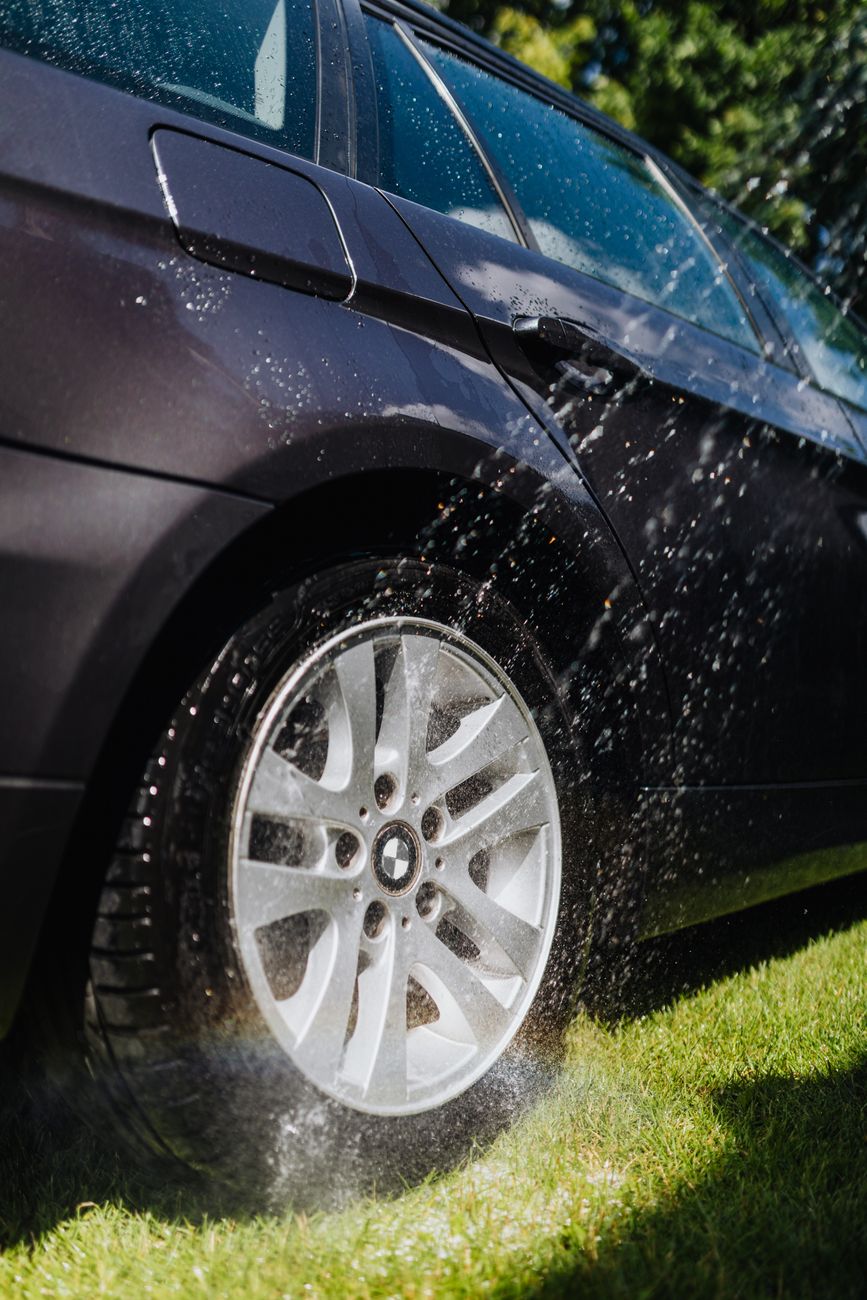
Cleaning and Maintenance of Alloy Wheels: How to Preserve Their Appearance and Safety
Regular cleaning of alloy wheels with mild products and non-abrasive tools preserves their protective finish and prevents corrosion. Proper maintenance also protects brake performance and vehicle handling. This whitepaper analyzes the risks of improper cleaning and proposes an evidence-based protocol for professional drivers.
Executive Summary
Alloy wheels are aesthetic and functional components of the vehicle. Their surface is protected by a coating that can be damaged by aggressive detergents, abrasive cleaners, or wire brushes. The accumulation of brake dust, grease, and environmental contaminants accelerates corrosion and premature wear, and can affect brake performance and handling. This document synthesizes best cleaning and maintenance practices, defines a protocol of action, and provides criteria for selecting products and tools. The goal is for drivers to preserve the appearance and safety of their alloy wheels over time.
Introduction: Why is alloy wheel maintenance critical?
Alloy wheels are not just a decorative element. Their condition influences safety and the dynamic behavior of the vehicle. Embedded dirt, especially brake dust, can alter heat dissipation and affect braking system efficiency. Additionally, environmental contaminants such as road salt or mud can corrode the surface if not removed regularly.
Wheel maintenance is therefore a task that combines aesthetics and functionality. A responsible driver should integrate it into their vehicle care routine, along with other essential checks such as Basic Vehicle Maintenance: Complete Guide for Responsible Drivers. This holistic approach ensures not only the good appearance of the car but also its reliability and safety.
Problem Statement: What damages alloy wheels and why is it a problem?
Alloy wheels face multiple aggressions. The protective coating that covers them is vulnerable to strong chemicals. The Mazda manual warns that the use of non-mild detergents, abrasive cleaners, polishing compounds, solvents, or wire brushes can discolor, stain, or damage the protective coating. Furthermore, brake dust, grease, and environmental contaminants accumulate and, if not removed, cause corrosion and premature wear.
The problem is twofold: on one hand, aesthetics deteriorate; on the other, safety can be compromised. Dirt on wheels can affect brake performance and vehicle handling. For example, embedded brake dust can act as thermal insulation and reduce the wheel's cooling capacity. Although this effect depends on the amount accumulated and the type of driving, it is a risk that should be mitigated with periodic cleanings.
Research/Analysis: What does the evidence tell us about alloy wheel cleaning?
What contaminants attack alloy wheels?
The most common contaminants are brake dust, grease and oil, and environmental contaminants such as mud and salt. Brake dust is a black residue that adheres strongly and is difficult to remove if not cleaned regularly. Grease and oil come from the road and other vehicles, and can stain the surface. Environmental contaminants, especially salt used for de-icing, accelerate corrosion.
The following table summarizes the types of contaminants and their effects:
| Contaminant | Origin | Main effect |
|---|---|---|
| Brake dust | Wear of pads and discs | Black accumulation, difficult to remove, can affect cooling |
| Grease and oil | Road, other vehicles | Stains, attraction of dirt |
| Mud and salt | Environment, treated roads | Corrosion, discoloration |
How do chemicals damage alloy wheels?
The protective coating of alloy wheels is sensitive to aggressive chemicals. Mazda specifies that only mild detergent should be used, and that before applying it, ingredients should be checked to avoid discoloration or staining. Acidic cleaners are effective for removing brake dust and corrosion, but must be used with caution to avoid damaging the surface. Non-acidic cleaners are milder and safer for the finish, and foam-based cleaners allow deep cleaning without being as aggressive.
The use of wire brushes or abrasive compounds is contraindicated because they scratch and remove the protective layer. Likewise, automatic car washes with hard, high-speed brushes can cause damage.
How often should alloy wheels be cleaned?
Frequency depends on factors such as climate, type of driving, and exposure to contaminants. A deep cleaning every 1-2 months and regular maintenance weekly or biweekly is recommended. In areas with road salt or abundant dust, wheels should be cleaned after each exposure to prevent corrosion.
What tools and products are most suitable?
For alloy wheel cleaning, microfiber sponges or soft cloths are recommended, as they do not scratch the surface. Wheel-specific brushes with soft bristles are useful for hard-to-reach areas. As for products, non-acidic and foam-based cleaners are safe for the finish. Acidic cleaners should be reserved for cases of severe corrosion and applied with caution.
The comparative table of cleaners can help in selection:
| Type of cleaner | Effectiveness | Risk to finish | Recommended use |
|---|---|---|---|
| Acid | High | High | Occasional deep cleanings, with caution |
| Non-acid | Medium | Low | Regular cleaning |
| Foam-based | Medium-high | Low | Periodic deep cleaning |
How does the type of wheel influence maintenance?
Not all alloy wheels are the same. Some have special coatings, such as Dura-Bright wheels, which require specific care. The manufacturer Alcoa recommends the use of high-pressure cleaners and avoiding scratches and erosion. For these wheels, the process includes applying a small amount of ALpolish and rinsing with clean water, repeating if necessary. This is an example that maintenance must adapt to the type of finish.
Proposed Solution/Approach: 5-step cleaning and maintenance protocol
Based on the evidence, we propose a five-step protocol for the care of alloy wheels. This protocol is designed for drivers who wish to preserve the appearance and safety of their wheels.
- Preparation: Park the vehicle in the shade and let the wheels cool. Gather materials: microfiber sponges, soft cloths, non-acidic or foam-based cleaner, warm or cold water, and optionally a wheel sealant.
- Initial rinse: Remove loose dust and mud with moderate pressure water. Avoid using hard or high-speed brushes.
- Cleaner application: Apply the cleaner to the wheel and let it act according to the manufacturer's instructions. Use a sponge or soft cloth to rub gently. For resistant brake dust, use a soft-bristled brush.
- Rinsing and drying: Rinse thoroughly with clean water and dry with a microfiber cloth to avoid water spots.
- Protection: If desired, apply a wheel sealant to protect the surface from dirt and contaminants. For wheels with special coating, follow the manufacturer's recommendations, such as the use of ALpolish.
This protocol should be complemented with periodic tire pressure checks, as proper pressure helps prolong wheel life. For this, you can consult the guide Correct Tire Pressure: Complete Guide to Measure and Maintain It.
Implementation Considerations: What factors condition maintenance success?
The implementation of the protocol depends on several factors. Climate is decisive: in coastal areas or where salt is used in winter, corrosion is more aggressive and cleanings should be more frequent. The type of driving also influences: urban driving with frequent braking generates more brake dust. The previous condition of the wheels is another factor: wheels with damage or deteriorated coatings require more delicate care.
A critical aspect is the choice of products. Not all cleaners are compatible with all finishes. Whenever possible, consult the owner's manual. Mazda, for example, warns about the use of non-mild detergents and recommends checking ingredients. For alloy wheels with special coatings, such as Dura-Bright, it is essential to follow the manufacturer's instructions.
Another factor is frequency. Weekly or biweekly cleaning, complemented with a deep cleaning every 1-2 months, is adequate for most drivers. However, in severe conditions, it may be necessary to clean after each use. The balance between frequency and gentleness is key to not damaging the protective coating.
Conclusion
Cleaning and maintenance of alloy wheels are an investment in appearance and safety. Evidence shows that the use of mild products and non-abrasive tools preserves the protective coating and prevents corrosion. A systematic protocol, adapted to the type of wheel and usage conditions, allows keeping wheels in optimal condition. Additionally, wheel care is part of a broader vehicle maintenance routine, which includes brake, oil, and battery checks. To delve deeper into these aspects, we recommend consulting the Brake Inspection: Signs of Wear and When to Replace Them - Complete Guide for Drivers.
References
- Mazda. (n.d.). Maintenance of aluminum wheels (Some Models). Owner's manual. Retrieved from owners-manual.mazda.com
- Alcoa Wheels. (n.d.). Cleaning Dura-Bright wheels. Retrieved from www.alcoawheels.com
- Multivac. (n.d.). Alloy Wheel Cleaning: Tips and Products. Retrieved from multivac.es