Automatic Transmission: Maintenance and Failure Symptoms to Avoid Major Repairs
Preventive maintenance of an automatic transmission is based on checking the fluid level and quality of the ATF, detecting leaks, and immediately addressing symptoms such as slipping, jerking, or delayed shifts. Clean fluid at the correct level preserves performance and prolongs transmission life, while ignoring early signals leads to major repairs.
Executive Summary
The automatic transmission is a complex hydraulic and electronic system that requires a special fluid to function properly. Automatic transmission fluid (ATF) transmits power, lubricates internal components, and acts as a coolant. When ATF degrades or the level is incorrect, failures appear ranging from harsh shifts to total loss of traction. According to Toyota, a special fluid circulates through the system and helps maintain transmission health, preserve performance, and prolong its useful life; it is always best to consult the owner's manual. Castrol Spain points out that shaft seals are exposed to greater wear and that automatic transmission breakdowns are often related to the fluid, so its protection and maintenance are crucial.
This whitepaper analyzes why automatic transmission maintenance is an investment, not an expense. Early failure symptoms are explained, a diagnostic process based on the official automatic transmission repair guide from the Mexican labor certification is detailed, and a decision framework is proposed so drivers act before a minor repair becomes a bill of thousands of pesos. The document is aimed at drivers and industry professionals who wish to understand how the system works and make informed decisions.
Introduction: Why is automatic transmission maintenance crucial?
The automatic transmission is one of the most expensive components to repair in a vehicle. Unlike the engine, which gives obvious signals such as noises or smoke, the transmission fails progressively and silently. A driver can ignore for months a slightly harsh shift or a small puddle of fluid under the car, until the vehicle stops completely. At that point, the repair may involve complete disassembly of the transmission, replacement of discs, bands, and solenoids, and a cost that easily exceeds the maintenance value of several years.
ATF fluid is the soul of the system. It is not a simple oil: it is a hydraulic fluid designed to withstand high temperatures, maintain stable viscosity, and protect friction materials. When it becomes contaminated or degrades, it loses its properties and begins to damage internal components. Toyota recommends changing all the old transmission fluid in the system to maintain transmission health. Castrol, for its part, warns that shaft seals and other seals are exposed to greater wear, which can cause leaks and breakdowns.
Early detection is the driver's most powerful tool. The diagnostic guide from the Mexican labor certification establishes that you must check whether the oil is at level or has a burnt disc smell to diagnose the cause and determine the necessary action. That burnt smell is an alarm signal that should not be ignored: it indicates that the fluid has overheated and lost its lubricating properties.
Problem Statement: The Cost of Negligence
The central problem is the lack of awareness about automatic transmission maintenance. Many drivers assume that the automatic transmission is "maintenance-free" or that it only requires attention when it fails. This belief is dangerous. Evidence from Toyota and Castrol suggests otherwise: the fluid must be changed periodically and seals must be checked to prevent breakdowns.
The consequences of ignoring maintenance are serious. An undetected oil leak can cause the fluid level to drop below the minimum, leading to erratic operation and overheating. Overheated fluid loses viscosity and stops lubricating, which accelerates wear on discs and bands. Finally, the system may enter emergency mode, as Castrol mentions: when the fluid does not protect adequately, emergency operation mode is activated. At that point, the transmission may become stuck in one gear or refuse to shift, leaving the driver stranded.
The cost of a major repair is not only economic. It includes loss of time, interruption of daily mobility, and, in the case of commercial vehicles, loss of income. The repair guide from the Mexican labor certification details a complex process that includes removing the transmission, inspecting the oil pump, valve body, and drums, changing the complete set of discs, bands, seals, and spacers, and testing the electromagnetic solenoids. Each of these steps represents hours of specialized work and expensive parts.
Analysis and Research: How the Automatic Transmission Works and Why It Fails
What internal components wear and how do they manifest?
The automatic transmission uses a set of discs, bands, and a valve body to shift gears hydraulically. ATF fluid is responsible for transmitting the pressure needed to actuate these components. Over time, the fluid becomes contaminated with metal particles and degrades from heat, which reduces its ability to lubricate and cool. The Mexican labor certification guide indicates that a visual inspection should be performed for damage to the oil pump, valve body, and drums, and they should be changed if necessary. The electromagnetic shift solenoids should also be checked and tested in the case of electronic transmissions, according to manufacturer specifications.
Shaft seals, also called retainers, are critical points. Castrol points out that shaft seals are exposed to greater wear. When a seal fails, a fluid leak occurs that, if not addressed, can lead to total loss of hydraulic pressure. Therefore, a thorough inspection to locate oil leaks is a mandatory step in diagnosis.
What are the early failure symptoms that every driver should recognize?
Automatic transmission failure symptoms are progressive and often subtle. The diagnostic guide from the Mexican labor certification lists a series of checks that the technician must perform, and that the driver can use as a checklist of warning signs:
- Harsh or delayed shifts: the transmission takes time to shift or does so with a hard jolt.
- Slipping: the engine revs up but the vehicle does not accelerate proportionally.
- Jerking or vibration: the vehicle shakes when shifting.
- Strange noises: when engaging a gear or while driving, metallic noises or whining are heard.
- Oil leaks: reddish or brown stains under the vehicle.
- Burnt disc smell: the fluid has a pungent odor indicating overheating.
- Emergency mode: the transmission becomes stuck in one gear or does not shift.
The guide also recommends reviewing driver complaints and road testing the vehicle to determine whether the transmission performs its shifts properly or exhibits slipping, jerking, vibration, harsh or delayed shifts. If there is no traction, it must be determined whether the problem is in the hydraulic system, electronic system, or drive shafts.
How is ATF fluid related to emergency mode?
ATF fluid not only lubricates; it also transmits hydraulic pressure. When the fluid degrades or the level is low, pressure drops and the electronic control system detects an anomaly. As a protective measure, the transmission may activate emergency mode, which limits functions to prevent major damage. This mode usually manifests as a harsh shift to a fixed gear (for example, third) and the inability to upshift or downshift. It is a sign that the system is already suffering and requires immediate attention.
What role do seals and leaks play in breakdowns?
Seals are rubber gaskets that prevent fluid from escaping the transmission. Over time, heat and contaminants harden and crack them. Castrol warns that shaft seals are exposed to greater wear. A leak, even a small one, reduces the fluid level and can cause the pump to draw air, generating foam and pressure loss. The diagnostic guide includes a thorough review of oil leaks as an essential step to determine the necessary action.
How often should transmission fluid be changed?
The exact frequency depends on the manufacturer and the type of vehicle use. Toyota recommends consulting the owner's manual to determine the appropriate interval. There is no universal interval, but evidence suggests that fluid change is a recognized preventive maintenance practice. Castrol emphasizes that fluid protection and maintenance are crucial to prevent breakdowns. In severe conditions (towing, extreme weather, constant traffic), the interval is usually shortened. This is a decision that depends on factors such as vehicle model, mileage, and operating conditions.
Proposed Solution: A Four-Level Preventive Maintenance Framework
To avoid major repairs, we propose a staggered approach ranging from visual inspection to specialized repair. This framework is based on the practices described in the sources and is designed so the driver knows when to act and when to seek a professional.
Level 1: Visual and Smell Inspection (Monthly)
The driver can perform a basic check every month. It consists of parking the vehicle on a flat surface, with the engine hot and in neutral, and checking the transmission fluid dipstick (if the vehicle has one). The level and color should be verified: healthy fluid is usually reddish and translucent; dark brown fluid or fluid with a burnt smell indicates degradation. The diagnostic guide recommends checking whether the oil is at level or has a burnt disc smell. The ground under the vehicle should also be observed for stains, which would indicate leaks.
Level 2: Shop Diagnosis (Every 20,000 to 40,000 km or per manual)
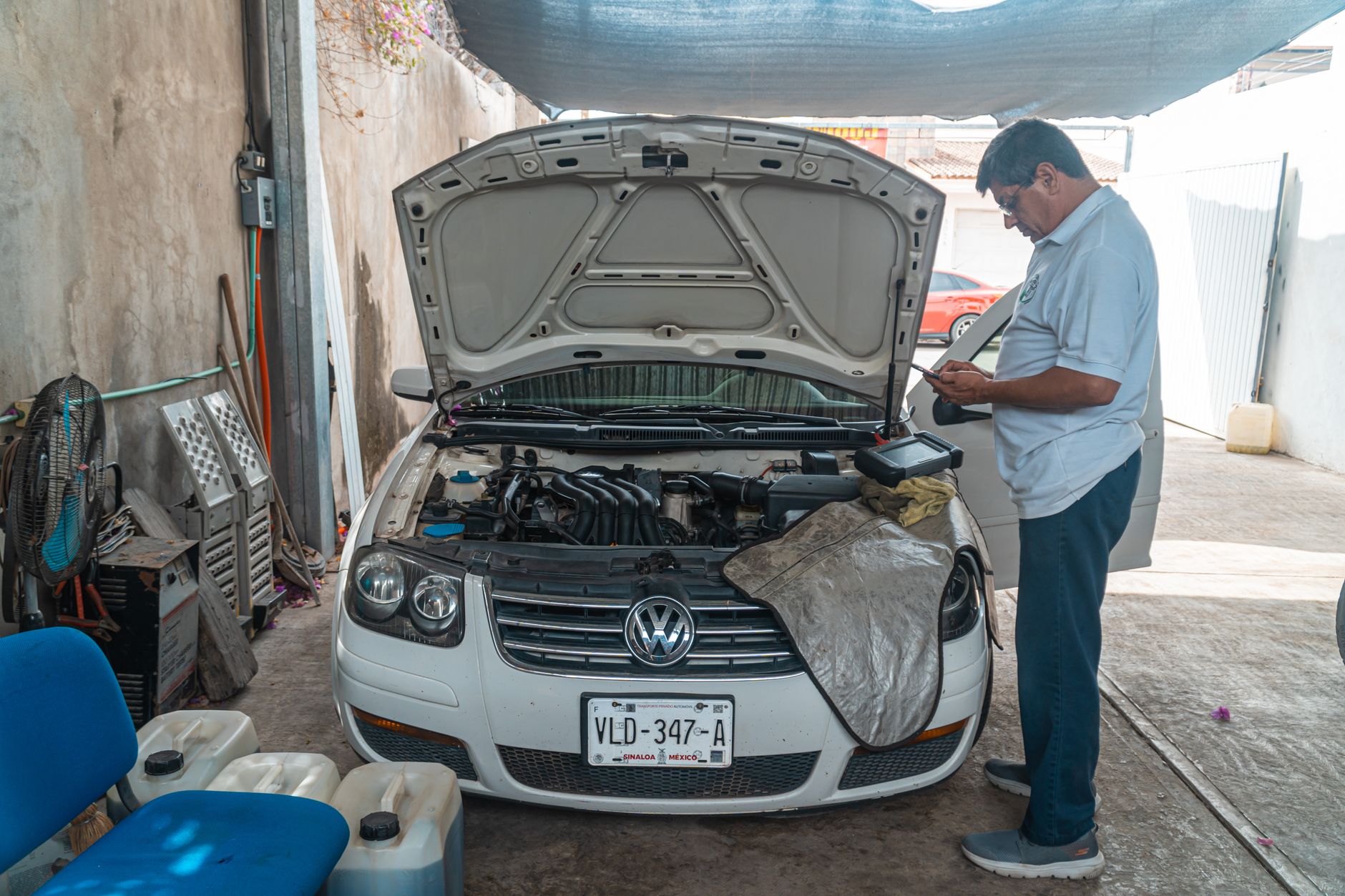
At this level, a technician performs a deeper review that includes a road test and verification of shifts. The Mexican labor certification guide describes stall tests to determine the transmission slip percentage and road tests to evaluate shift frequency and overdrive system operation. These tests allow incipient problems to be detected before they become serious failures.
Level 3: Fluid and Filter Change (Per Manufacturer Interval)
When the fluid has reached the end of its useful life, it should be replaced. Toyota indicates that all the old transmission fluid in the system should be changed. In some vehicles, the filter or strainer is also replaced as part of maintenance. The repair guide mentions changing the turbine, tail, and selector seals, as well as the oil filter or strainer. This service, performed on time, is the best investment to prolong transmission life.
Level 4: Specialized Repair (Only if Failures Are Confirmed)
If symptoms persist after maintenance, a specialized diagnosis is necessary. The repair guide details the process: remove the transmission, inspect internal components, change the complete set of discs, bands, seals, and spacers, and test the solenoids. This level should only be performed by certified shops, as it requires specialized tools and advanced technical knowledge.
Implementation Considerations: How to Apply This Framework in Real Life
Implementing this framework requires discipline and knowledge of the vehicle. Not all drivers have the technical ability to check the fluid, and not all vehicles allow a simple check (some do not have a transmission dipstick). In those cases, the recommendation is to go to a trusted shop to perform the inspection. The Mexican labor certification guide emphasizes the importance of reviewing driver complaints and road testing the vehicle, which underscores that driver perception is a valuable diagnostic source.
A critical aspect is choosing the correct fluid. Toyota mentions that a special fluid circulates through the system. Not all ATF fluids are the same; each manufacturer specifies a particular type. Using an incorrect fluid can cause serious damage. Therefore, the owner's manual should always be consulted.
Another factor is the timing of the change. Some experts recommend not changing the fluid in high-mileage transmissions that have never received maintenance, because the old fluid and debris may be sealing small internal leaks. This is a decision that depends on the specific condition of the transmission and must be evaluated by a professional. The evidence from the sources does not address this case, so it is a general practice consideration.
Early leak detection is essential. Castrol points out that shaft seals are exposed to greater wear. Regular visual inspection of the area under the transmission can detect a leak before the level drops to a critical point. If a leak is detected, repairing the seal is much cheaper than replacing internal components damaged by lack of lubrication.
Conclusion
The automatic transmission is a robust but maintenance-sensitive system. ATF fluid is its lifeline, and its degradation is the main cause of failures. Early failure symptoms—harsh shifts, slipping, leaks, burnt smell—are opportunities to act before damage is irreversible. Evidence from Toyota, Castrol, and the repair guide from the Mexican labor certification supports a preventive approach: check fluid level and quality, detect leaks in time, and perform fluid changes according to the manufacturer's interval.
The proposed four-level framework offers a clear roadmap for drivers and shops. It is not about turning every driver into a mechanic, but about fostering a culture of observation and maintenance. A five-minute monthly check can prevent a repair costing thousands of pesos. The automatic transmission does not fail suddenly; it gives warning. The driver who knows how to listen to those signals saves money, time, and headaches.
References
- Toyota. (n.d.). How often should you change transmission fluid?
- Castrol Spain. (n.d.). Why should you change ATF oil in automatic transmissions?
- Mexican Labor Certification. (n.d.). Automatic Transmission Repair. Type F Exam Guide.
To complement this topic, we recommend reviewing our guide to basic vehicle maintenance and the step-by-step guide to changing engine oil, which are part of a comprehensive automotive care routine.